
Last updated November 15, 2026
 Wrought iron
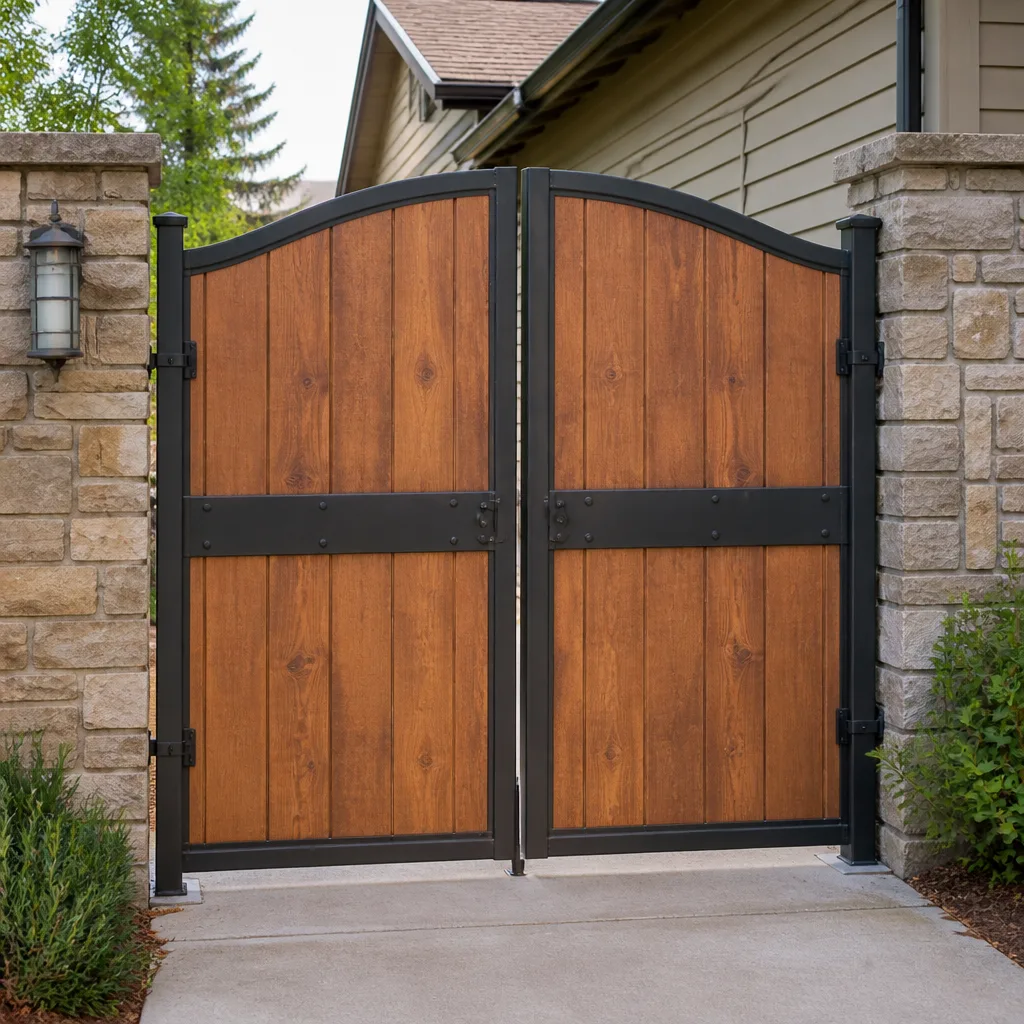 Wood & steel frame
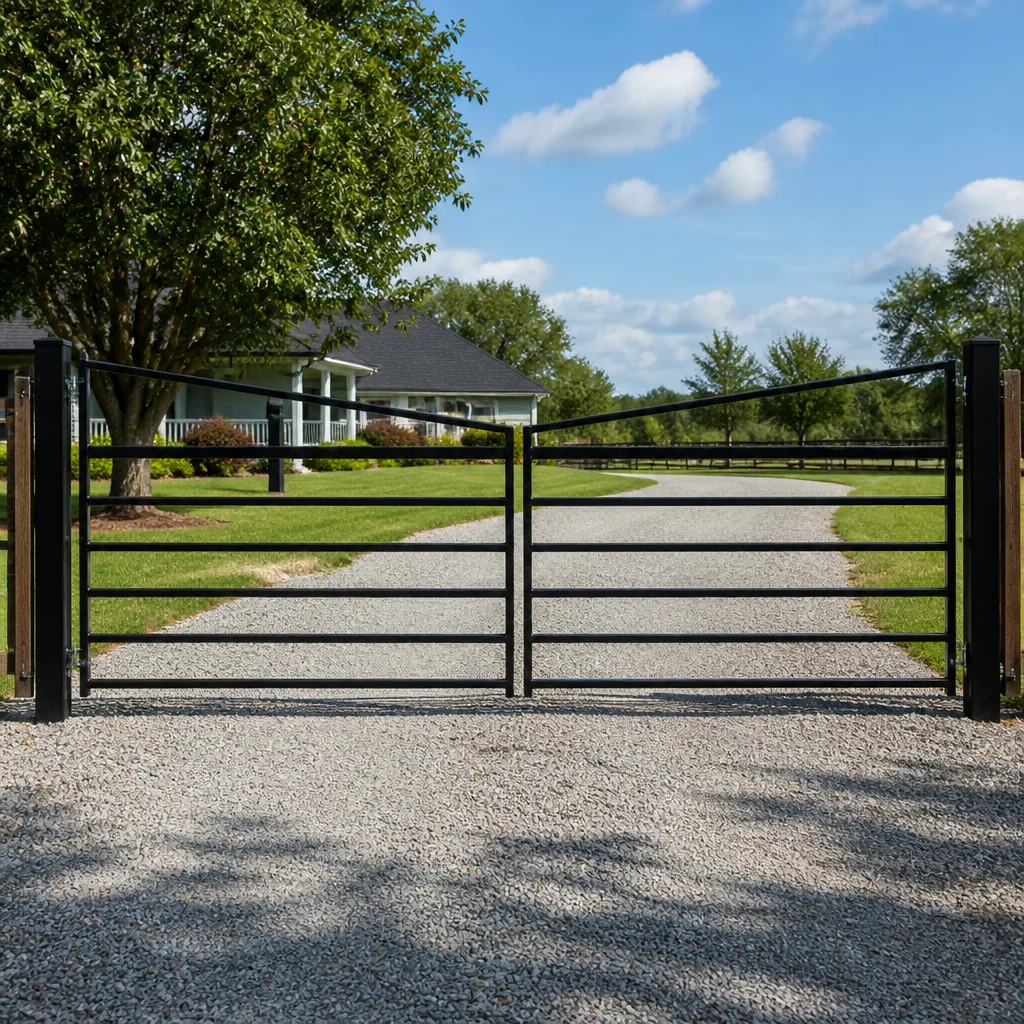 Farm & ranch
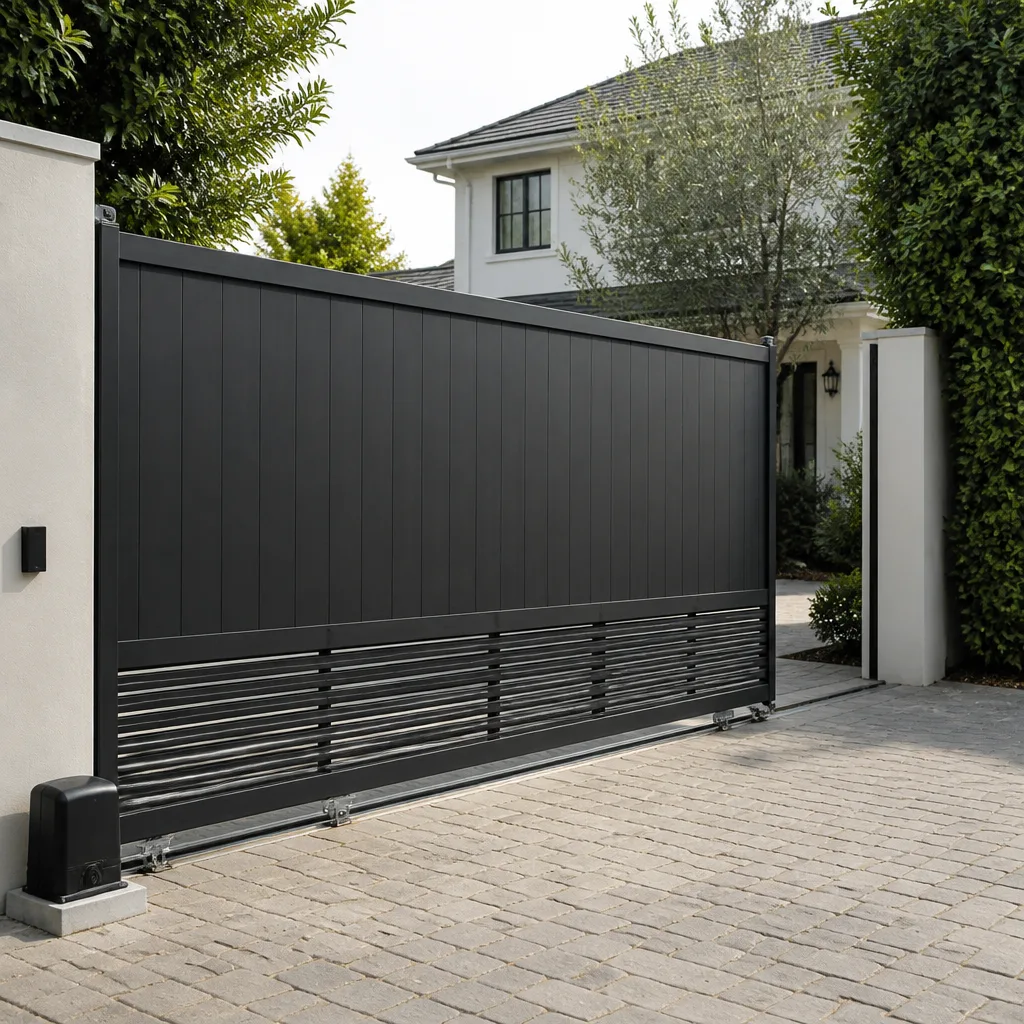 Sliding driveway gates
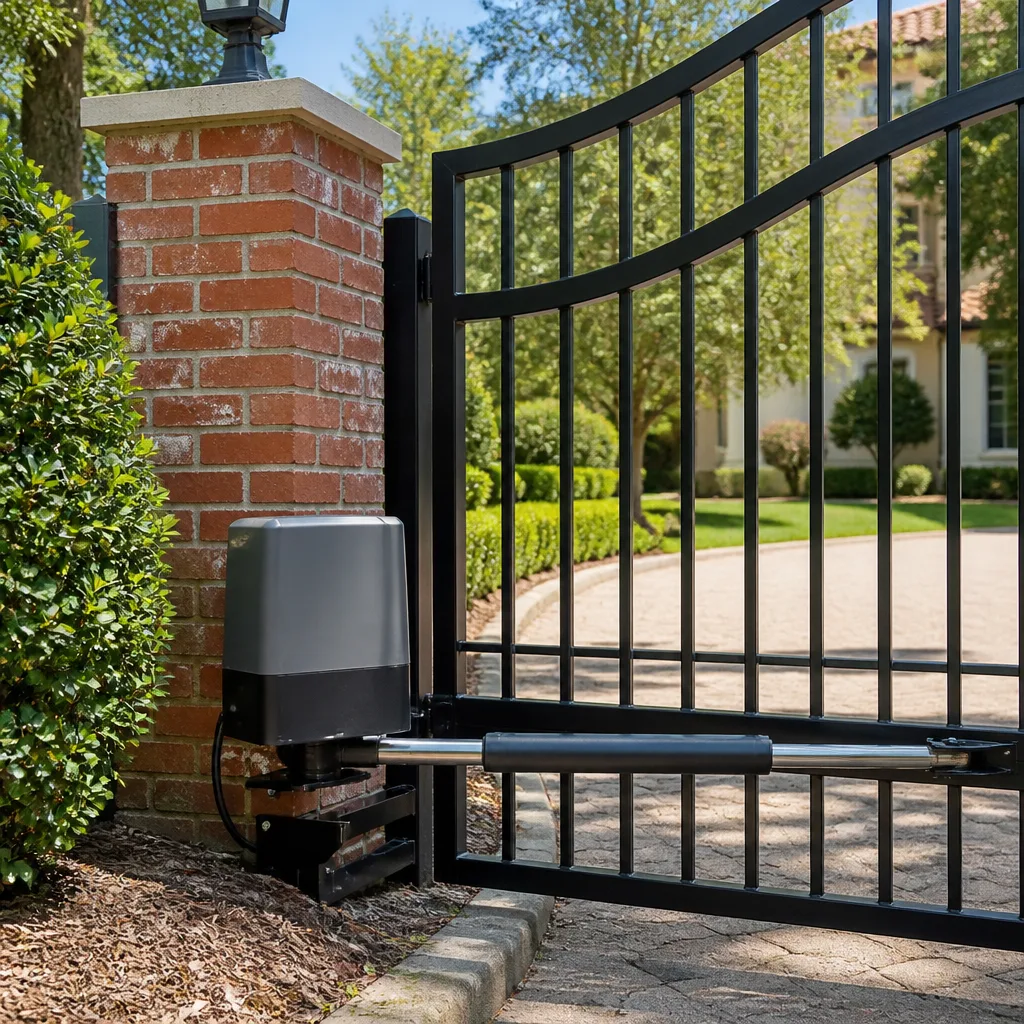 LiftMaster operators
Free on-site gate assessment - hinges, posts, and your LiftMaster or Nice gate operator checked before anything is quoted
The assessment is free and the quote is the invoice.
Get your free estimateDIY vs Professional Gate Repair: The Vallejo Homeowner’s Decision Guide
Adjusting a gate latch is a ten-minute job with almost no downside if you get it slightly wrong. Replacing a gate operator without resetting the obstruction force limits is a different category of decision entirely. In California, the safety requirements that govern automatic gates mean an improperly calibrated operator can leave a homeowner carrying liability that follows the person who owns the gate, not the person who did the work. That gap between a harmless latch tweak and a serious safety risk is where most DIY-versus-pro conversations go wrong. This guide skips the ego and maps the decision by risk, so you can see exactly which repairs you can handle in Vallejo and which ones deserve a specialist.
Quick Answer
Most manual gate problems, such as a sticking latch, a sagging swing panel, or a worn hinge, are safe for a capable homeowner to adjust with basic tools and a little patience. Automatic gate repair is different: any work involving the operator, control board, safety sensors, or entrapment protection should be done by a technician because UL 325 compliance depends on precise calibration that’s hard to verify without the right equipment. Electric gate acting up in Vallejo? electric gate repair is where professional help pays for itself fastest.
Styles & brands we work with
- Wrought iron
- Wood & steel frame
- Farm & ranch
- Sliding driveway gates
- LiftMaster operators
Table of Contents
- The Task-by-Task Risk Matrix: What’s Safe, What Isn’t
- Why Automatic Gates Carry Hidden Liability
- California, UL 325, and What the Law Actually Expects
- What Tools You’d Actually Need for Common Repairs
- When a “Simple” Repair Is Masking a Bigger Problem
- The Real Cost Comparison: Parts, Labor, and Downside
- A Simple Decision Framework
The Task-by-Task Risk Matrix: What’s Safe, What Isn’t
The best way to answer the DIY-versus-pro question is one task at a time. Gate repair isn’t a single skill; it’s a dozen smaller jobs that happen to live under the same name. Some are genuinely safe for a homeowner with mechanical common sense. Others carry weight limits, crush risk, or electrical hazards that deserve a trained hand.
Here’s how we break down the most common repairs we’re called for in Vallejo:
- Safe for a capable homeowner: Adjusting a latch striker plate, tightening hinge bolts, lubricating hinges and rollers, clearing debris from a slide track, replacing a remote battery, and re-aiming a safety photo-eye that got bumped.
- Approach with caution: Realigning a swing gate that’s dropped on its hinges, replacing worn swing-gate hinges, and replacing a slide-gate roller wheel. These are manageable but require knowing how much a heavy gate panel weighs and how to brace it before removing hardware.
- Professional territory: Any work on the operator motor, control board, safety sensor wiring, entrapment sensors, electric locks, access control units, and the power feed to the unit. A heavy slide gate panel that comes off the track or off a worn roller is a genuine crush hazard.
The category in the middle is where DIY lives or dies on preparation. A gate panel is heavier than it looks, and a hinge that seems to slip off easily going one way doesn’t come back on the same way. If you don’t have someone to help you support the panel, that middle category tips into the “call a specialist” column fast.
Why Automatic Gates Carry Hidden Liability
Here’s the part most DIY guides skip. When you adjust a manual gate latch and get it slightly off, the gate doesn’t latch cleanly. Annoying, yes. Dangerous, no. When you install or tinker with an automatic gate operator and fail to set the obstruction force limits correctly, the failure mode isn’t a wobbly latch. It’s a moving gate that doesn’t reverse when something is in the way.
An automatic gate that closes on a child, a pet, or a vehicle because the entrapment sensors weren’t recalibrated doesn’t just cause injury. It creates a legal record that traces back to whoever owns the property. For a homeowner, that’s you. For a property manager, it’s the owner or the association. The person who did the work disappears from the picture once the job is “done,” but the gate keeps cycling every day.
We’re not saying this to scare anyone away from touching their gate. We’re saying it because the stakes of a mistake aren’t evenly distributed. Cosmetic mistakes cost a little money. Safety mistakes cost something you can’t buy back. That’s the real line between DIY and pro, and it’s the one that should drive the decision.
What “hidden” really means
Most homeowners we talk to in Vallejo can describe exactly what their gate is doing wrong. The gate stops halfway. The remote works sometimes. The gate opens but won’t close on its own. What they can’t see is the interaction between the operator, the control board, and the safety devices. Those three systems talk to each other, and when one goes out of sync, the symptom shows up somewhere else. Hooking a new operator up wrong, or swapping a control board without reprogramming the safety loop, is how a small fix becomes a bigger one.
California, UL 325, and What the Law Actually Expects
Automatic gates in California are governed by the UL 325 safety standard, which sets out requirements for entrapment protection. In practical terms, that means an automatic gate needs at least one means of entrapment protection, and the force the operator applies has to be limited and calibrated so the gate reverses when it meets an obstruction. It’s not about being careful. It’s about a specific measured behavior that has to be verified.
For a homeowner in Vallejo, this has two consequences:
- Replacing or repairing the operator isn’t a plug-and-play job. The force limits, reversal sensitivity, and sensor alignment all have to be set after the physical install. If you buy a replacement operator from a big-box store and wire it in without re-running the setup procedure, you’ve created a gate that may not comply with UL 325 even though it technically runs.
- Every operator brand does this differently. A Viking unit and a Ghost Controls unit both meet the standard, but the calibration routine on each is different. Knowing your specific brand matters. We work on the brand you already have, which is why the setup steps stay the same no matter what’s on your post.
California law also puts the responsibility for a safe automatic gate on the property owner, and for shared-drive installations in Vallejo, that obligation sometimes falls to whoever maintains the shared access. If you’re a property manager, a malfunctioning gate on a shared entry is not a “wait and see” situation.
What Tools You’d Actually Need for Common Repairs
Generic advice about “a screwdriver and a wrench” undersells what actually makes a gate repair go smoothly. If you’re going to attempt a DIY repair on a Vallejo gate, here’s the specific kit that makes the difference between a fix and a follow-up call.
For swing gate alignment and hinge work
- A socket set with deep sockets in the sizes that match your hinge bolts (usually 1/2″ through 5/8″ for residential gates, but check yours).
- A level, ideally a magnetic torpedo level or a 2-foot level for checking panel plumb.
- A block of wood or a jack rated for the panel weight, so you can support the gate before loosening hinges.
- A metal file or rotary tool for dressing burrs on hinge barrels.
- Penetrating oil applied the day before if the bolts haven’t moved in a while.
For slide gate roller replacement
- A floor jack or a heavy-duty pry bar to lift the panel enough to remove the old roller.
- Replacement rollers sized to your track and the panel weight, not a generic roller from a hardware store.
- A wire brush for cleaning the track before reinstalling the wheel.
- A tape measure to confirm the panel lifts evenly on both sides.
For anything involving the operator
There is no DIY tool kit for the operator itself. Calibration is done through the manufacturer’s control panel or a handheld programmer, and verifying that entrapment protection actually works requires the ability to trigger the safety device and watch the reversal behavior. If you don’t have the programming manual for your specific controller, that’s a sign to stop.
When a “Simple” Repair Is Masking a Bigger Problem
One of the more useful things we’ve learned from years of gate work in Vallejo is that a gate rarely tells you the whole story. The symptom you can see is usually the last thing to fail in a chain of wear. A sticking latch often means the gate has dropped on its hinge pins a few millimeters, and the latch is fighting an alignment problem that started months ago. A slide gate that jumps on the track doesn’t usually need a new track; it needs new rollers and a check that the posts haven’t shifted.
Here are the patterns worth noticing before you DIY:
- A gate that gets progressively harder to close over weeks rather than suddenly is almost always a hinge, roller, or post issue. Replacing a latch won’t fix it.
- A gate that worked fine before a specific event (a storm, a bumped post, a new driveway surface) may have a foundation issue underneath.
- An operator that trips the same safety sensor every week is rarely a bad sensor. It’s usually alignment, wiring degradation, or a control board starting to fail.
- A gate that briefly reverses on its own mid-travel on a warm afternoon, then works fine at night, is showing an electronic fault that will worsen with temperature swings.
If your “simple” repair is actually a symptom of something larger, DIY can push the problem forward and, in the worst case, damage a component that was still healthy. A trained eye on-site tends to catch those earlier.
The Real Cost Comparison: Parts, Labor, and Downside
The standard cost analysis compares parts to labor and stops there. That’s fine as far as it goes, but it doesn’t reflect the actual risk on the table. The real question isn’t “What does the part cost?” It’s “What does the part cost, plus what does it cost if this doesn’t go right?” Here’s the honest comparison, based on typical estimates we quote in Vallejo:
- Manual gate repair (hinge, latch, alignment): DIY parts are usually under $30. A professional repair estimate typically lands in the $150 – $350 range, depending on whether new hinges or hardware are needed.
- Slide gate roller replacement: DIY is $20 – $60 in parts. Professional estimate is typically $200 – $400, and includes verifying the track and posts while the panel is up.
- Electric gate repair (operator, control board, sensor): Parts alone run $150 – $600 or more depending on the brand and the fault. Professional estimates typically run $250 – $700 for a straightforward repair. This is the category where DIY risk is highest.
- Recalibrating the operator and safety sensors: This isn’t really a DIY category. A technician who knows Viking, DoorKing, or Elite systems can usually complete it in a single visit as part of a larger repair.
Those are typical ranges for the Vallejo market. Every job is priced on its own after we look at the gate; the written estimate sets the final cost, and nothing is charged before you agree to it.
The piece that doesn’t fit neatly in a table is the downside on a failed DIY job. A control board ruined by a miswire can run more than the labor cost of the original repair. A gate panel that drops off a roller during a DIY swap can bend a post or track, and now you’re looking at a much bigger job than the one you started. In the electric category especially, the cost comparison usually favors professional help once you factor in what going wrong actually costs.
A Simple Decision Framework
If you’d rather skip the deep analysis and just make the call, here’s the framework we’ve found holds up in almost every case we see in Vallejo:
- Is the gate manual or automatic? Manual fixes are usually fair game for a competent DIYer. Automatic work isn’t.
- Does the fix involve the operator, control board, wiring, or safety sensors? If yes, professional. Full stop.
- Do you need to support a heavy panel? If yes, and you don’t have a helper and the right lift, professional.
- Has the problem been building for weeks? If yes, the visible issue probably isn’t the whole story. Professional diagnostic first.
- Do you have the manual for your exact brand? If no, professional. For brands like Viking, Ghost Controls, DoorKing, or Elite, the setup sequence matters.
- Would you still feel comfortable with the result if a child walked through the gate alone tomorrow? If any part of you hesitates on an automatic gate, that’s your answer.
Five out of six of those tests mean picking up the phone. If you’re in the sixth, a free on-site estimate is faster than trying to figure out the calibration by watching a video. Gate Repair Vallejo offers free estimates across the city and can usually get a technician out the same day for urgent electric gate issues.
Common Mistakes to Avoid
- Removing hinge bolts without bracing the panel. A swing gate panel can weigh well over a hundred pounds, and a loosened bolt on one hinge suddenly sends all that weight through the other. Always support a gate before you start pulling hardware, or bring a helper.
- Buying a replacement operator from a big-box store without checking compatibility with the existing mounting and wiring. A “universal” replacement rarely matches the arm position and voltage of the existing system. What looks like a $400 swap can become a $1,200 re-installation when the mounting holes don’t line up.
- Assuming a wall-mounted control panel is “just a box.” Control boards, transformers, and access hardware all interact. Replacing one component without checking the others is a common reason we get called back for a second visit within a month.
- Replacing the sensor instead of the alignment. Photo-eyes and safety loops rarely fail first. Alignment, moisture in the housing, and wiring issues cause most safety trips, especially in the mild wet season Vallejo sees between November and March.
- Forcing a stuck automatic gate by hand. Manual release procedures vary widely by brand and model. Forcing the gate on the wrong operator can strip the gear box or snap a shear pin, turning a $300 repair into a $900 one.
- Assuming the fix worked because the gate opened and closed once. On an automatic gate, the safety devices need to be tested against a real obstruction (a light object, not your arm) to verify the reversal behavior. If you haven’t tested the reversal, you haven’t verified the fix.
- Ignoring the post. A gate that worked fine for years and suddenly doesn’t sit right usually has a post problem, not a gate problem. If the post has shifted, hinges and rollers will keep failing until the post is addressed.
See the difference
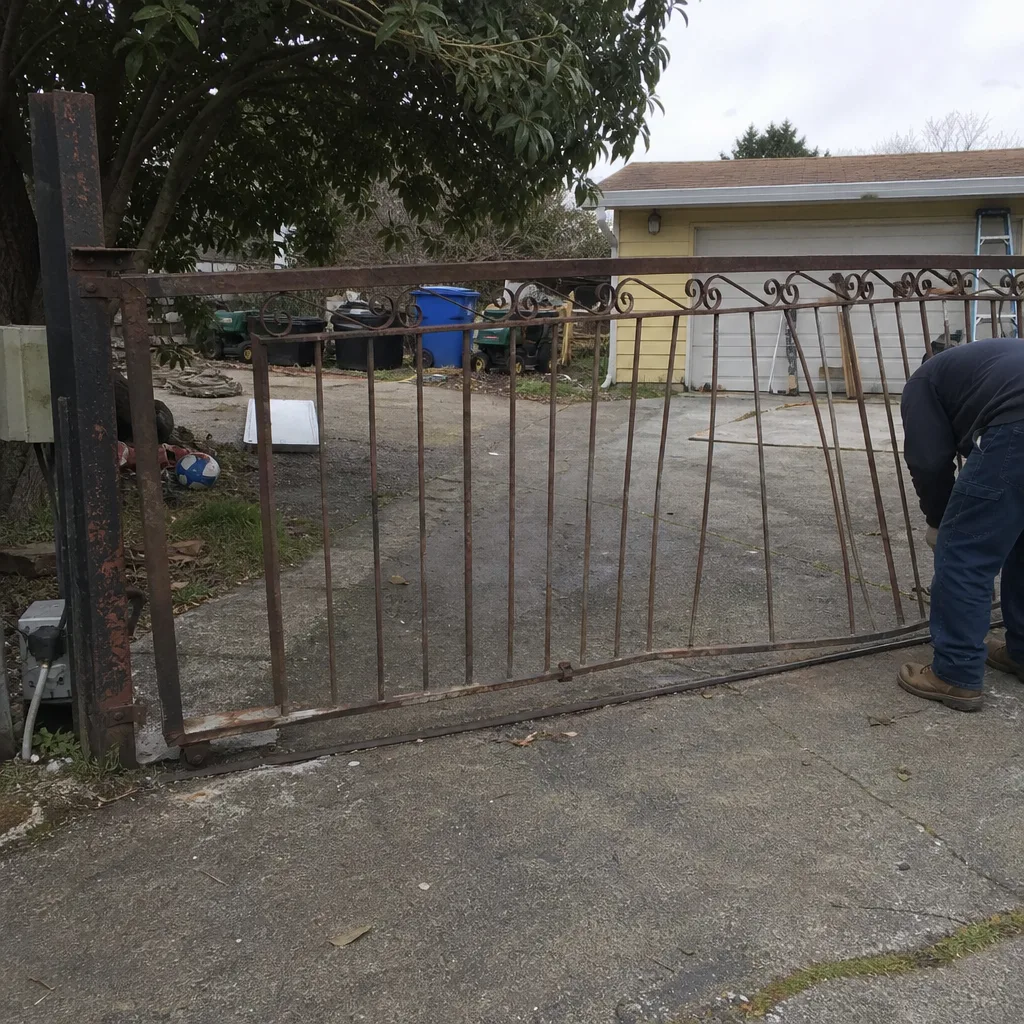 Before
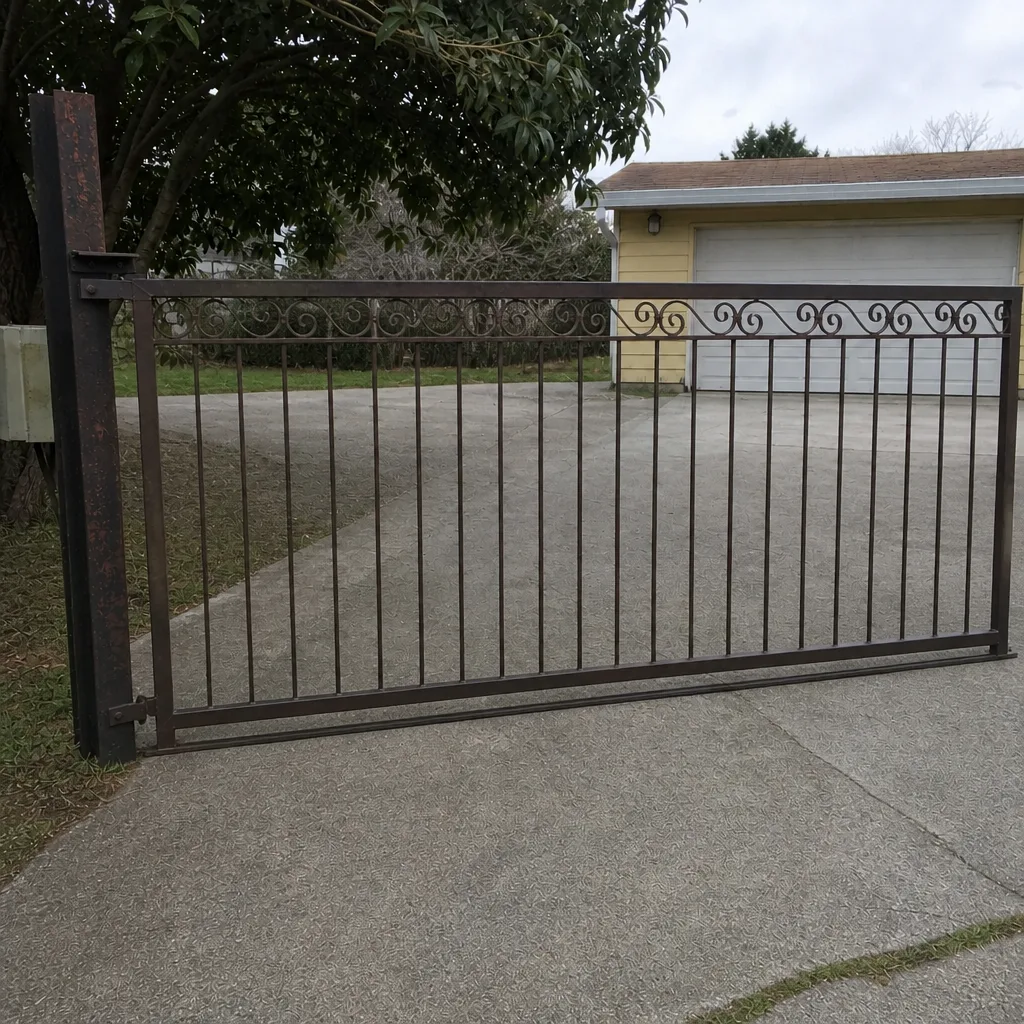 After
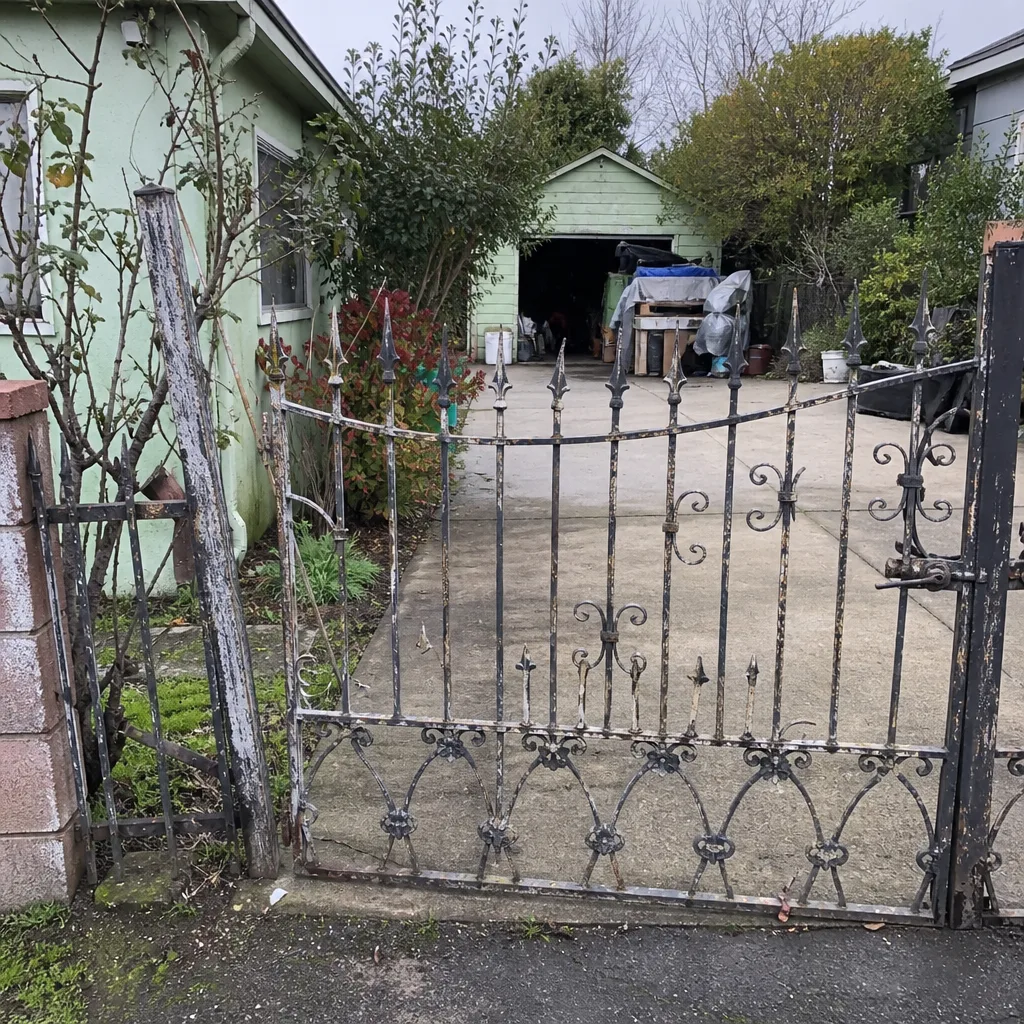 Before
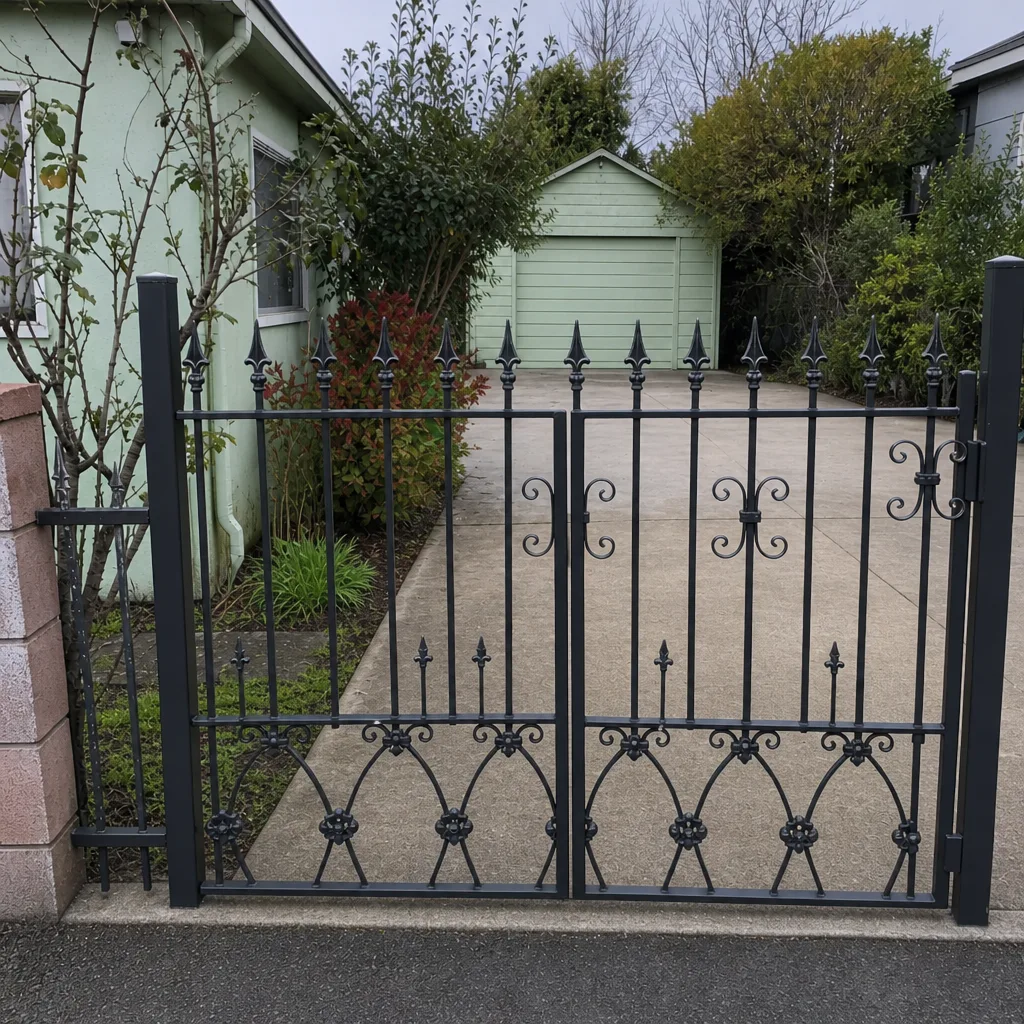 After
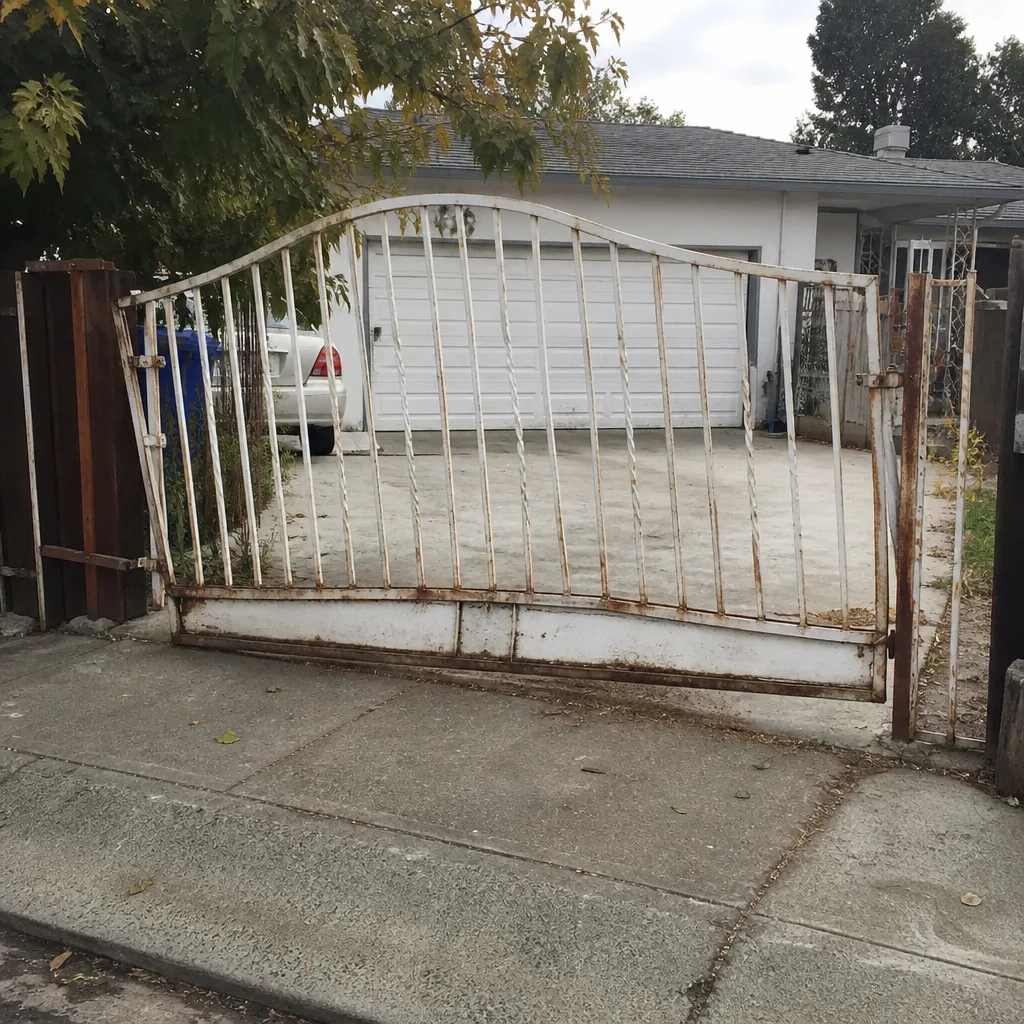 Before
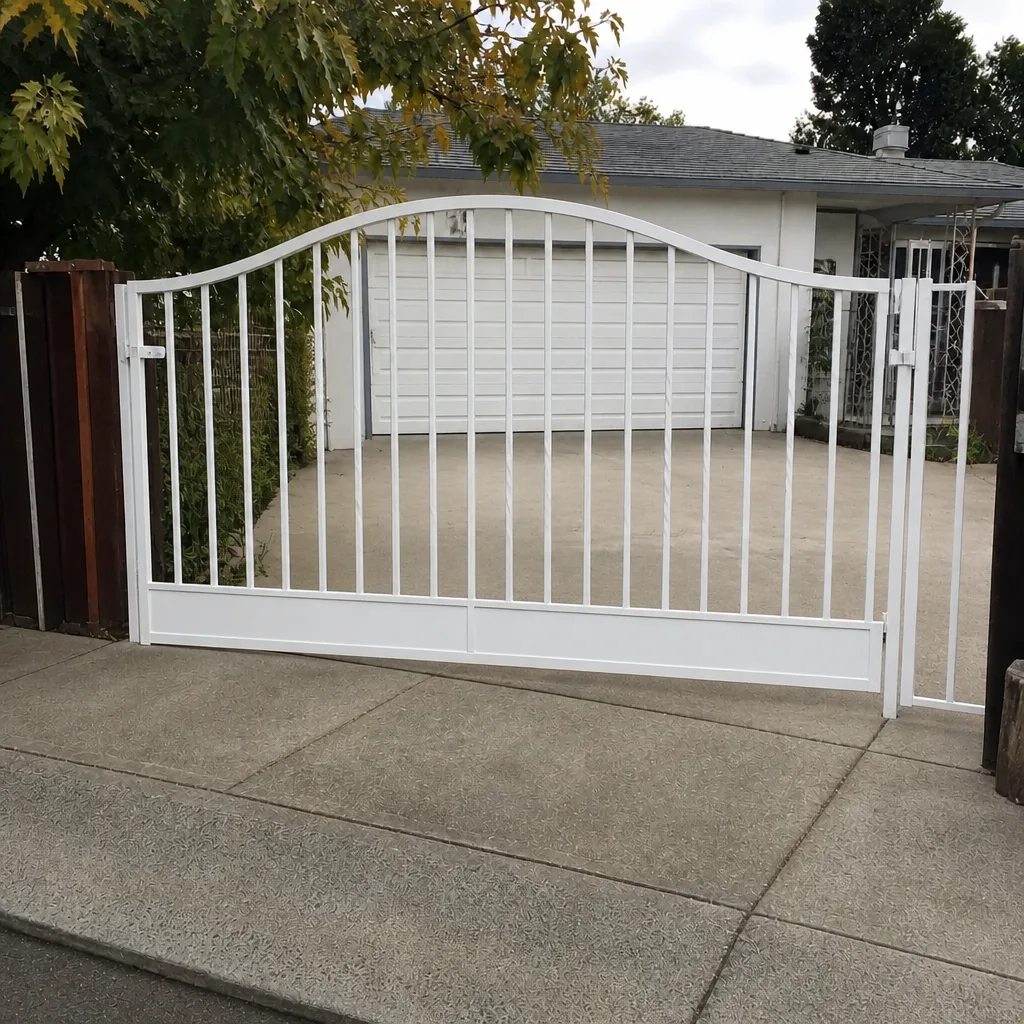 After
When to Call a Professional
A few situations tip clearly into professional territory. Your automatic gate runs, but the safety sensors trip randomly or the gate reverses on its own. Your swing gate has dropped and a hinge replacement hasn’t stopped it from sagging again. Your slide gate has come off the track once, even if it went back on. Your operator is a brand you can’t find a manual for, such as an older DoorKing or Viking system that a previous owner installed. Your gate is on a shared drive or is part of a property you manage, so a malfunction affects other people. Or you’ve tried the basic DIY fix once and it didn’t hold.
Gate Repair Vallejo offers free estimates in Vallejo, and our technicians work on the brand you already have rather than only the ones we’d rather sell. gate repair for manual swing and slide gates, plus electric work across operators, control boards, safety loops, and access hardware, all comes from the same team. Call (877) 315-2991. We answer 24/7. Fast dispatch from 7am to 7pm, Sunday through Friday.
Frequently Asked Questions
Cosmetic repairs like tightening a hinge bolt or lubricating rollers are safe. Anything involving the operator, control board, safety sensors, or wiring is not, because a miscalibrated automatic gate can fail to reverse and cause injury, and the liability for that stays with the property owner. Call (877) 315-2991 for an exact quote on any electric gate work; estimates are free.
Typical estimates run $150 – $350 for a manual gate repair and $250 – $700 for an electric gate repair, depending on the brand, the fault, and any parts needed. The written estimate sets the final price, and nothing is charged before you agree. Call (877) 315-2991 for an exact quote; estimates are free.
In most cases, yes. Same-day service is available for urgent electric gate issues in Vallejo, with fast dispatch from 7am to 7pm, Sunday through Friday. Call (877) 315-2991 to check availability for your address. We answer 24/7.
UL 325 is the safety standard that governs automatic gate operators, including entrapment protection and the reversal behavior of the gate when it meets an obstruction. A DIY install can pass a visual inspection and still fail the actual safety requirement if the force limits weren’t calibrated on the specific operator. Call (877) 315-2991 if you’re not sure your gate complies; estimates are free.
Yes. We work on the brand you already have, including Viking, Ghost Controls, DoorKing, and Elite, as well as the other major gate operators commonly installed in Vallejo. Multi-brand fluency means we don’t turn a job away because a previous owner went with a less common system. Call (877) 315-2991 for a free estimate.
Not at all. A partial repair is common, and a technician can usually pick up from where a DIY attempt left off without starting over. The one thing to avoid is continuing to force a component that’s already been pushed out of tolerance. Call (877) 315-2991 and let us know what you tried; estimates are free.
Yes. Electric gate work covers operators, control boards, safety loops, safety edges, and any wiring related to the gate’s automatic operation. If you’re upgrading from a manual gate to an automatic one, the electrical work and safety calibration are handled as part of the installation. Call (877) 315-2991 for a free estimate and written price before any work starts.
The Bottom Line
The DIY-versus-pro question for gate repair isn’t about whether you’re handy. It’s about which repairs carry consequences beyond the gate itself. Latches, hinges, rollers, and swing-gate alignment are genuinely safe for a capable homeowner. Operators, control boards, safety sensors, and wiring are not, because UL 325 compliance is a measured behavior, not a guess, and the liability for a miscalibrated automatic gate follows the property owner. If your gate is manual and the fix is cosmetic, DIY is a fine choice. If it’s automatic, or if the “simple” repair keeps coming back, that’s your signal to bring in a specialist. We work on the brand you already have, whether that’s Viking, Ghost Controls, DoorKing, Elite, or another system, and we hand you a written estimate before any work starts.
If you’re in Vallejo and want a second opinion on whether your gate needs a professional, or you’d rather skip the analysis and get someone out to look, call (877) 315-2991 for a free estimate. Gate specialists, not generalists. From worn hinges to failed control boards, one call covers the full repair. You can also visit Gate Repair Vallejo to see the full scope of what we handle, or read more about our service across Vallejo.
Written by the team at Gate Repair Vallejo.