
Last updated November 15, 2026
 Wrought iron
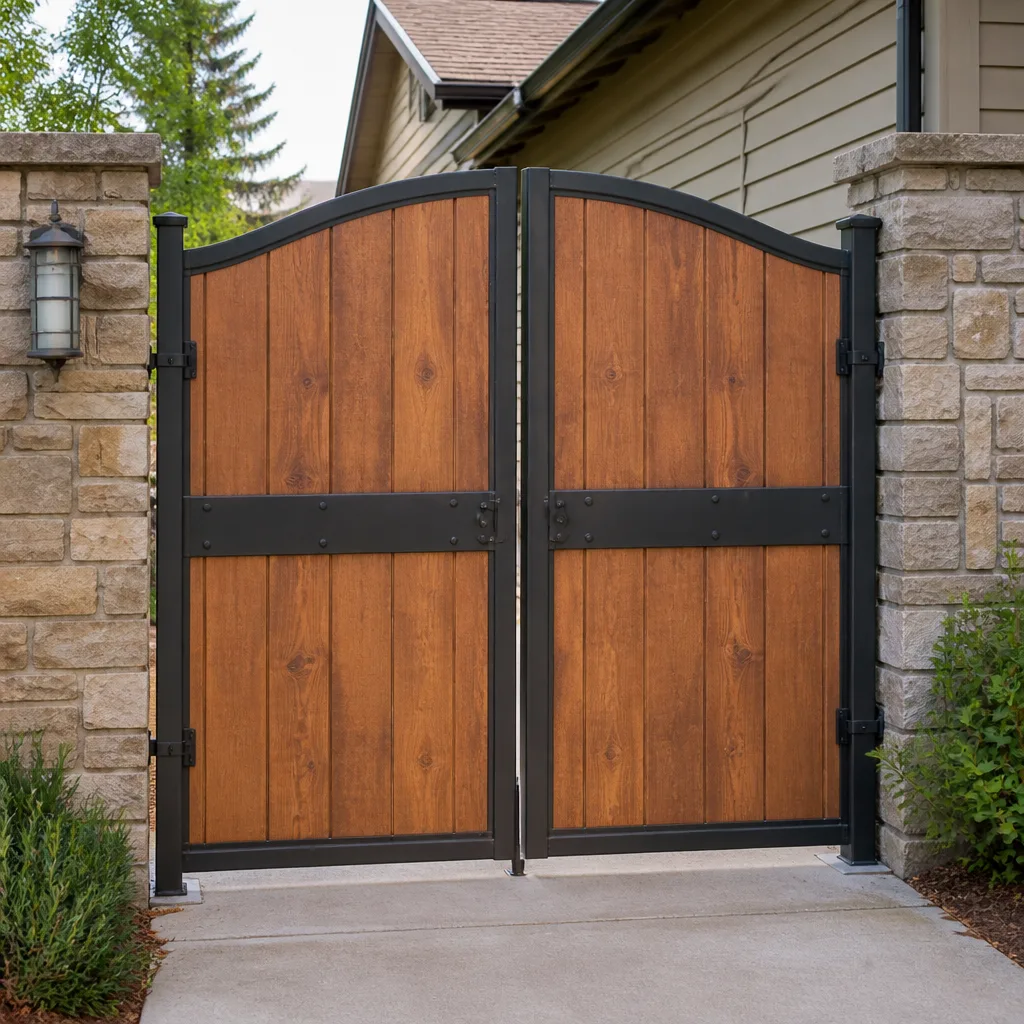 Wood & steel frame
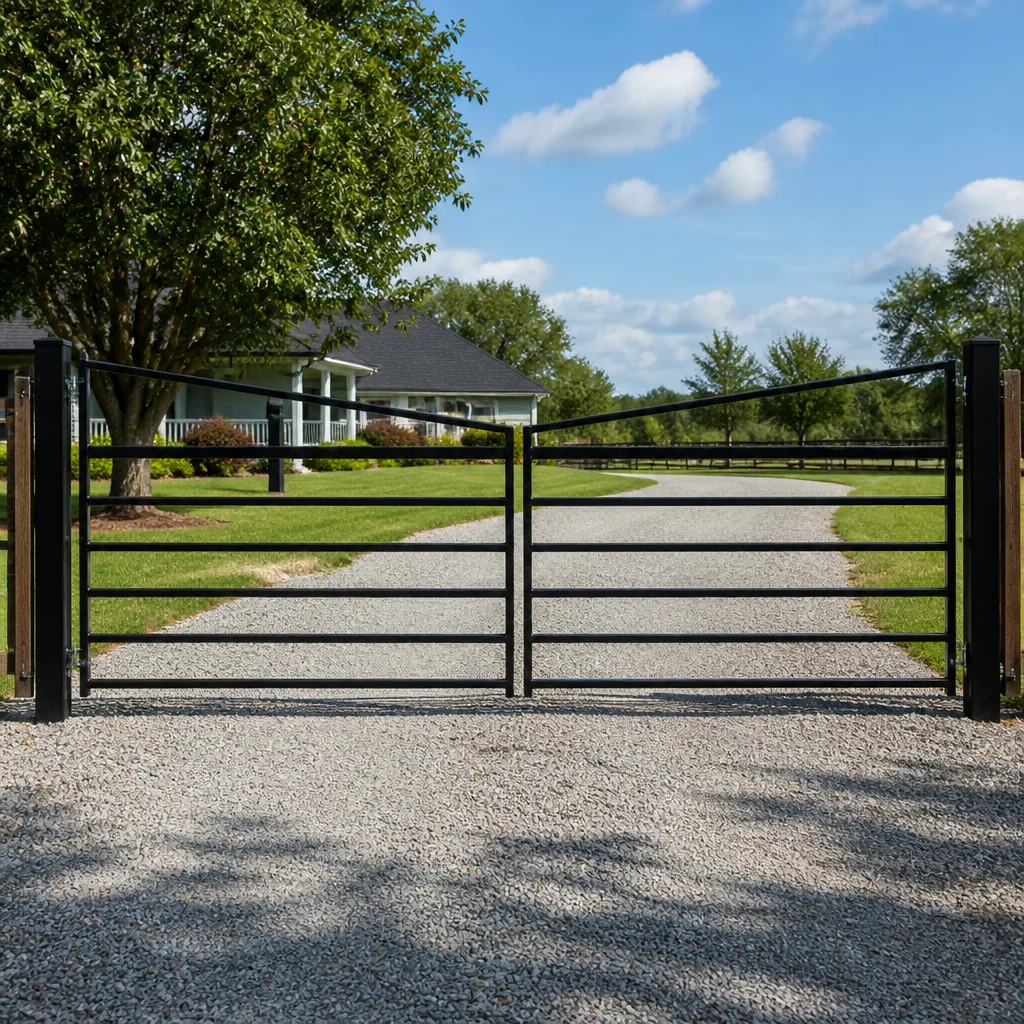 Farm & ranch
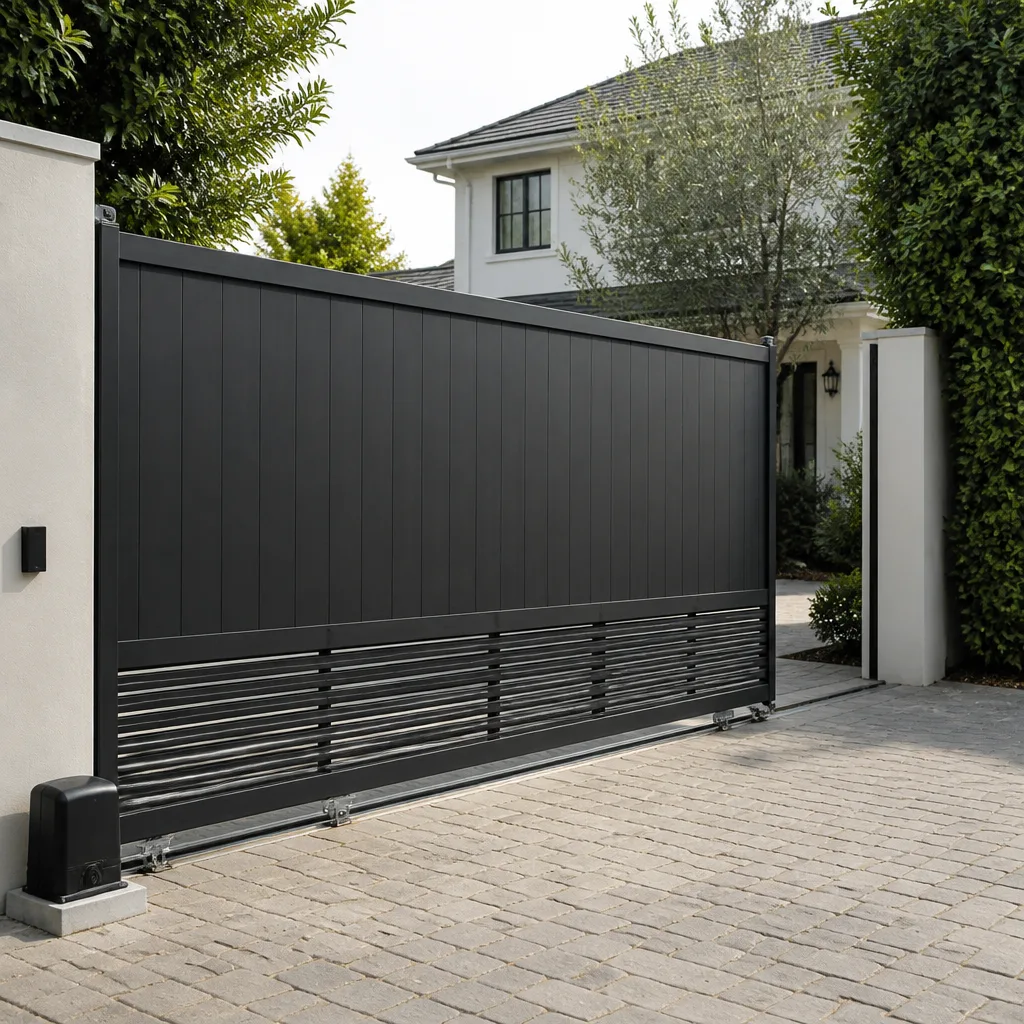 Sliding driveway gates
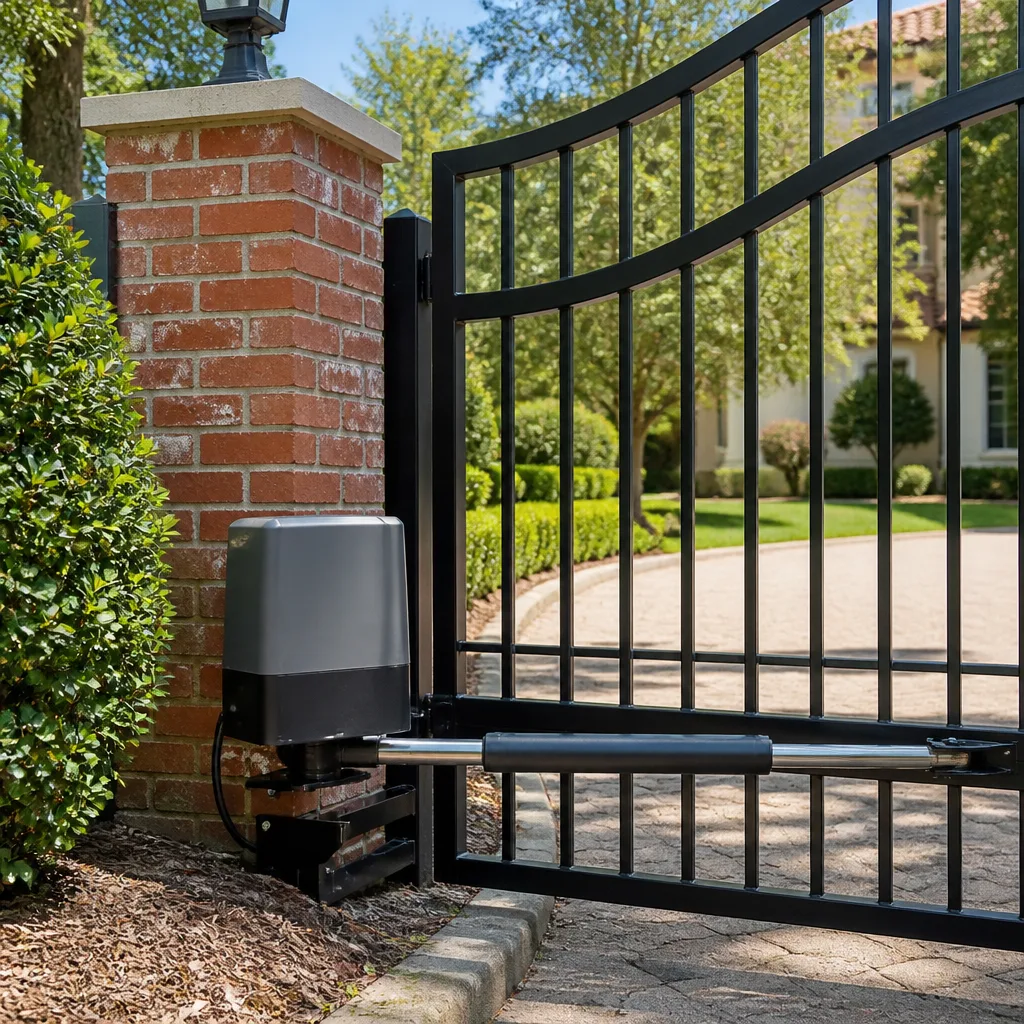 LiftMaster operators
Free on-site gate assessment - hinges, posts, and your LiftMaster or Nice gate operator checked before anything is quoted
The assessment is free and the quote is the invoice.
Get your free estimateThe Complete Guide to Gate Repair in Vallejo
A gate that needed one hinge replaced last spring shouldn’t need a new opener motor this fall. But it often does, because the hinge was swapped without anyone checking why it failed in the first place. Most gate failures in Vallejo follow a pattern, and it’s rarely the pattern the homeowner expects. The part that breaks is usually the last link in a chain that started somewhere else: a post that moved a quarter inch, a mounting bracket that let water sit against bare steel, a control board that was paired with the wrong operator. This guide maps each common failure back to its actual cause, so you can walk into any conversation with a technician knowing what questions to ask, what to expect, and what a real diagnostic looks like before a single part is ordered.
Quick Answer
Gate repair in Vallejo usually means fixing one of three things: a mechanical problem (hinges, rollers, tracks, latches), an electrical problem (the operator motor, control board, safety devices or access hardware), or a structural problem (a post or foundation that has shifted). The fix depends entirely on which one you’re dealing with, which is why a proper diagnosis on site comes before any parts are ordered. Our technicians have experience working on gates, and the first thing they do is figure out which of those three categories is actually causing the symptom.
Styles & brands we work with
- Wrought iron
- Wood & steel frame
- Farm & ranch
- Sliding driveway gates
- LiftMaster operators
Table of Contents
- Why Gates Fail in Vallejo: The Three Root Causes Most Repairs Miss
- How the Bay Climate Affects Metal Gates Here
- Broken vs. Out of Adjustment: Why the Fix Is Completely Different
- Gate Types and What Each One Is Prone to Failing
- Electric Gate Systems: What Actually Goes Wrong
- Why Mixing Brands Shortens the Life of Every Component
- Red Flags That a Previous Repair Was Done Wrong
- What a Proper Diagnostic Looks Like
Why Gates Fail in Vallejo: The Three Root Causes Most Repairs Miss
We see gates all over Vallejo, from older properties near the waterfront district to newer homes up toward the hills, and the failures cluster into three categories. Almost every gate problem we’re called to traces back to one of them. If you fix the visible symptom without addressing the underlying cause, the same failure returns, sometimes in a more expensive form.
1. Foundation and post movement. A gate hangs from posts, and posts sit in soil. Over years, soil settles, shifts and compacts, especially on sloped lots and on properties where drainage runs toward a gate line. When a post moves even slightly, the gate geometry changes. Hinges carry load they weren’t designed for. Rollers bind. An automated gate starts straining because the operator is now fighting a gate that’s out of square. Homeowners notice the gate dragging and assume the hinges are worn. The hinges may be fine. The post is the problem.
2. Corrosion on ferrous metal. Vallejo sits close enough to the Bay that moisture in the air behaves differently than it does twenty miles inland. We’ll get into the specifics in the next section.
3. Mismatched components from previous repairs. A replacement motor, a substitute hinge, a control board from a different lineage than the operator. Each part might work. Together, they wear each other out faster.
Ask three questions about any failing gate: did the post move, is there corrosion at the joints, and were the components matched? Those answers determine whether a repair holds or comes back.
How the Bay Climate Affects Metal Gates Here
Gates near the Bay don’t rust the way gates rust inland. Inland, corrosion tends to concentrate on horizontal surfaces where water pools and sits. Here, moisture hangs in the air for long stretches, and the corrosion pattern follows the joints, seams and fasteners rather than the flat panels.
What that means in practice:
- Hinge pins and pivots wear first. Moisture works into the small gaps where two metal parts meet and stay in contact. Those are the spots that seize.
- Welded seams fail before the surrounding steel. The weld and the parent metal cool at different rates and can behave differently under sustained moisture.
- Fasteners on mixed-metal assemblies corrode fast. When a steel bolt holds an aluminum bracket, or vice versa, moisture plus two dissimilar metals creates a corrosion cell at the contact point. The bolt can look fine from the outside while the material around it is failing.
- Bottom rails of slide gates take it hard. They sit low, close to ground moisture, and they’re the track surface the whole gate rides on.
This is one reason we inspect the joints and fasteners on every diagnostic visit, not just the part the homeowner called about. A gate that looks solid from the driveway can have a hinge plate two seasons from letting go. Any metal gate in Vallejo benefits from having its pivot points and fasteners checked before they fail, not after.
Broken vs. Out of Adjustment: Why the Fix Is Completely Different
This distinction saves homeowners real money, and it’s the one most people get wrong.
A broken gate has a failed component. A hinge pin has sheared. A roller has cracked. A control board has a dead relay. A weld has separated. Something that should be intact is not.
An out-of-adjustment gate has every component intact but the geometry is off. The gate has dropped on its hinges, so the latch no longer catches. The operator’s limit switches have drifted, so the gate stops a few inches short. The track has a slight bend that makes the gate bind near the end of its travel.
The fixes are not interchangeable:
- Diagnose which one you have. A technician should physically move the gate by hand with the operator disengaged, checking for binding, sag and play at every pivot.
- If it’s out of adjustment, adjust it. Re-hang the gate, reset the limits, realign the track. No new parts. The cost is a service visit, not a component.
- If it’s broken, replace the failed part, then check why it failed. A hinge that sheared may have sheared because the post moved. Replace the hinge without addressing the post and it shears again.
What we see too often is a homeowner told they need a new operator when the gate was simply out of adjustment, or told a gate needs re-hanging when a weld had actually cracked. Both directions are expensive mistakes, and both come from skipping the hand-move test. If your gate drags, sticks, or stops short, get it looked at before you agree to parts.
Gate Types and What Each One Is Prone to Failing
Different gate designs fail in different places. Knowing what your gate type is prone to helps you spot problems early and understand what a technician is checking.
Swing gates
The most common residential type. Swing gates hang from hinges and pivot through an arc. Their weak points are the hinges themselves, the hinge post, and the latch alignment. Gravity loads the hinges constantly, so any post movement shows up here first. On automated swing gates, the operator arm and its mounting bracket take the strain when the gate sags.
Slide gates
Slide gates roll along a track on the ground, guided by rollers. The track is the failure point. Debris collects in the channel, the gate’s weight bears on the rollers, and the bottom rail carries moisture. When a slide gate binds, the operator motor works harder and the control board sees higher current draw, so electrical faults often start as mechanical ones.
Bi-fold gates
Bi-fold gates fold in the middle as they open, which means more hinges and more moving joints per gate than any other design. Each joint is a wear point. Bi-fold gates tolerate post movement poorly because the folding geometry amplifies any misalignment, and they need their pivot points checked more often than swing gates.
Automatic gates
“Automatic” describes the operator, not the gate, and every gate type above can be automated. What automates badly is a gate whose mechanical problems get blamed on the operator. If the gate binds, the operator strains. If the safety devices are misaligned, the gate reverses unpredictably. Fix the gate first, then judge the operator.
Whatever the type, the diagnostic principle holds: mechanical problems and electrical symptoms need to be untangled before anyone quotes a repair.
Electric Gate Systems: What Actually Goes Wrong
Electric gates act up in ways that look mysterious and usually aren’t. If your electric gate repair search started because the gate is behaving strangely, here’s what’s likely underneath it. The main systems are the operator (the motor and gearbox), the control board (the logic that runs the gate), the safety devices (loops, photo eyes, and edge sensors), and the access hardware (remotes, keypads, entry systems). Each fails in its own way.
- Operator motor and gearbox: wear shows up as slow movement, grinding, or a gate that moves partway and stops. Often the operator is fine and the gate is binding.
- Control board: the most misdiagnosed component on any electric gate. A board that’s replaced when the real fault is a corroded wire connection will fail again, because the fault was never the board.
- Safety loops and photo eyes: when these misalign or fail, the gate reverses, stops mid-travel, or refuses to close. A gate that reverses for no apparent reason is usually reporting a safety device fault, not a logic failure.
- Access hardware: remotes that stopped working, keypads that reject codes, entry systems that lost communication. These are often the simplest fixes on the list.
The brands we work with include LiftMaster and DoorKing, along with FAAC, BFT, Linear, Viking, Ghost Controls, Elite and Mighty Mule. We work on the brand you already have, which matters most with electric gates, because a technician who only knows one line of operators will guess at the rest. Electrical work at the operator and power supply is genuinely dangerous. Connections carry real current, and a control board swapped with the power live can injure the person doing it. If you’re not trained on this equipment, don’t open the housing.
Why Mixing Brands Shortens the Life of Every Component
When a gate gets repaired more than once, it accumulates parts. A hinge from one source, a roller from another, an operator and control board that came as a pair, a replacement board from a different generation. Each part may be fine on its own. The problem is how they interact.
Gate systems are designed as units. An operator’s force profile assumes a gate of a certain weight rolling on a certain track. A control board’s logic assumes an operator with specific electrical characteristics. When you substitute a component from a different lineage, you change the system’s assumptions. The consequences show up in predictable ways:
- Premature motor wear. A control board that doesn’t match the operator can send current the motor wasn’t designed for.
- Erratic behavior. Safety devices from one system wired into another’s board can trigger false faults, so the gate reverses or stops at random.
- Shortened hinge and roller life. Mismatched hardware changes how load distributes through the gate, and the weakest joint absorbs the difference.
- Harder future repairs. Every mismatched part makes the next diagnosis slower, because the technician can’t assume the system behaves the way its documentation says.
This doesn’t mean every part must come from one manufacturer. It means the components need to be compatible, and a technician should be able to explain why the part they’re recommending fits the system you have. If nobody can tell you why, that’s a reason to ask more questions before agreeing to the work. It’s also why we recommend a diagnostic before ordering anything: knowing the full system prevents the next mismatched part.
Red Flags That a Previous Repair Was Done Wrong
Plenty of gates we’re called to were worked on before, and some of those repairs created the current problem. Here’s what we look for, and what you can check yourself.
- Fresh hardware on worn mounts. A new hinge bolted to an original hinge plate that’s bent or corroded. The hinge will last weeks, not years.
- Parts that don’t match the system. A board, motor, or safety device from a different brand or generation than the rest of the gate. If you have the previous invoice, compare the part to the equipment.
- A repair that didn’t address the post. If the gate was re-hung or had hinges replaced but nobody checked whether the post had moved, the same failure is already on its way back.
- No adjustment after installation. A replacement operator installed without resetting the limits or travel will strain immediately. A gate that stops hard or reverses at the end of travel is showing this.
- Sealed-over corrosion. Paint or coating applied over rust without removing the rust first traps the corrosion and accelerates it underneath.
- Safety devices disconnected. This is the one to check first. If your photo eyes or safety edges are wired out or bypassed, the gate can crush or trap, and no repair should ever leave them that way.
- A gate that was never quite right afterward. Small issues after a repair (a slight drag, a latch that needs a nudge) are signs the work wasn’t finished or adjusted properly.
What a Proper Diagnostic Looks Like
A real diagnostic happens before any part is ordered. It follows a sequence, and any technician who jumps straight to a quote without doing this is guessing.
- Walk the gate. Check the posts and the foundation first. Look for movement, cracks at the base, and whether the gate hangs square.
- Check the joints and hardware. Hinge pins, pivot points, rollers and fasteners. Note corrosion at the contact points.
- Move the gate by hand. Disengage the operator and move the gate through its full travel. Any binding, sag or play tells you where the mechanical load is.
- Test the electrical system. Operator, control board, safety devices and access hardware, in that order. Confirm each works before judging it faulty.
- Trace the symptom to a root cause. A gate that reverses is a safety-device fault, a board fault, or a mechanical bind that’s tripping current limits. Diagnose before replacing.
- Explain the fix before quoting. You should know what’s wrong, why it’s wrong, and why the recommended fix addresses the cause and not just the symptom.
This is exactly how we approach a gate repair call in Vallejo, whether it’s a single stiff hinge or a fully automated entry system that’s gone dark. One call covers the full repair, from worn hinges to failed control boards, so you’re not relaying a diagnosis to a second company.
Common Mistakes to Avoid
- Replacing parts without diagnosing the cause. The most expensive mistake on this list. A new operator installed on a binding gate will fail, and the money spent on it is gone.
- Assuming a dragging gate needs new hinges. Check the post first. If the gate has dropped because the post moved, new hinges will just wear out faster.
- Ignoring small changes. A stuck gate gets attention. A latch that needs a nudge doesn’t, so it stays until it’s a bigger repair.
- Letting a handyman “have a look.” Mechanical gate work is one thing, but opening the operator housing or touching wiring without training is where things get dangerous. Gate specialists, not generalists, for anything involving power.
- Mixing brands without checking compatibility. Working on the brand you already have doesn’t mean dropping in whatever part is on hand.
- Painting over rust. Corrosion has to be removed, not covered. Otherwise it stays under the coating and keeps eating the metal.
- Disconnecting a safety edge or photo eye to “fix” a reversing gate. Never. Those devices exist to stop the gate from crushing someone, and a gate with them bypassed is a hazard.
One more: be careful with any gate that’s clearly failing mechanically. A heavy gate panel that’s come off its track or lost a hinge can fall, and a slide gate that’s jumped the track can swing or tip. Keep people clear and keep children and pets away until a technician has looked at it.
See the difference
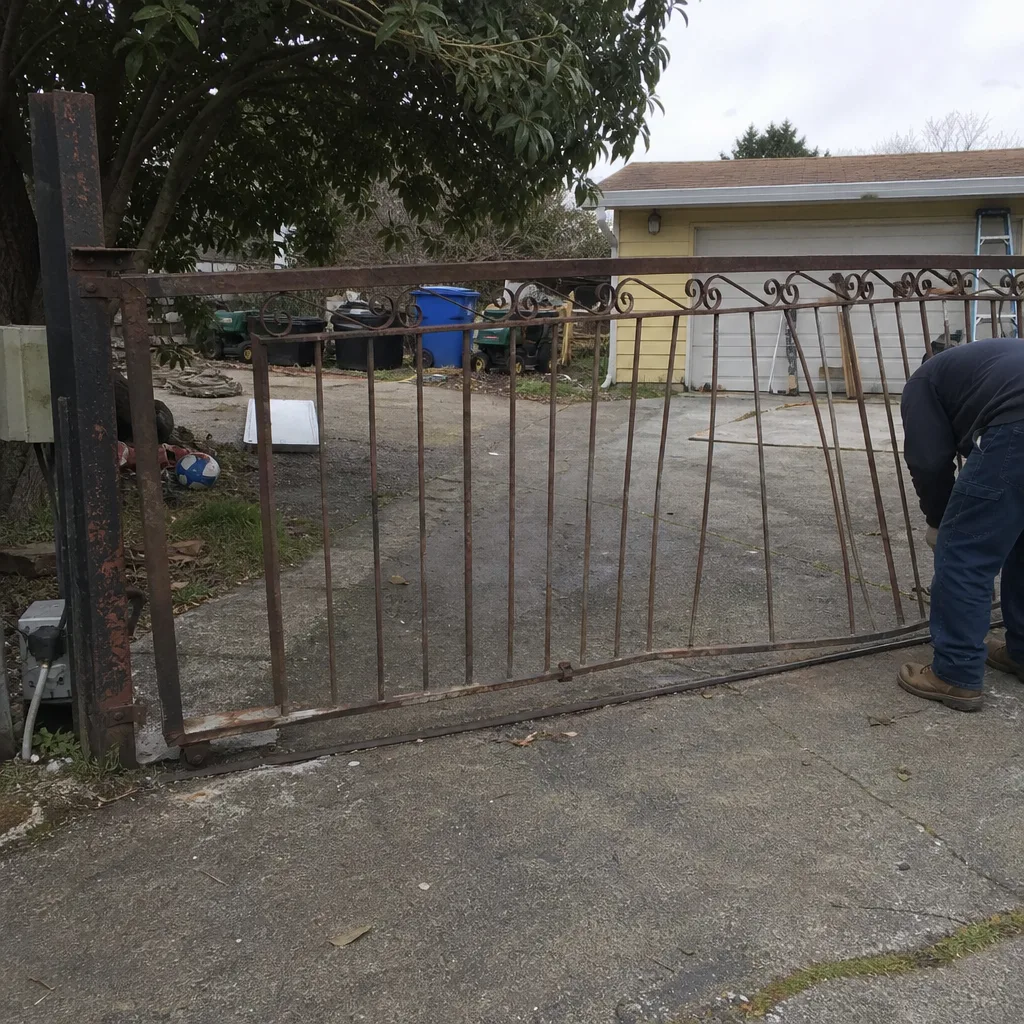 Before
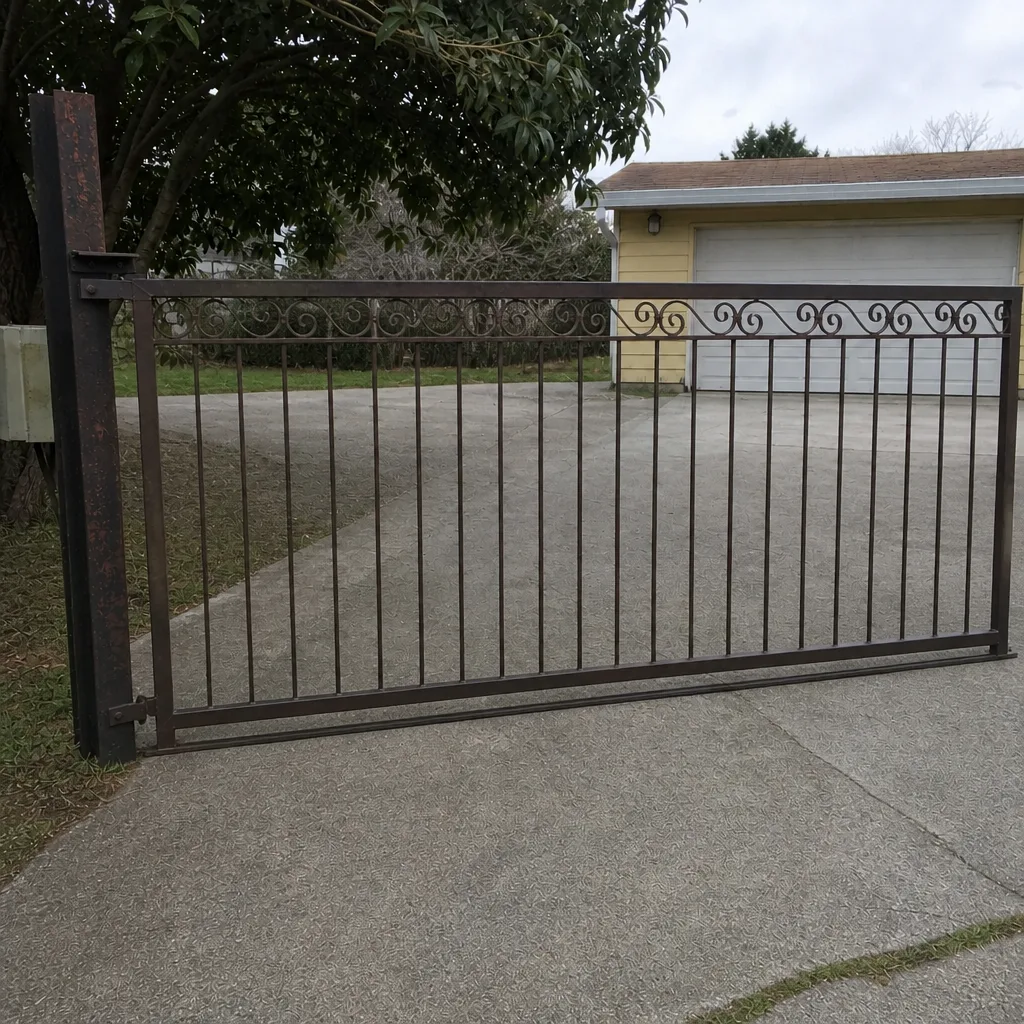 After
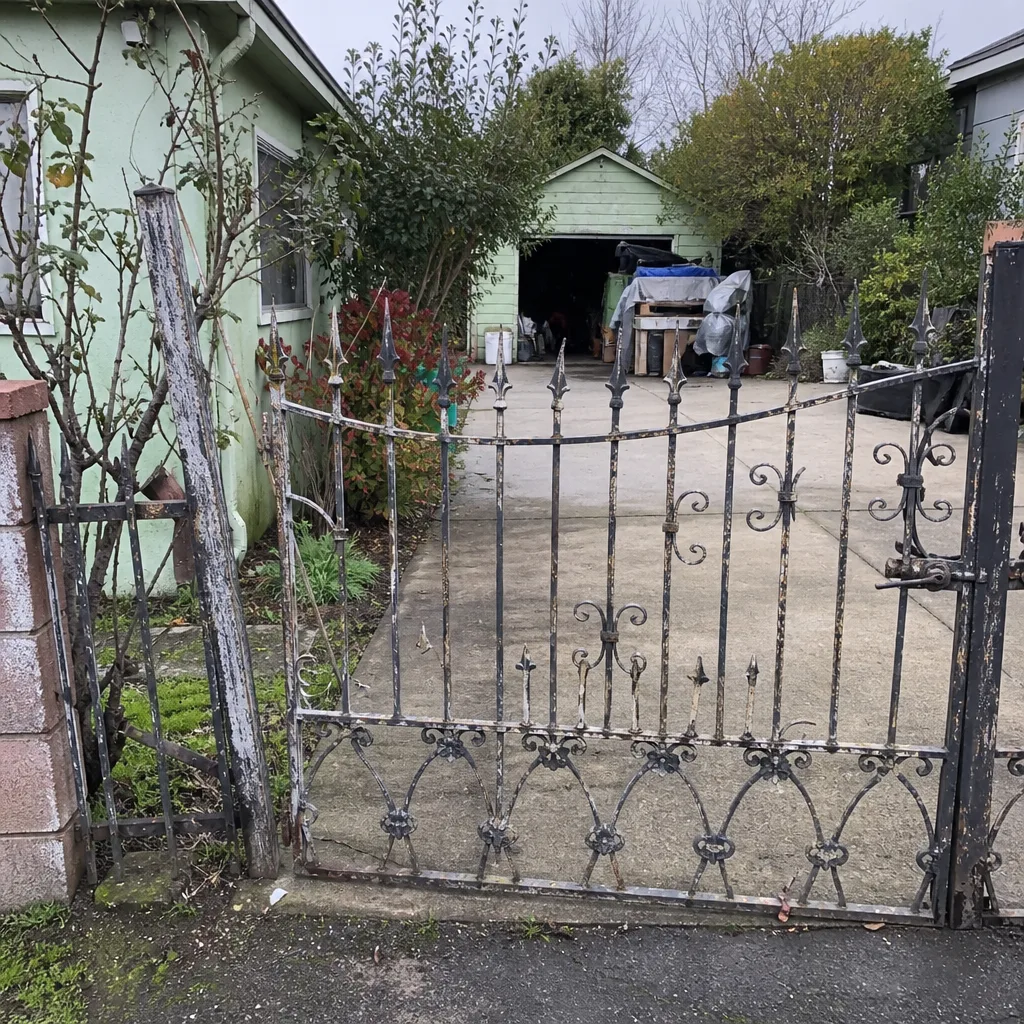 Before
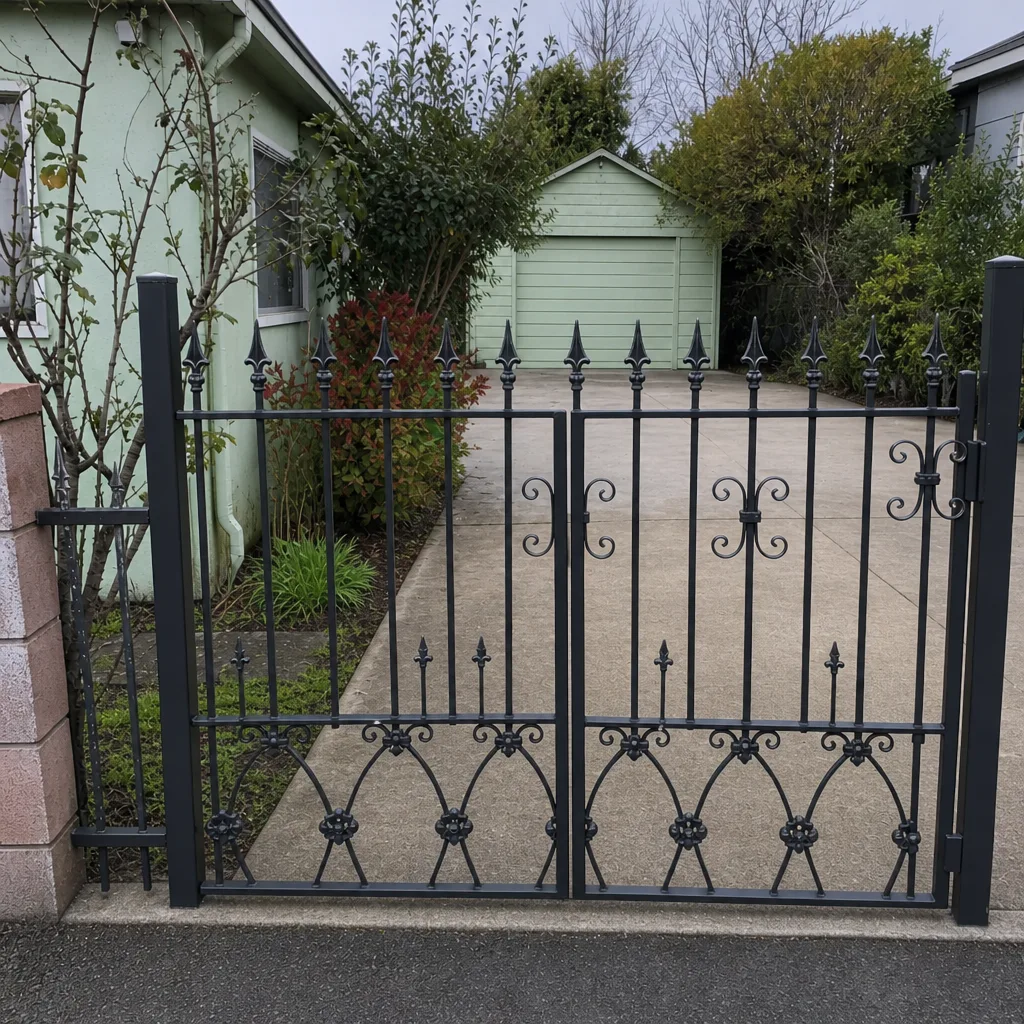 After
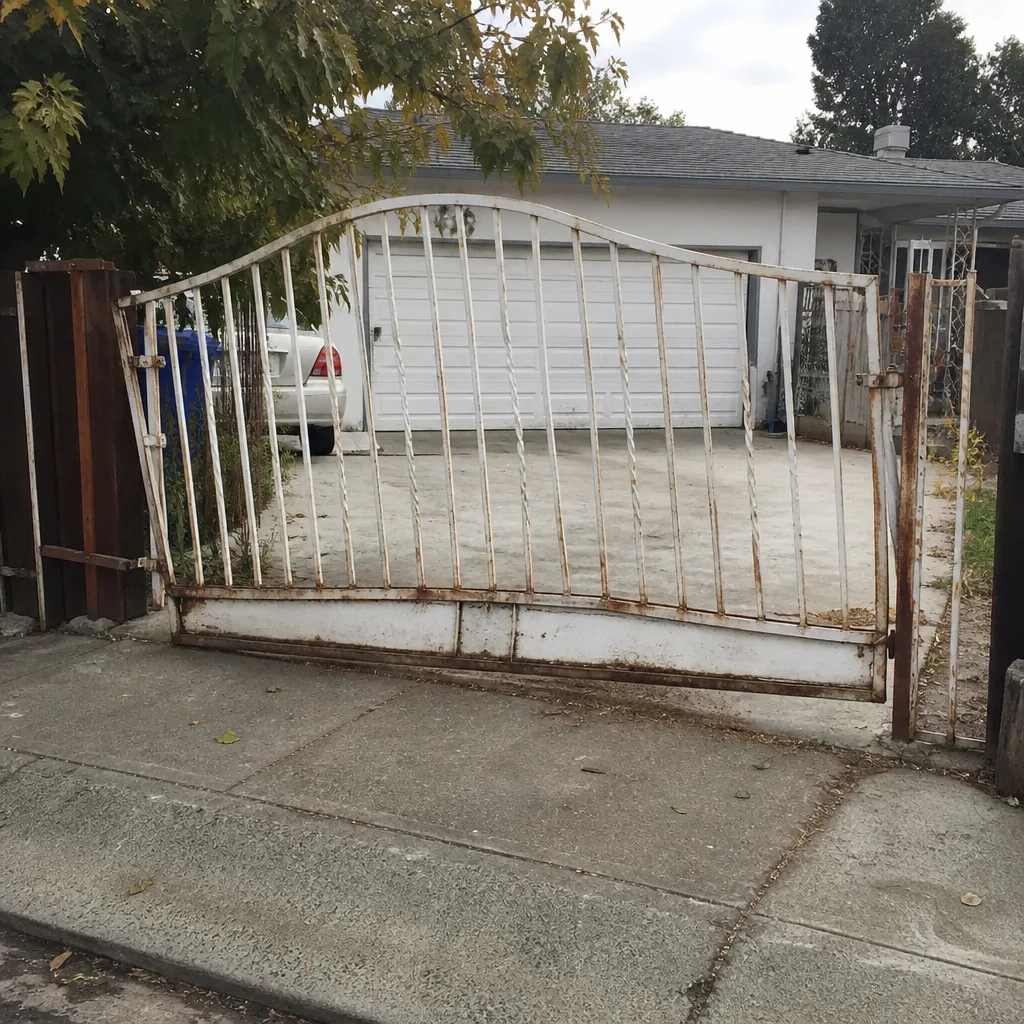 Before
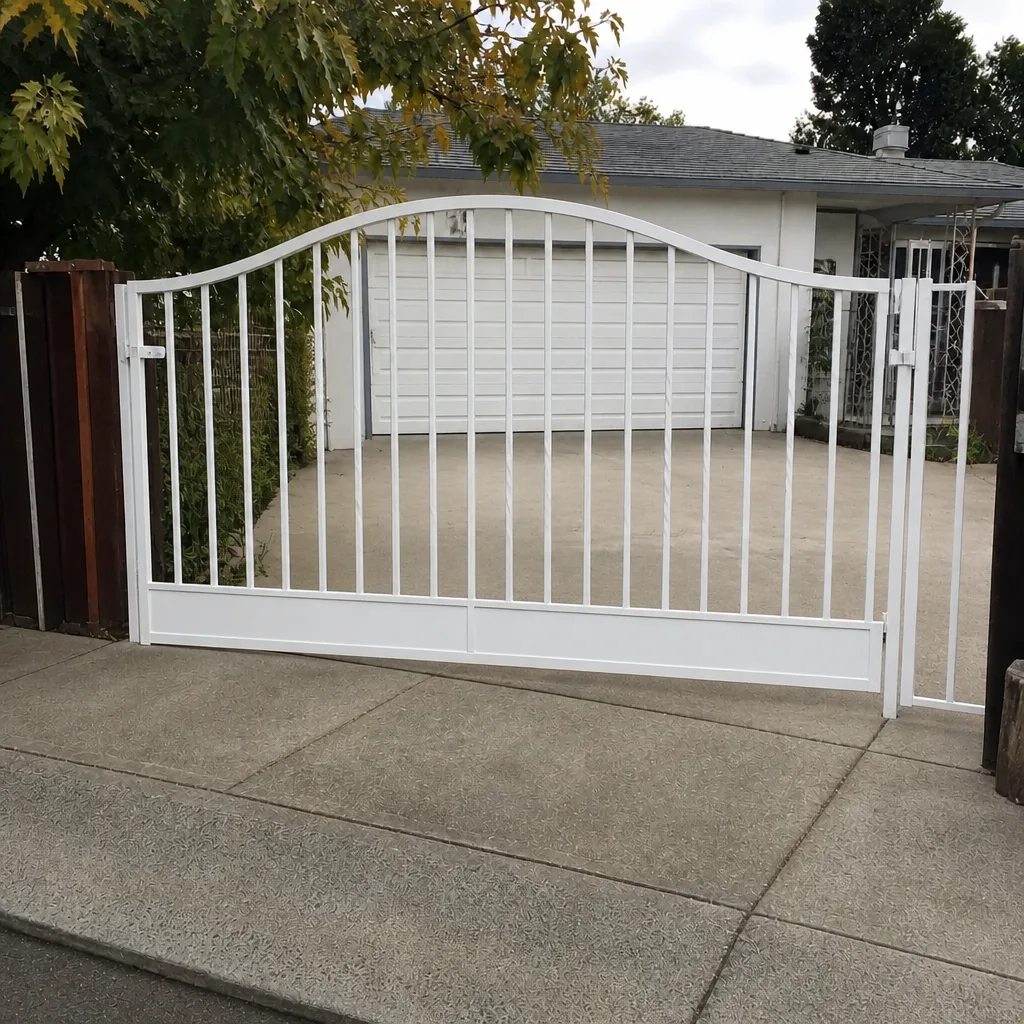 After
When to Call a Professional
Some gate issues are worth watching. Others need a professional on site before anyone uses the gate again.
Call us if a gate is sagging, dragging, or hard to move by hand. Call if an automated gate reverses for no reason, stops mid-travel, or won’t close. Call if a gate panel has come loose, if a hinge or bracket has visibly failed, or if a slide gate has jumped its track. Call if a post is cracked or leaning, or if you can see corrosion eating into a joint. And call before agreeing to a large parts replacement: a second opinion on a diagnostic costs nothing compared to a motor you didn’t need.
Gate Repair Vallejo offers free estimates in Vallejo: call (877) 315-2991. We answer 24/7. Fast dispatch from 7am to 7pm, Sunday through Friday, closed Saturday. Same-day service is often possible for repair calls.
Frequently Asked Questions
We don’t publish fixed prices because the range depends entirely on the cause: a hinge or adjustment is a small job, while a failed operator or control board is a larger one. The way it works with us is simple. We diagnose the gate on site, explain what’s wrong and why, and give you a written estimate before any work starts. The price is set per job by that written estimate, and you agree to it before we begin. Nothing gets ordered or replaced without your approval. Call (877) 315-2991 for an exact quote; estimates are free.
Yes. Electric gate repair is one of our three core services, covering the operator, control board, safety loops, and remote and access systems. A gate that reverses, stops partway, or won’t respond usually has a traceable fault in one of those systems, and we diagnose it before recommending a part. We work on the brand you already have, including LiftMaster, DoorKing and other major operators. Call (877) 315-2991; estimates are free.
A broken gate has a failed component, while an out-of-adjustment gate has every part intact but the geometry is off. The fix is completely different. Adjustment means re-hanging, resetting limits or realigning a track with no new parts. A broken part needs replacing, plus a check of why it failed. Call (877) 315-2991 and we’ll tell you which one you’re dealing with; estimates are free.
Moisture in the Bay air stays in contact with the metal longer than it does inland, so corrosion works into joints, seams and fasteners rather than pooling on flat surfaces. Hinge pins, welds and mixed-metal fasteners tend to go first. Keeping those contact points checked and treated prevents most of it. If you’re seeing corrosion at a joint, call (877) 315-2991 for a look; estimates are free.
Yes. We’re independent and work on the brand you already have, whether it’s a current system or a legacy operator. That includes gates that were installed by someone else and repaired by someone else. We diagnose the system as it actually is. If a previous repair left mismatched parts, we’ll explain what’s incompatible and what to do about it before any work begins. Call (877) 315-2991; estimates are free.
Same-day service is often possible for repair calls, and we dispatch Sunday through Friday, 7am to 7pm, closed Saturday. We answer 24/7, and a call outside dispatch hours is booked into the next opening. New gate installation is different: that work is measured, ordered and scheduled, so it gets a free on-site measure and a written price rather than a same-day promise. Call (877) 315-2991 to book.
The Bottom Line
Gate problems in Vallejo come down to three root causes: post and foundation movement, corrosion at the joints, and mismatched parts from previous repairs. Fix the symptom without fixing the cause, and it comes back. The tests that separate a real repair from a temporary one are simple: check the post before the hinges, hand-move the gate with the operator disengaged, and match components to the system that’s actually installed. When the work involves electricity, wiring or heavy panels, a trained professional does it. That approach keeps gates working and eliminates the callback.
If your gate is sagging, reversing, sticking or simply not acting right, get it looked at. Call Gate Repair Vallejo at (877) 315-2991 for a free estimate. We answer 24/7. Fast dispatch from 7am to 7pm, Sunday through Friday, closed Saturday. Our technicians have experience, and we handle everything from a stiff hinge to a failed control board. One call covers the full repair. Find out more on our Gate Repair Vallejo page, and call us today to set up a diagnostic or a free estimate.
Written by the team at Gate Repair Vallejo.