
Last updated November 15, 2026
 Wrought iron
 Wood & steel frame
 Farm & ranch
 Sliding driveway gates
 LiftMaster operators
Free on-site gate assessment - hinges, posts, and your LiftMaster or Nice gate operator checked before anything is quoted
The assessment is free and the quote is the invoice.
Get your free estimateSeasonal Gate Repair Care for Vallejo: Year-Round Homeowner’s Guide
Most gate advice you’ll find online was written for places with real winters. Vallejo doesn’t have those. What Vallejo has is a slow, quiet version of the same stress: a wet season that moves soil under gate posts, a dry season that pulls wood and seals out of shape, and a fog-heavy autumn that works on exposed hardware month after month. The failure isn’t dramatic. It’s cumulative. This guide walks through a full year of gate care in Vallejo, month by month, so you can catch the small shifts before they turn into a repair call.
Quick Answer
Seasonal gate care in Vallejo revolves around three predictable cycles: wet-season soil movement that shifts posts and misaligns latches, dry-season warping of wood and composite gates, and autumn fog that speeds wear on exposed hinges, tracks, and operator housings. Checking and tightening hardware before the rains, lubricating moving parts before summer, and clearing operator ventilation before fall prevents most of the failures we see on automated gates in Vallejo.
Styles & brands we work with
- Wrought iron
- Wood & steel frame
- Farm & ranch
- Sliding driveway gates
- LiftMaster operators
Table of Contents
- Why Vallejo’s Mild Seasons Still Stress Your Gate
- Month-by-Month: Which Gate Parts Are Under Stress in Vallejo
- What to Inspect and Tighten Before the Rainy Season
- Summer Care for Wood and Composite Gates
- Winterizing a Solar-Powered Gate Controller
- The Two-Week Post-Storm Checklist
- Electric Gate Care Through the Year
- When Seasonal Care Isn’t Enough
Why Vallejo’s Mild Seasons Still Stress Your Gate
Vallejo sits in a part of the Bay Area where the temperature rarely swings hard, and that’s exactly what lulls homeowners into skipping maintenance. The problem isn’t temperature. It’s moisture cycling and soil movement, and both are active here in ways that surprise people.
Older Vallejo neighborhoods, particularly the ones on sloped streets and the ones with mature street trees, sit on soil that expands and contracts with the wet-dry cycle. A gate post that was perfectly level in August can lean a quarter inch by February. Multiply that by two posts and you get a gate that drags, a latch that won’t catch, and an operator that has to work harder every cycle. None of that is dramatic. All of it is fixable if you catch it early, and all of it is expensive if you don’t.
Then there’s the fog. Fall in Vallejo means moisture hanging in the air for hours at a time, coating hinges, tracks, chain, and operator housings. On a manual gate that just means a stiff hinge. On an automated gate it means rust working into places it shouldn’t, and it means dust and grit turning into a paste that blocks ventilation on the operator motor. That’s why October is one of the most common months for opener failures in coastal Northern California. Not cold. Not rain, yet. Just the first wet mornings arriving on top of a summer’s worth of accumulated dust.
None of this is hard to prevent once you know what you’re watching for. That’s what the rest of this guide is about.
Month-by-Month: Which Gate Parts Are Under Stress in Vallejo
Here’s the seasonal pattern we see most often on gates across Vallejo, organized by month so you can plan ahead rather than react.
Late Fall (October-November)
- Operator housings and ventilation: Summer dust plus first moisture creates clogs. This is when openers start stuttering.
- Hinges and latches: First wet mornings reveal stiffness that summer humidity was hiding.
- Solar controller panels: Output starts dropping as sun angles lower and days shorten.
Winter (December-February)
- Posts and footing: Peak soil saturation. Misalignment shows up here first.
- Safety loops and buried wiring: Wet ground is when intermittent faults surface.
- Chain and slide tracks: Continuous moisture increases wear.
- Solar controllers: Shortest daylight window. Charge trouble grows here.
Spring (March-May)
- Post alignment reset: Soil dries and posts settle back, but not always to where they started.
- Hinge wear: Wobbly hinges become obvious once the gate is used more.
- Operator alignment: Arms and limit switches need checking after the wet season.
Summer (June-September)
- Wood and composite panels: Drying causes warping, checking, and seal failure.
- Operator heat: Long hot afternoons and heavy cycle counts stress the motor and control board.
- Exposed metal: Sun exposure opens up finish cracks that let moisture in later.
Early Fall (September-October)
- Full inspection window: Last dry-weather chance to correct everything before the wet season.
- Dust accumulation in the operator: The single biggest cause of fall opener problems.
Print that pattern out if it helps. Even a shortened version pinned to the garage wall will put you ahead of most homeowners in Vallejo.
What to Inspect and Tighten Before the Rainy Season
The best week to inspect your gate in Vallejo is the same week you start thinking about rain gear. Once everything is wet, you’re no longer inspecting, you’re recovering. Here’s what to work through before the first sustained rain.
- Walk the full swing or slide path. Open and close the gate by hand (if it’s automated, disengage the operator first). Look for drag, rub, and hesitation. Any spot that snags now becomes a jam later.
- Check every hinge bolt and latch screw. Hand-tight is not tight enough. Use a wrench. If any bolt spins freely with light pressure, the threads are stripped and the hinge needs replacement before moisture gets into the joint.
- Look at post plumb. Set a level against each post. A quarter inch of lean now becomes an inch of lean after a wet season on shifting Vallejo soil.
- Clear the operator’s ventilation. If your opener has vents or a fan, blow them out with compressed air or a soft brush. Do this before the fall moisture arrives, not after.
- Lubricate moving parts with a moisture-resistant lubricant. Hinges, latch mechanisms, and the pivot points on operator arms. Skip the chain on a slide gate unless the manufacturer calls for it; a chain conditioner is not the same as grease.
- Inspect the buried wiring and safety loop area. If your gate has buried safety loops or wiring, look for soft spots or exposed sections in the soil around the gate path. Standing water over a failing loop is a common source of “ghost” openings in Vallejo winters.
- Test the safety edges and reverse function. Walk through a cycle with someone else’s help if the gate is automated. Any failure here is a real safety issue and needs a technician.
If any of those checks turn up something you can’t fix confidently, that’s not a failure on your part. It’s exactly the point of a pre-rain check. Our gate repair team sees more preventable winter damage in Vallejo than any other cause, and almost all of it comes from skipping this list.
Summer Care for Wood and Composite Gates
Summer is when wood and composite gates quietly go out of shape. The heat and dry air pull moisture out of the panels, and the material has to go somewhere. Panels cup. Joints open. Seals crack. None of that is visible on your walk past the gate in July, but by October you’ll notice the gate isn’t sitting square.
Stopping that comes down to moisture management and finish. Here’s the shape of a summer routine:
- Re-seal exposed end grain. The top and bottom edges of every panel take water in first. If the finish is thin there, it’s the spot that cups. A fresh coat on end grain goes a long way.
- Check for checking. Small surface cracks follow the grain on older wood gates. Catch them in June and they’re a sanding job. Catch them in October and they’re a repair.
- Look at the gate in the afternoon. Heat shows misalignment that cool mornings hide. If the gate drags at 3pm but swings freely at 8am, the frame or posts are moving with temperature and you want to know why.
- Keep expansion room. Wood gates need a small gap at the latch and at the strike. If a gate is jammed tight against the post in summer, it will bind hard once the wet season returns.
- Watch composite differently. Composite doesn’t cup the way wood does, but it does expand and contract. Loose fasteners on a composite gate are the first sign that a panel is trying to move.
If your gate is already showing warped panels or misaligned framing, that’s a repair, not a maintenance task. We’re honest about the difference. On a gate that’s drifted out of alignment, the right fix is usually a hinge and alignment correction, not a full rebuild, and we’ll tell you so after looking at it on site.
Winterizing a Solar-Powered Gate Controller
Solar-powered gate controllers are a fantastic fit for properties where running power to the gate isn’t practical. They’re also the system most likely to give you trouble in December and January, and it’s not the battery’s fault. It’s the sun angle.
When the sun drops low in winter, the panel spends more of the day in shade and less of the day at productive output. Add shorter daylight and a typical winter cloud pattern, and a system that ran fine all summer can start showing low-battery warnings by mid-December. That’s normal physics, not a failing panel. What you want to avoid is letting the low-charge condition persist for weeks, because that’s when controllers start dropping settings and operators start faulting.
Here’s the winter routine we recommend:
- Clean the panel. Dust, leaf litter, and bird droppings block more light than most people realize, and a dirty panel loses a meaningful share of its winter output. Wipe it down with water and a soft cloth at the start of the season.
- Clear any new shade. Trees grow. A branch that wasn’t a problem last winter may be shading the panel this winter. Trim it back before December.
- Check panel tilt. A panel that’s drifted out of its set angle catches less of the low winter sun. If it’s adjustable, tilt it to favor the winter sun angle as the days shorten.
- Test the battery. If your controller shows a battery status, note the reading in November and again in January. A slow decline is normal. A sudden drop means the battery is going.
- Reduce unnecessary cycle load. If you’re testing the gate every day for no reason, stop. Save the cycles for when they matter until the days get longer again.
- Have the controller checked if warnings persist. Recurring low-charge warnings after all of the above usually point to a battery or charge-controller issue that a technician should diagnose with a meter, not guess at.
We work with operators from electric gate repair systems built around LiftMaster, FAAC, and BFT controls, and while the specific winter behavior varies by brand, the underlying pattern is the same on all of them. Understand the seasonal drop, plan for it, and don’t let a low-charge condition linger into the new year.
The Two-Week Post-Storm Checklist
After a real storm rolls through Vallejo, the most useful thing you can do is wait a few days and then walk the gate deliberately. The immediate aftermath is too wet and too raw to judge much. Give the ground a little time to drain, then run through this in the two weeks after.
- Check post plumb again. Storm runoff moves soil. This is the window where a post starts leaning and you can correct it instead of waiting for a latch failure.
- Open and close by hand. Feel for new drag, rub, or binding that wasn’t there before the storm.
- Test every safety function on an automated gate. Photo-eye alignment, safety edges, and reverse function. Wet ground and shifting posts can throw an alignment off by an eighth of an inch and disable a beam.
- Look for pooled water over wiring or loop areas. If your gate has buried safety loops or low-voltage wiring, watch for any area that stays wet for days.
- Check finish on exposed metal and wood. Storms strip finish and open small cracks. You want to catch that before fog season.
- Listen to the operator. Any new noise on a cycle is telling you something. Grinding, humming, or a delay before the gate starts moving all point to specific components.
- Watch for intermittent openings or refusals. Ghost commands after a storm are one of the most common electric gate faults, and they’re almost always a wiring or control board issue.
Two weeks after the storm is the sweet spot. Too soon and you’re reading wet ground. Too late and you’re reading a repair bill.
Electric Gate Care Through the Year
Electric and automated gate care has its own seasonal rhythm, and it’s the area where homeowners most often call us out of the dark. Here are the parts of a powered gate that behave differently across the year in Vallejo.
- Operators and motors: Heavy cycle counts and hot afternoons in summer stress the motor. Cooler months are gentler, but only if ventilation is clear. Keep the housing clean before the wet season.
- Control boards: The most common seasonal failure is moisture ingress into the control enclosure. If the seal is compromised going into the wet season, a board failure in January is nearly certain.
- Safety loops: Buried loops respond to soil moisture. A loop that’s nearing end of life often shows intermittent faults first in wet weather, which is why so many “mystery” gate issues turn up in Vallejo winter.
- Safety edges: Rubber edges harden and crack in summer sun. Test them in the fall, when the cracking shows.
- Remotes and access hardware: Not seasonal in the same way, but worth testing at the same time as the rest. A failing receiver can be mistaken for a mechanical problem.
- Battery backup (if fitted): A backup battery that sat unused all year is often dead by the first winter power cut. Test it in the fall.
One thing worth saying plainly: not every electrical fault is one you should troubleshoot yourself. Gate operators use mains voltage, and the control board is not a place to poke around with a multimeter unless you know the circuit. If a gate is behaving erratically, arcing, or refusing to move entirely, that’s work for a trained technician. The same goes for anything involving the power run. If you’re unsure of your comfort level with live wiring, that’s your answer.
When Seasonal Care Isn’t Enough
Seasonal checklists catch a lot, but some failures need a trained eye and the right diagnostic tools. Call a gate technician in Vallejo when:
- A post has moved more than a small fraction of an inch, or the gate no longer sits square in the frame.
- The operator cycles on its own, refuses to move, or shows repeated fault codes.
- Any safety function – photo-eye, safety edge, reverse function – fails when you test it.
- You hear grinding or humming from the operator that wasn’t there before.
- Your solar controller shows low-charge warnings after a full cleaning and shade clearing.
- A control board has obvious moisture damage or visible burn marks.
- You’re using a gate a lot around children, pets, or anyone who might not be able to move out of its path quickly.
Gate Repair Vallejo offers free estimates in Vallejo. Our technicians have experience across the major gate and operator brands, and we work on the system you already have rather than steering you toward a new one. Whether it’s a manual gate with a worn hinge or an electric gate with a failed control board, one call covers the full repair. Call (877) 315-2991 and we’ll get you on the schedule.
See the difference
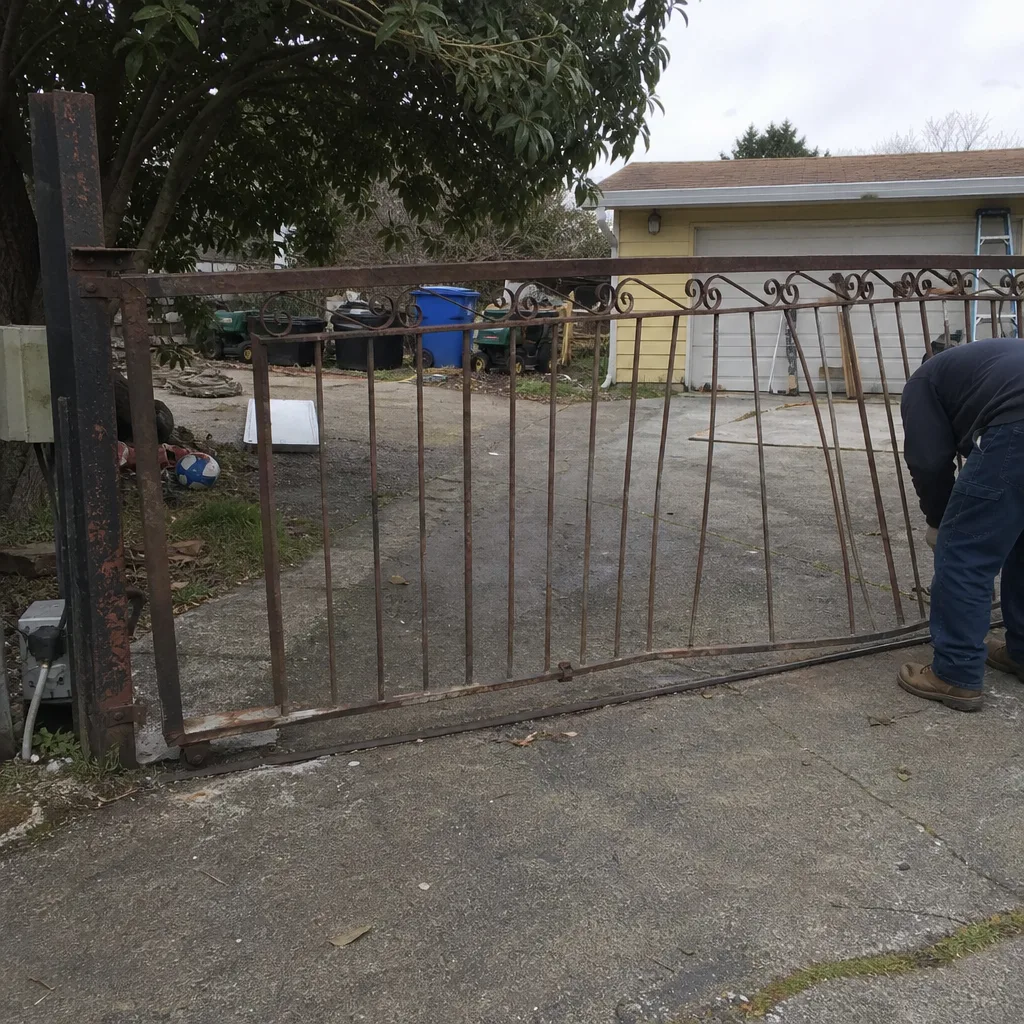 Before
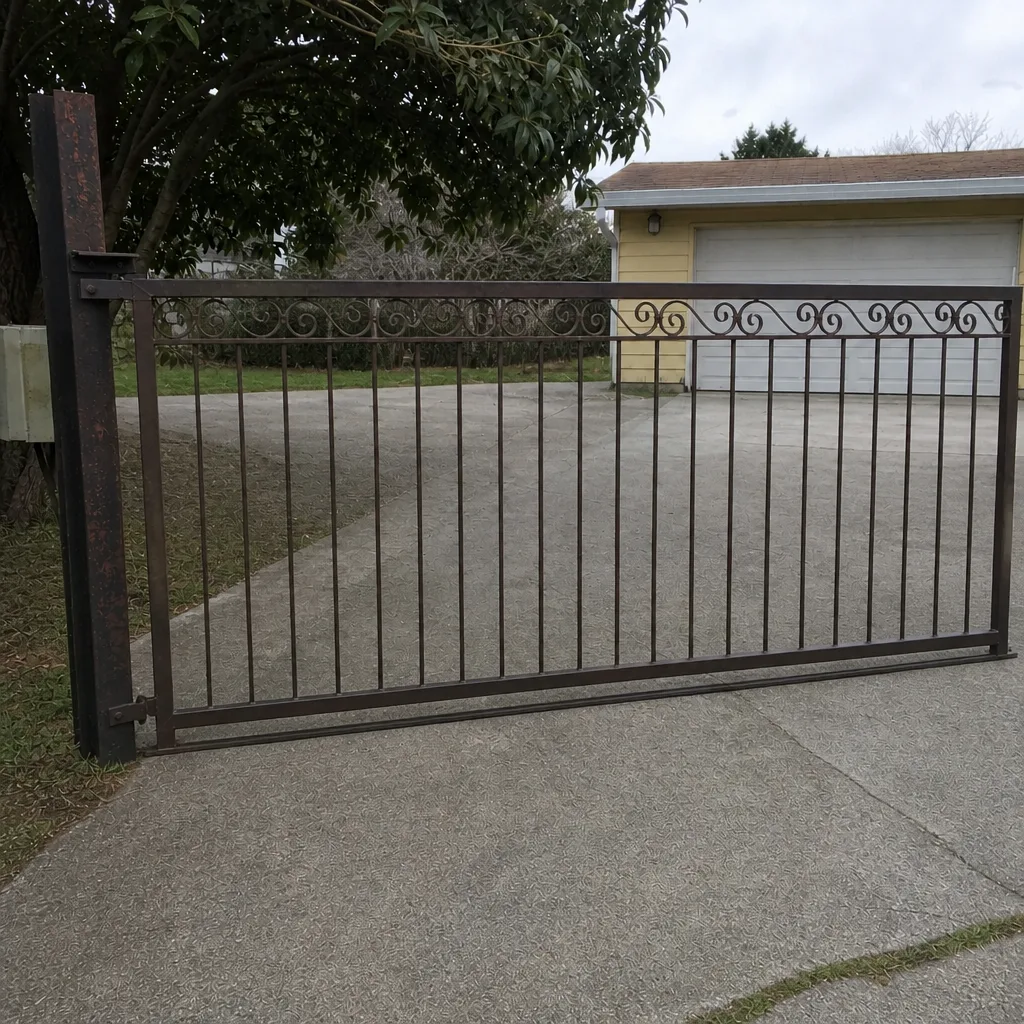 After
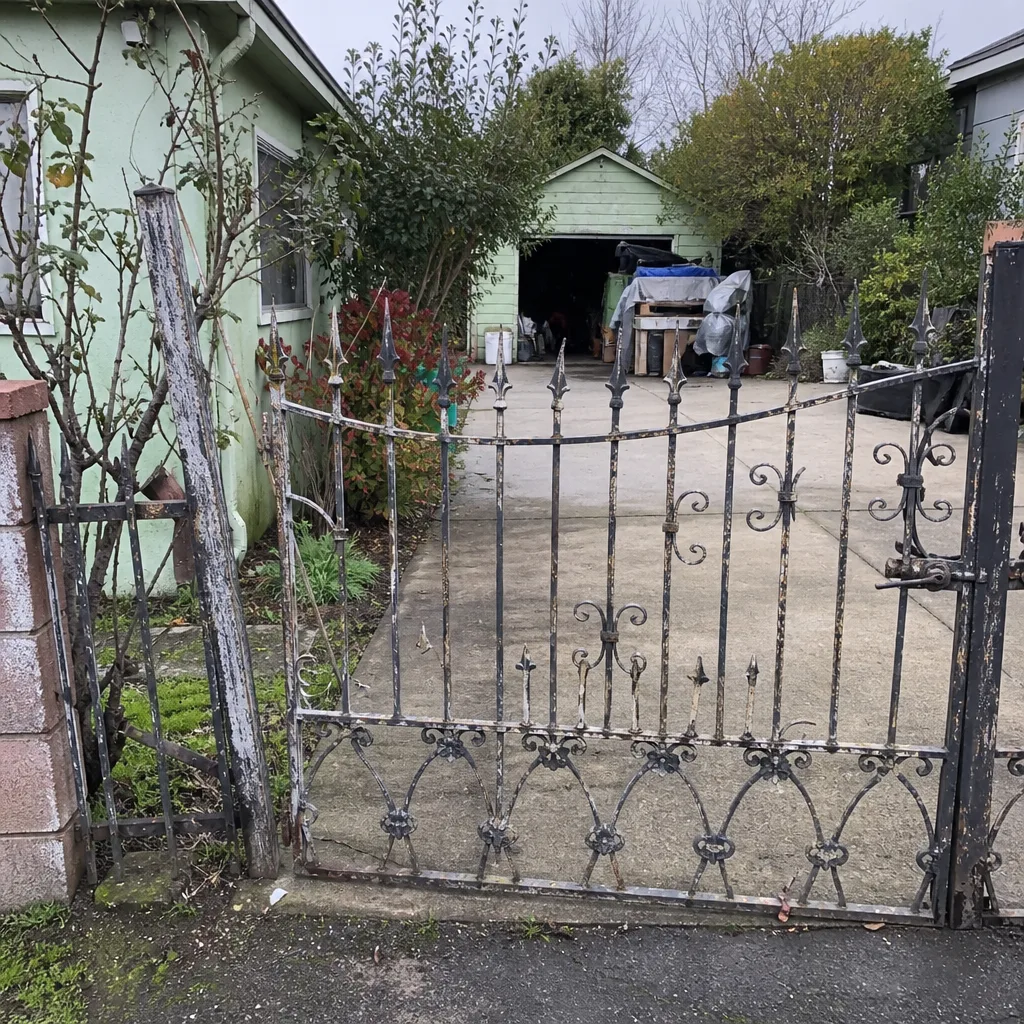 Before
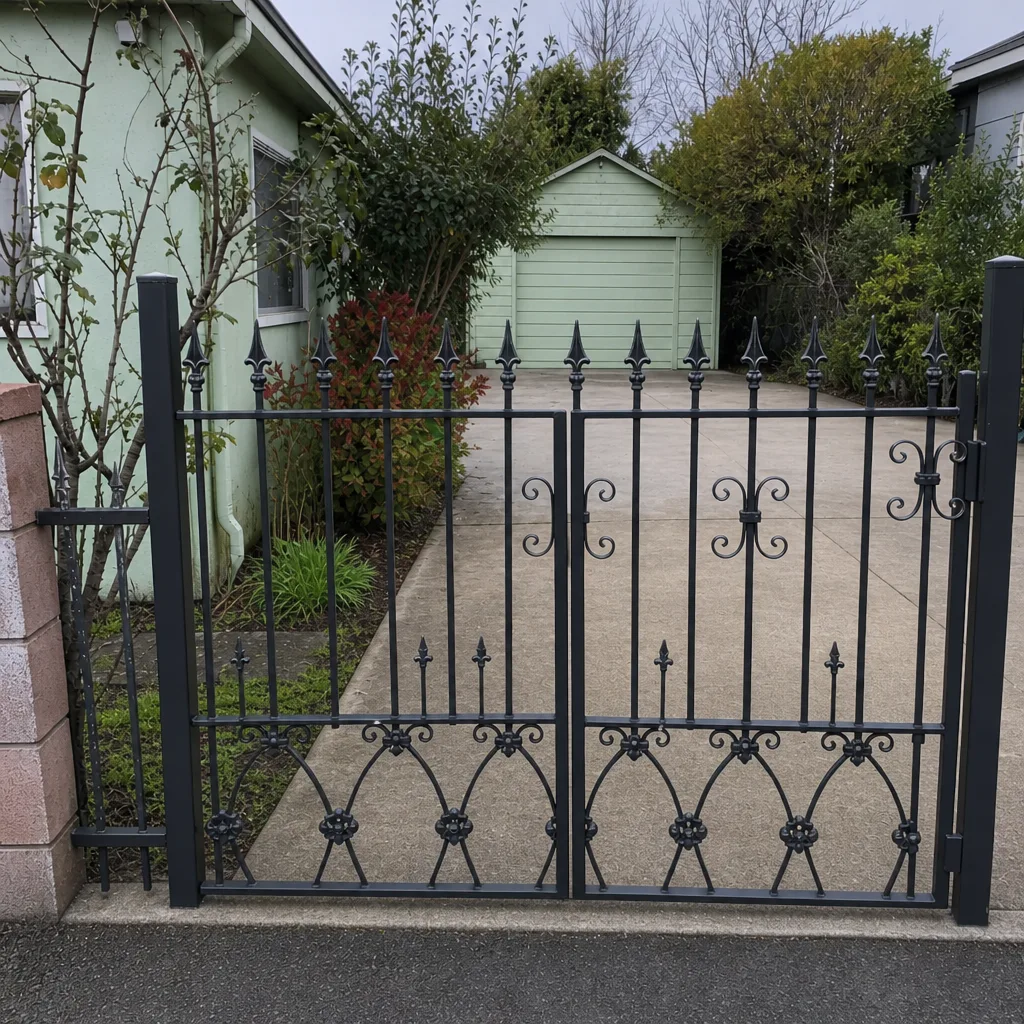 After
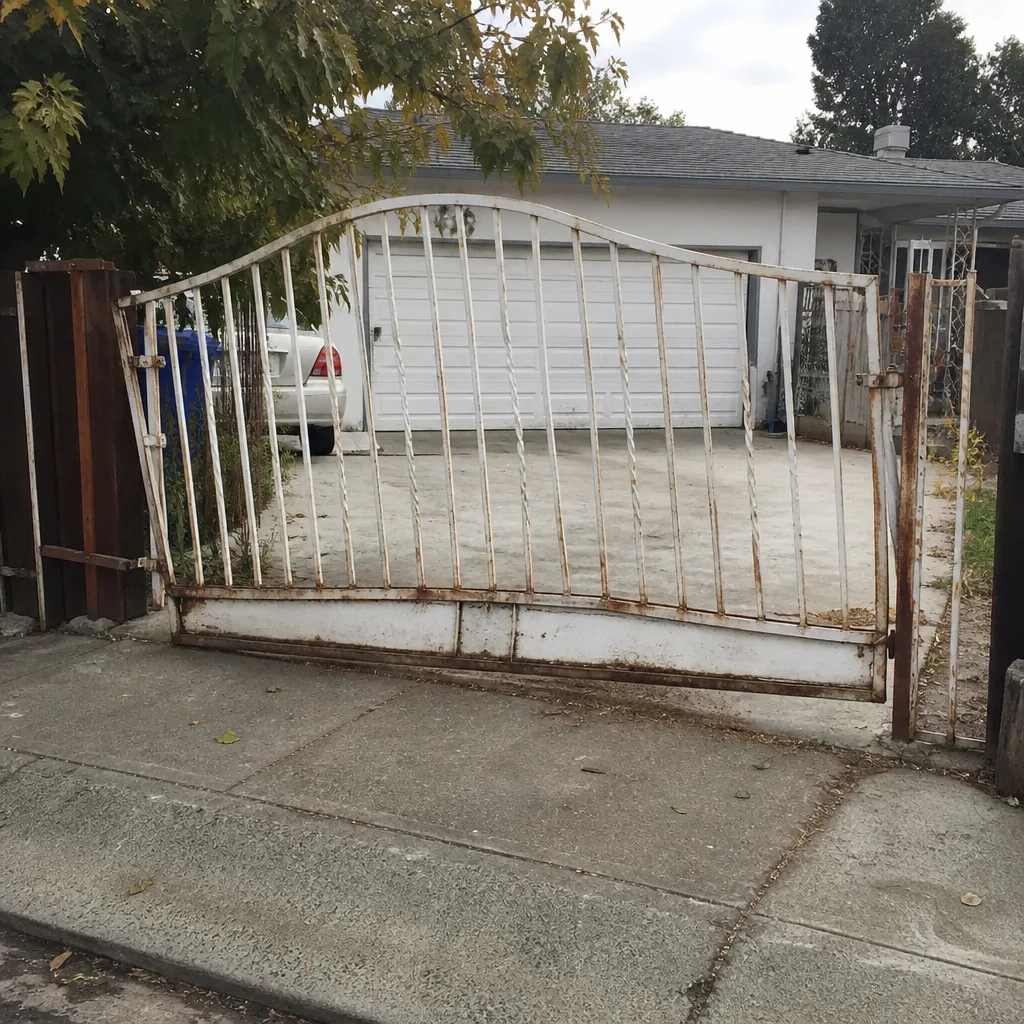 Before
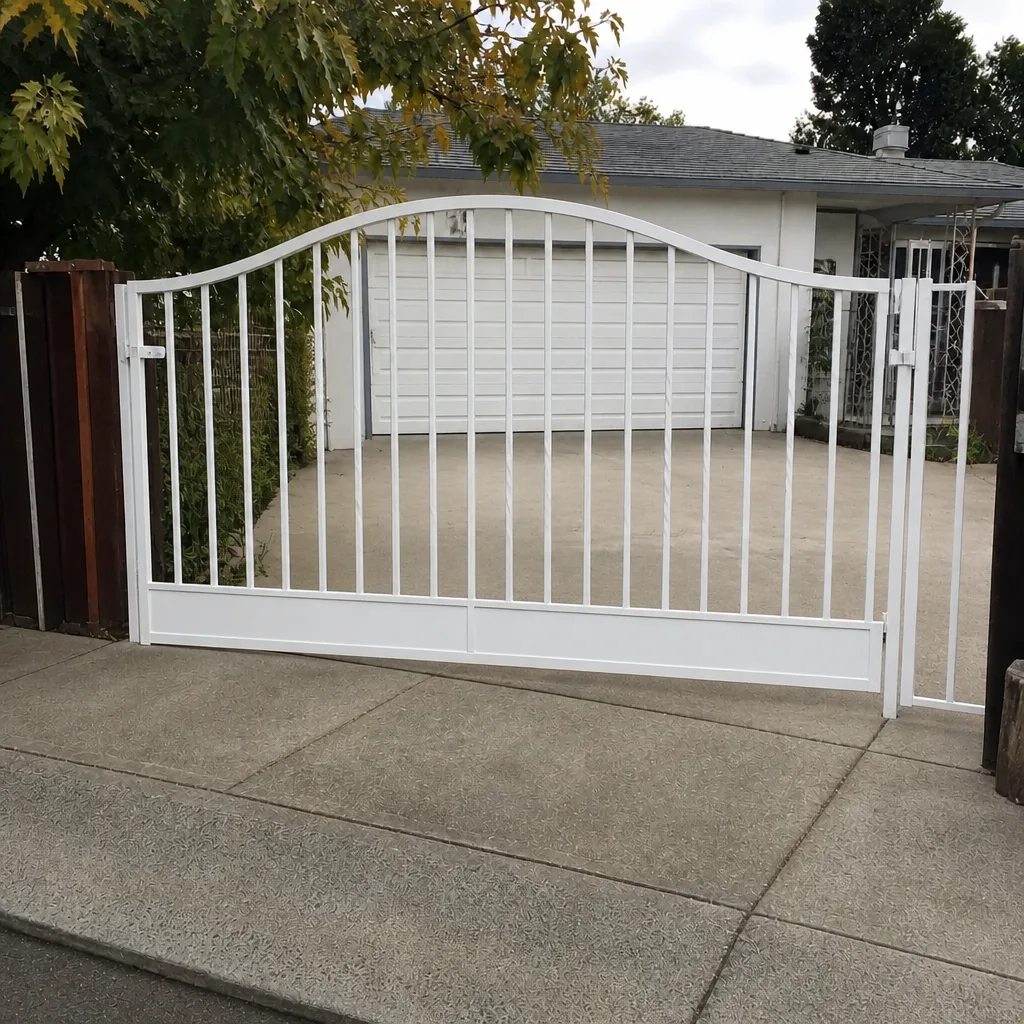 After
Common Mistakes to Avoid
- Skipping the pre-rain inspection because the summer was dry. The dry season is exactly when the damage is being set up, not when it’s being revealed. Inspect in October whether or not the gate looks fine.
- Waiting for a failure to think about seasonal care. By the time an electric gate stops opening, the underlying problem has usually been building for weeks. The point of the seasonal rhythm is to catch it before it turns into a repair call.
- Lubricating everything with whatever’s on the shelf. Grease on a slide track or the wrong lubricant on an operator arm can trap grit and make things worse. Use a moisture-resistant lubricant suited to the part.
- Assuming a leaning post will settle back on its own. On Vallejo soil it sometimes will, and it sometimes won’t. If a post has moved, have it checked rather than assuming the soil will correct it.
- Troubleshooting live low-voltage control wiring without a meter. Failing safety loops and control boards present almost identically to a homeowner with a screwdriver. Diagnose with the right tools or call a technician.
- Ignoring a low-charge warning on a solar gate through winter. Persistent warnings shorten battery life and stress the controller. Cleaning and shade trimming handle most of it. The rest needs a technician.
- Cleaning the operator with a pressure washer. Water forced into a housing is exactly what the enclosure was designed to keep out. Use a brush or low-pressure air on the vents instead.
Frequently Asked Questions
The pre-rain inspection in late September or October. It’s the single window where you can correct post alignment, clear operator ventilation, seal hardware, and test safety functions before the wet season starts. Everything else in the year builds off that one inspection.
Summer dust settles into motor housings and ventilation paths, and the first wet mornings turn that dust into a paste that blocks airflow and stresses the motor. It’s not the cold that causes October opener failures in Vallejo; it’s the transition from dry to wet catching an operator that hasn’t been cleaned since spring.
Seasonal issues show up as stiffness, minor drag, or drag that appears and disappears with the weather. Real repairs announce themselves as consistent drag, new noises, failed safety tests, or an operator that refuses to cycle. If a problem persists across a weather change, it’s a repair.
Yes. A solar controller’s output drops with winter sun angles and shorter days, so cleaning the panel, trimming new shade, and checking the battery are all winter-specific tasks that don’t apply to a hardwired gate. If low-charge warnings persist after those steps, have a technician check the battery and charge controller.
Almost certainly. We service LiftMaster, FAAC, BFT, Linear, Viking, Ghost Controls, DoorKing, Elite, and Mighty Mule systems, and we work on the system you already have rather than steering you toward a replacement. Call (877) 315-2991 with the brand and model and we’ll confirm before scheduling.
Call when the work involves live electrical components – mains voltage, control boards, or the power run – or when a safety function fails, a post has moved, or the operator shows faults you don’t recognize. Seasonal checks are DIY-friendly. Diagnostics on a powered gate usually aren’t, and treating them as if they are is how small issues turn into expensive ones.
The Bottom Line
Vallejo’s climate doesn’t hand you obvious gate problems the way a snow belt would. It hands you slow ones: soil that shifts under posts, wood that warps and never quite returns, moisture that finds the one seal you didn’t check, and a fall season that quietly pushes an overdue operator over the edge. The seasonal rhythm – pre-rain inspection, summer wood and composite care, solar controller prep before winter, two-week post-storm walk-through – is what separates reactive repairs from prevention. If you’d like a hand running the checklist or a technician’s read on something that isn’t feeling right, our team at Gate Repair Vallejo is one call away for residents and property managers throughout Vallejo. Call (877) 315-2991 for a free estimate. We answer 24/7. Fast dispatch from 7am to 7pm, Sunday through Friday. And for a full look at our services, see Gate Repair Vallejo.
Written by the team at Gate Repair Vallejo.