
Last updated November 15, 2026
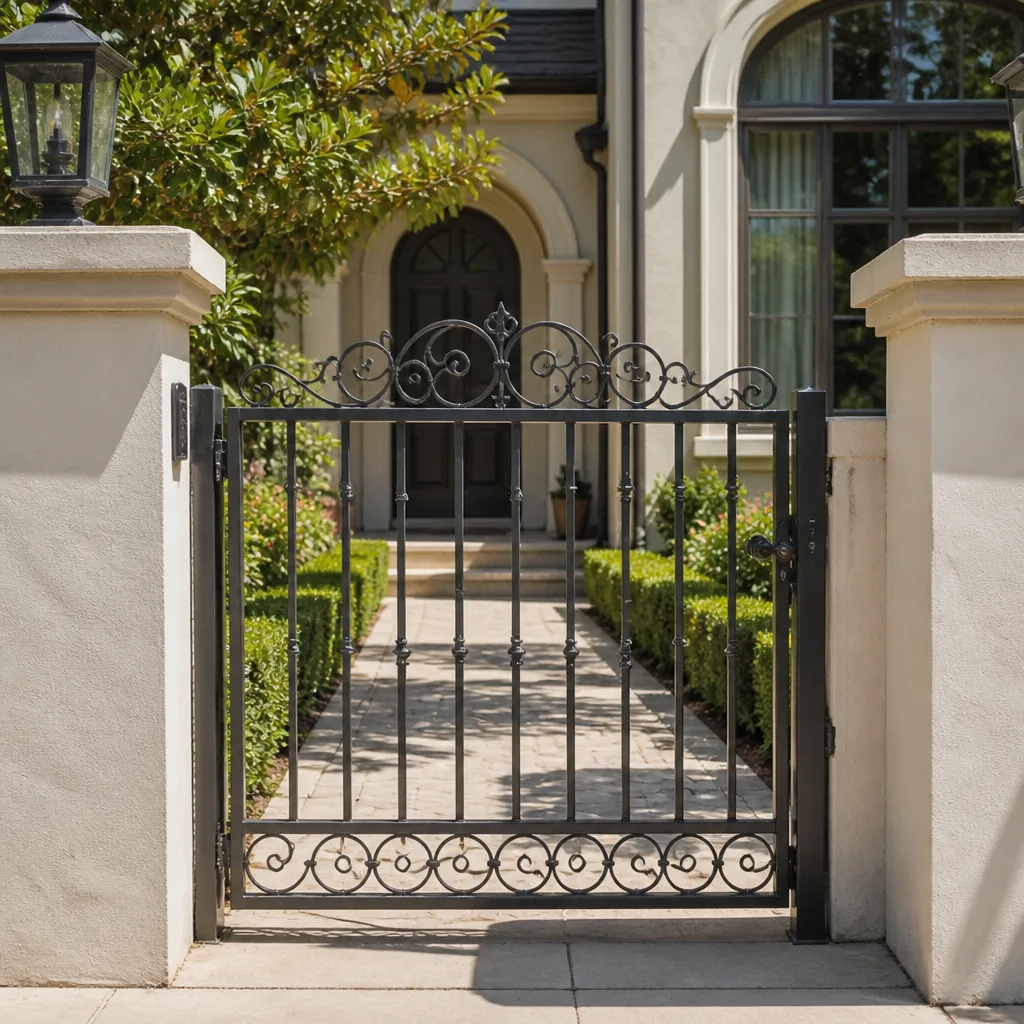 Wrought iron
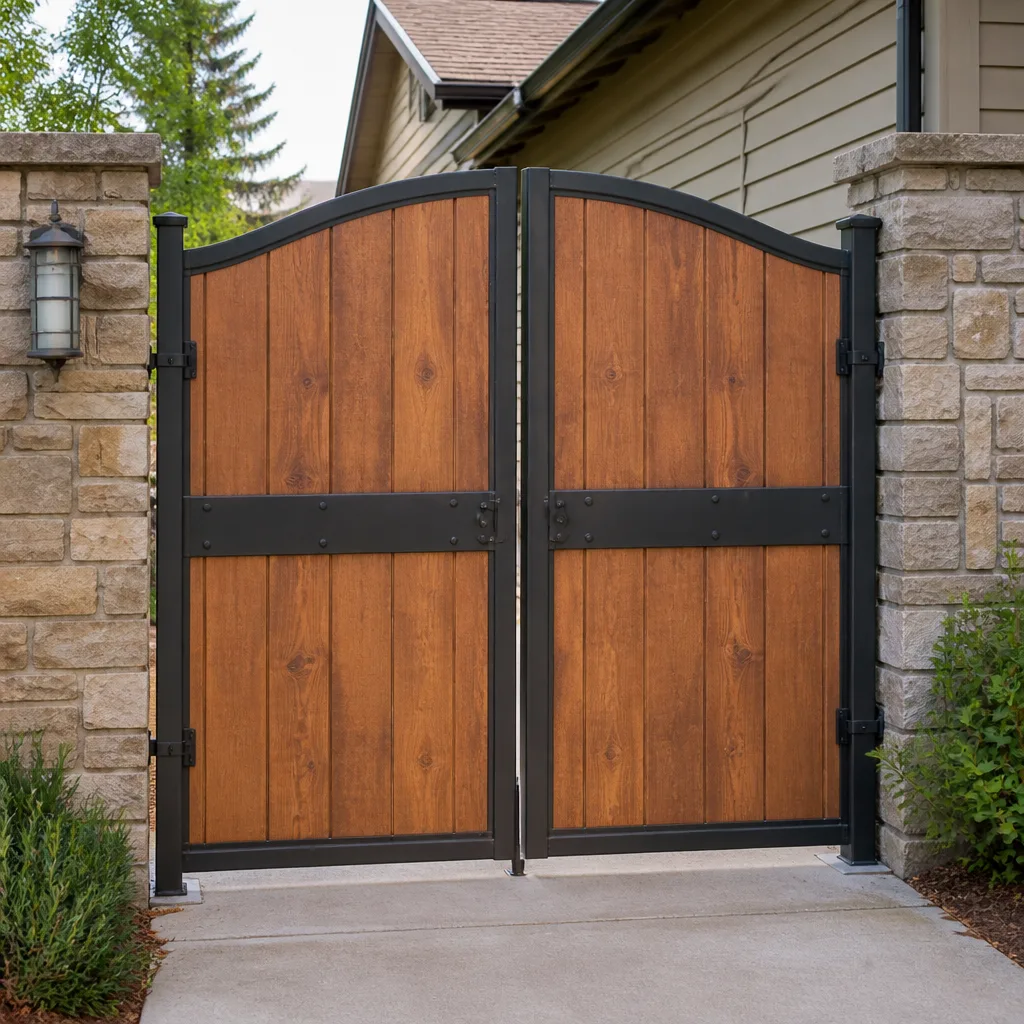 Wood & steel frame
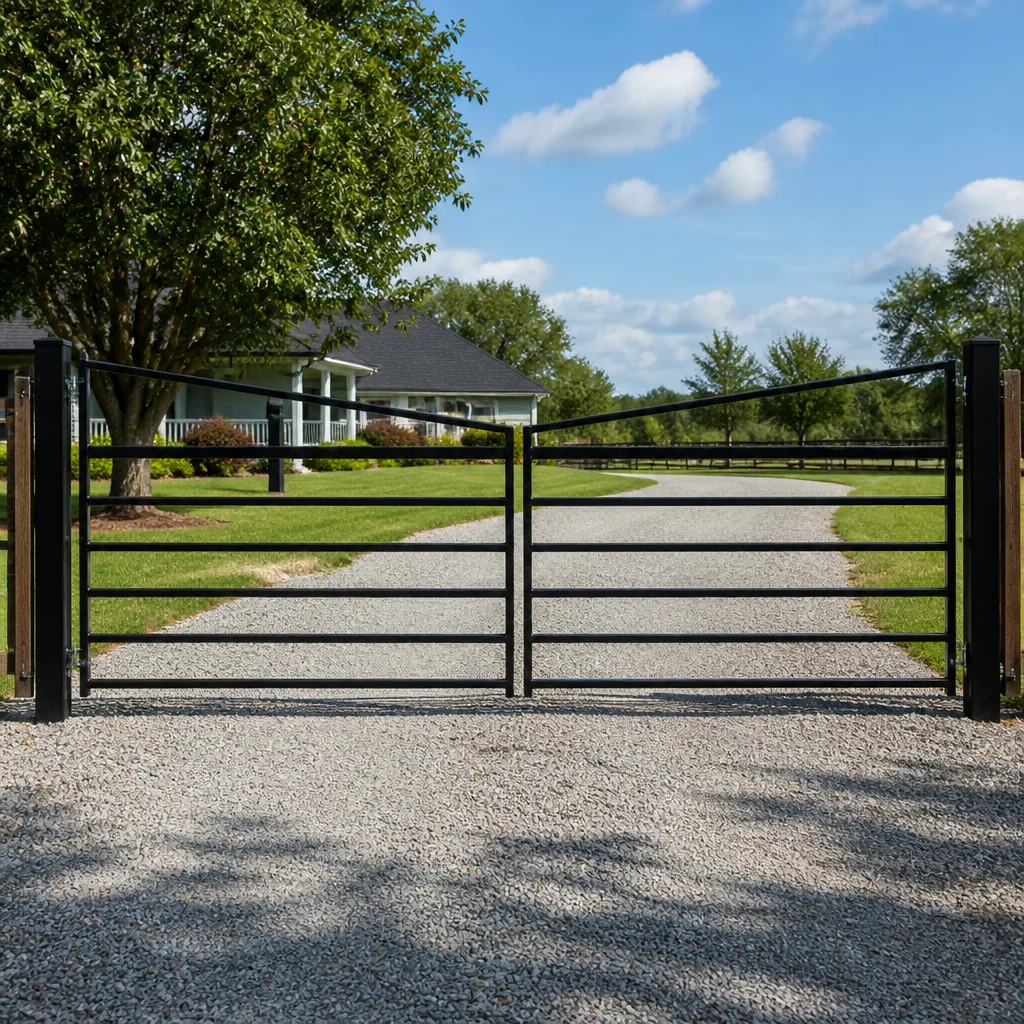 Farm & ranch
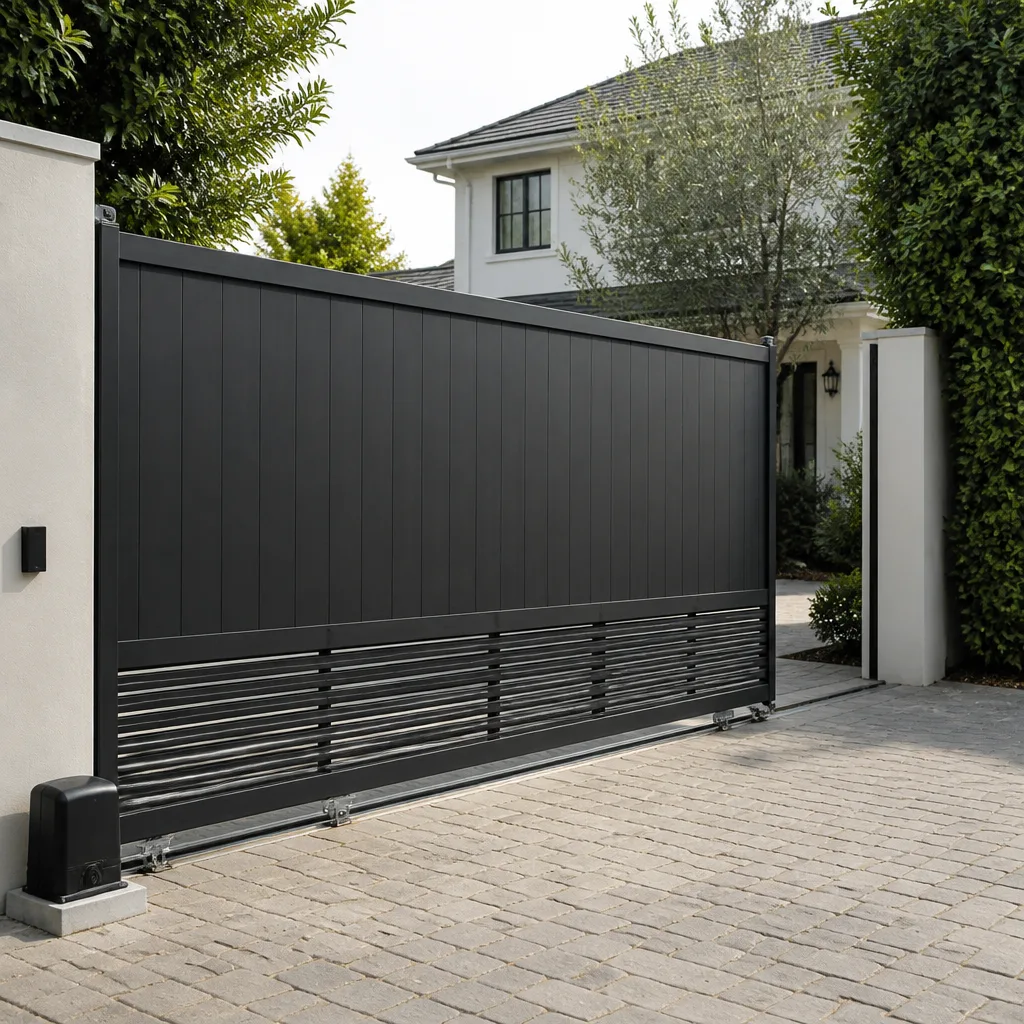 Sliding driveway gates
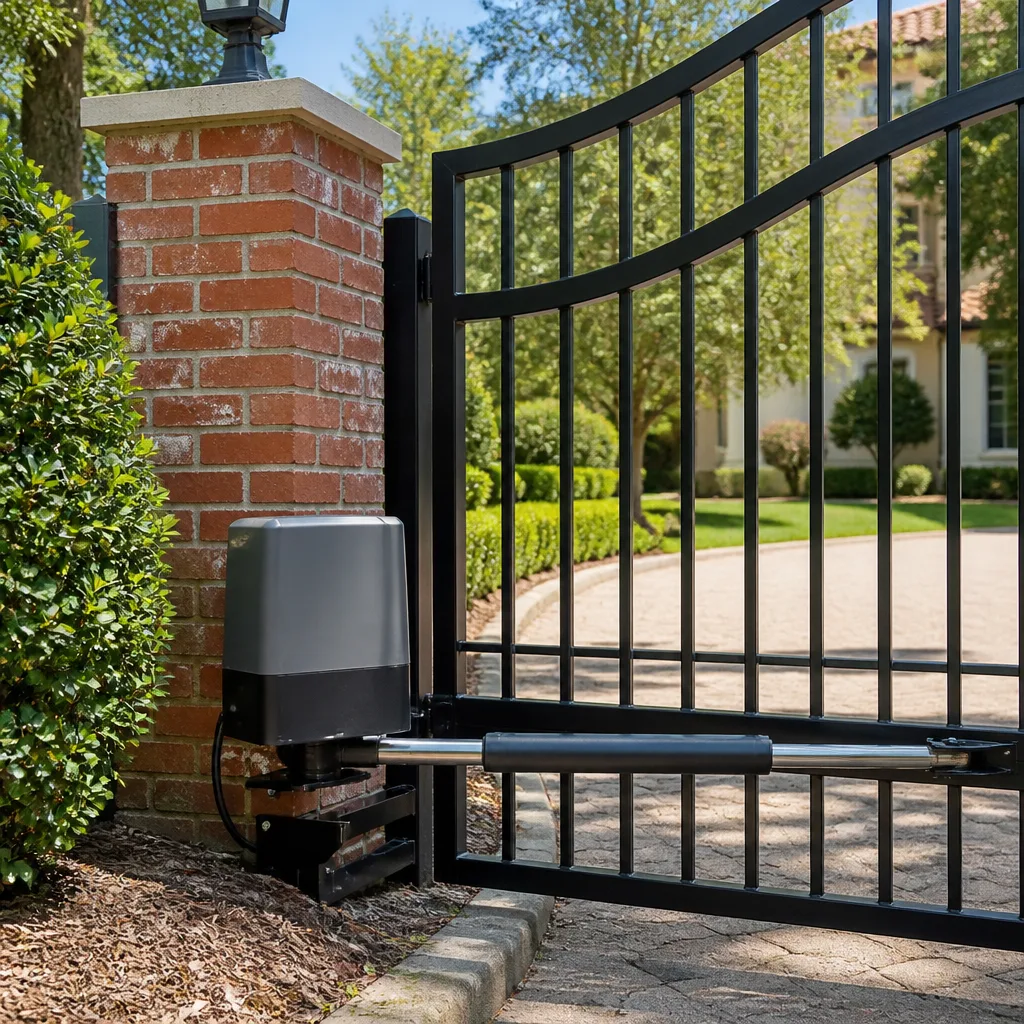 LiftMaster operators
Free on-site gate assessment - hinges, posts, and your LiftMaster or Nice gate operator checked before anything is quoted
The assessment is free and the quote is the invoice.
Get your free estimateGate Repair Permits, Codes & Inspections in Vallejo, CA: What You Need to Know
Here’s a fact that surprises most gate owners in Vallejo: the repair that fixes your gate and the repair that requires a city permit are often two completely different jobs. Homeowners tend to assume every change to an automatic gate is routine maintenance, so they skip the permit, and that decision sits quietly in the property record until a buyer’s inspector finds it. This guide draws the line precisely. You’ll learn which gate work triggers a building permit in Vallejo, what UL 325 entrapment protection actually requires, how HOA approval works alongside city code, how to check a gate’s permit history before you buy a home, and how to permit an existing installation after the fact. It’s written for owners and property managers who want to handle this correctly the first time.
Quick Answer
Most gate repairs in Vallejo, CA don’t require a building permit. Swapping a hinge, replacing a roller, fixing a latch, or repairing a control board are repair tasks that fall outside permit scope. What typically does require a permit: installing a brand-new automatic gate operator, replacing or resetting structural posts, adding or altering electrical circuits that feed the gate, and any gate that changes the property’s structural footprint. Separately, automatic gates must meet UL 325 entrapment protection standards regardless of whether the city permits a given job. When you’re unsure, a quick call to the City of Vallejo building department before work begins settles it, and a gate specialist can tell you which category your job falls into.
Styles & brands we work with
- Wrought iron
- Wood & steel frame
- Farm & ranch
- Sliding driveway gates
- LiftMaster operators
Table of Contents
- Which Gate Work Requires a Building Permit in Vallejo?
- What Gate Repair You Can Do Without a Permit
- UL 325 Entrapment Protection: What It Requires
- HOA Approval for Gate Modifications
- How to Check Permit History Before Buying a Home
- Permitting an Existing Unpermitted Gate
- What a Gate Inspection Looks For
- Common Mistakes to Avoid
Which Gate Work Requires a Building Permit in Vallejo?
The trigger for a permit is almost never “the gate stopped working.” It’s a change to the structure, the electrical system, or the public-facing installation. The City of Vallejo Municipal Code governs building permits through the city’s building division, and the office is the authority on your specific property and zoning. That said, the categories below cover the situations where a permit is most commonly required for gate work.
- New automatic gate installation. A brand-new automated gate with a new operator, new posts, and new electrical service to the gate is treated as a construction project. It usually needs a building permit and an electrical permit.
- Structural post replacement or resetting. Posts are load-bearing elements for any gate. Removing, replacing, or resetting a post to proper footing depth is structural work and typically triggers a permit, especially on a drive gate.
- New or altered electrical circuits. Running power from the house or panel to an operator, adding a transformer, or changing the circuit that feeds the gate is electrical work. Whether the electrical work is folded into a building permit or handled under an electrical permit is a question for the building department.
- Adding a gate where there wasn’t one. New openings in a property line, new driveways, or new gate locations that change access to the property generally require permits and may involve zoning review.
- Height and setback changes. Raising a gate, extending a run, or moving a gate closer to the property line can trigger permit review. Height limits and setback rules are set by local code and can vary by neighborhood zoning.
One thing worth stating plainly: permits exist for real reasons on automated gates. Posts, electrical service, and entrapment protection all come with safety consequences when a job is done wrong. If you’re planning a new automated entry in Vallejo, ask about permits before the estimate becomes a contract, not after the gate is standing. Our team handles electric gate repair and installation work on systems from DoorKing and LiftMaster, and part of that work is telling owners honestly which jobs should go through the city and which don’t need to.
What Gate Repair You Can Do Without a Permit
The vast majority of gate service is repair, not construction, and repair doesn’t need a permit. Replacing worn parts on an existing gate that stays in the same location and doesn’t change its structural or electrical footprint is normally exempt. The list below covers what gate repair work typically does not require a permit in Vallejo.
- Replacing hinges, rollers, latches, and gate hardware
- Repairing or replacing a damaged swing arm or slide gate track component
- Repairing the gate leaf itself (welds, alignment, wear)
- Replacing a control board, receiver, remote, or keypad on an existing operator
- Repairing or resetting a safety loop or safety edge on an existing system
- Motor repair or replacement on an existing operator in the same location
- General diagnostic work and tune-ups on a misbehaving automatic gate
Careful with the last one. Replacing a failed operator in the same location with the same type of unit is different from installing a new operator at a new location or upgrading to a different power and control setup. A like-for-like swap on an existing permitted installation is frequently treated as repair. A change in system type, power draw, or placement can pull the job back into permit territory. Our technicians have experience, and we’ve learned the difference matters most on legacy installations where the original system was never permitted in the first place.
If you have a manual gate that just won’t swing or slide cleanly, that’s straightforward gate repair territory. If the gate has an operator and you’re thinking of changing the system, ask the question before you buy the equipment.
UL 325 Entrapment Protection: What It Requires
UL 325 is the safety standard for automatic gates, and it applies whether or not the city issued a permit for the installation. The standard requires that an automatically closing gate be able to detect an obstruction in its path and reverse or stop rather than crush or trap anything in the way. In plain terms, an automatic gate needs at least one form of entrapment protection that works with its operator.
The common forms of entrapment protection include:
- Photoelectric sensors. A beam of light crosses the traffic path. If something breaks the beam while the gate is closing, the gate reverses.
- Safety edges. A contact strip on the leading edge of the gate senses pressure or contact and signals the operator to reverse.
- Inherent entrapment sensing. Some operators can detect resistance through the motor and stop or reverse when the gate meets an obstruction.
- Safety loops or other presence sensors. Vehicle detection loops that keep a gate from closing on a car in the path.
The failures we see most often are older systems. Gates installed years ago under an earlier understanding of the standard, or installed without any permits or inspection, frequently have one of these protection types disabled, disconnected, or never installed. A homeowner buys a house with a working automatic gate, and no one ever confirms the safety reverse actually trips. That gap is what bites during a home sale.
Testing whether an automatic gate meets UL 325 is not a job for a homeowner with a manual and a wrench. The safety reverse involves motor force settings, sensor alignment, and control board logic, and a technician testing a gate needs to be out of the path and know exactly how to stop the operator if something goes wrong. If you live in Vallejo and you’ve never tested your safety reverse, that’s worth knowing before something goes wrong. Call (877) 315-2991 and we’ll check it as part of a visit. We answer 24/7, and fast dispatch runs from 7am to 7pm.
HOA Approval for Gate Modifications
An HOA can require architectural approval for gate work even when the City of Vallejo does not require a building permit. Where the two systems overlap, both have to say yes. A homeowner who pulls a city permit but skips the HOA, or vice versa, can end up with a compliant installation and a violation letter at the same time.
The typical HOA review covers:
- The style, material, and color of the gate, including whether it matches the existing fence line
- The height and visibility from the street
- Single vs. double gates, and whether the change creates a new opening
- Access control equipment, call boxes, and keypads that are visible to the street
- Garage-style and driveway gates, where the appearance from the street affects the whole block
Practical sequence matters here. Get the design settled, submit to the HOA’s architectural committee, and only then pull the city permit, because an HOA can ask for a change after the permit is issued and then you’ve paid for a permit for a design that won’t fly. Keep a copy of the HOA approval letter. It becomes part of the record if the property changes hands, and it saves everyone a phone call down the road.
If your HOA is silent on gate modifications, it’s still worth a call to confirm. Many associations have blanket language in the CC&Rs that treats any visible change to an exterior structure as subject to review, even if a gate-specific section doesn’t appear in the handbook.
How to Check Permit History Before Buying a Home
Before you buy a home in Vallejo with an existing automated gate, check the permit history on that gate. This is a step most buyers skip, and it’s the one that matters most. Here’s how to do it in order.
- Ask the seller and the seller’s agent in writing whether the gate was installed, repaired, or modified, and whether a permit was pulled. Ask for receipts. An installation invoice often names the operator brand and model.
- Pull the permit record from the City of Vallejo. The building department can tell you what permits were issued for the address and what was inspected. Every permit record either confirms the gate was permitted or shows it wasn’t.
- Request a visual inspection of the installation. A gate specialist can identify the brand of the operator (DoorKing, Elite, Mighty Mule, LiftMaster), assess the safety reverse, and note whether the posts and wiring look consistent with a permitted installation.
- Check the HOA file. Ask the HOA for the architectural approval records for the property. If the HOA approved a gate, that’s a useful data point even if the city permit is missing.
- Write the answer into the purchase contract. If the gate is unpermitted, make the seller responsible for permitting it or negotiate an allowance for the cost of remediation. This is the point where a problem becomes a negotiated term instead of a surprise.
This step takes an afternoon. The alternative is a delay weeks before closing. Our team can look at a gate before you buy, note what’s non-compliant, and tell you what it would take to bring it up to standard, whether you’re buying in Vallejo or anywhere nearby. Start with Vallejo.
Permitting an Existing Unpermitted Gate
Retroactively permitting an unpermitted gate in Vallejo is doable, and the process is more contained than most owners expect. The key is that a retroactive permit is generally limited to the gate and its support system, not to the entire property. The city isn’t looking to re-open your house to a full code review because you brought a gate into compliance. What the retroactive permit covers is the gate installation, its structural elements, and its electrical components, plus the life-safety requirements for automatic operation.
The typical steps look like this:
- Contact the City of Vallejo building department and describe the installation: what the gate is, how old it is, what operator brand is installed, and what you don’t have permits for. Ask how the city wants the application filed and whether it wants an as-built drawing.
- Get the gate assessed by a specialist before the city inspector arrives. An inspector will note what’s wrong. A gate specialist can correct the issues in advance so the inspection is a confirm and not a to-fix list.
- Bring the gate up to current standards. That usually means confirming structural post footing depths, replacing any damaged footings, verifying the electrical connection, and making sure the operator has working entrapment protection (photoelectric sensors, safety edges, or inherent sensing) that meets UL 325.
- Submit the permit application and drawings. The city may require a site plan, photos of the gate, the operator specification, and the electrical method. Ask the building department what its current submittal list requires; it changes and the city is the source.
- Schedule the inspection. A gate inspector will typically check the structural installation, the electrical connection, the entrapment protection, and the finished appearance. Correct any findings before the re-inspection to avoid a repeat fee.
- Keep the approved permit and inspection record with the property file. It’s the document a future buyer will ask for.
One note on timing: retroactive permitting is not a same-day repair. It’s measured and scheduled, with city review in the middle. If you’re selling, start the process early. If you’re buying, negotiate the timing into the contract instead of hoping it moves fast.
What a Gate Inspection Looks For
A gate inspection is less about the paint and more about the parts that fail. Here’s what an inspector is looking at, whether that’s the city’s inspector or a gate specialist doing a pre-purchase assessment.
- Structural integrity of the posts. Posts need to be set to proper footing depth and sound enough to hold the gate leaf and operator. Rust, wobble, or a shallow footing fails the check.
- Gate leaf condition and hardware. Hinges, rollers, guides, and the gate frame itself. Worn hardware means the gate swings or slides off its intended path, and that stresses the operator.
- Entrapment protection. Photoelectric sensors, safety edges, and inherent sensing. An inspector will test whether the safety reverse actually stops or reverses the gate when a beam is broken or an edge is contacted.
- Electrical connection and operator. How power reaches the operator, whether a disconnect is present, whether the control board is intact, and whether the operator brand and model are compatible with the system (DoorKing, LiftMaster, Elite, FAAC, BFT, Linear, Viking, Ghost Controls, and Mighty Mule all appear in Vallejo).
- Access control. Keypads, remotes, call boxes, and loop detection. These fail without notice, and a gate that won’t open from the street is a compliance issue in itself.
- Appearance relative to the HOA standard. Style, color, and visibility from the street.
If you’re in Vallejo and you’re not sure whether your gate has a permit or a compliance issue, we can look at it. A gate specialist will tell you what’s compliant and what’s not, without trying to sell you a new system.
Our technicians are experienced across the major gate and operator brands, so the assessment is on the system you already have. It pays to start with an accurate read rather than a guess from the internet.
Common Mistakes to Avoid
- Assuming every gate repair needs a permit. Most repairs don’t. Spending a permit cycle on a hinge replacement delays the fix and frustrates the city. Ask before you file, and ask before you skip.
- Assuming every automatic gate change doesn’t need a permit. The corollary mistake. A new operator, a new circuit, or a new post often needs one, and skipping the permit is what turns a repair into a problem later.
- Skipping HOA approval because the city didn’t require a permit. HOA approval and city permits are two separate systems. Both apply, and an HOA violation letter arrives whether or not the city ever issued a permit.
- Not testing the safety reverse on an existing automatic gate. A gate can look perfectly fine and fail the entrapment protection check. Test it on a schedule, and have a specialist confirm the system meets UL 325.
- Buying a home without checking the gate’s permit history. Permit history is a matter of public record. Not looking at it is a choice that a buyer makes, and it costs at closing.
- Bringing in a generalist for an electrical or operator problem. Control boards, safety loops, and access hardware are a specialty. A general contractor will likely refer the job out, which adds a second visit and a second invoice.
- Trying to permit an existing gate without fixing the compliance gaps first. A failed inspection is a repeat fee and a repeat schedule slot. Fix first, inspect second.
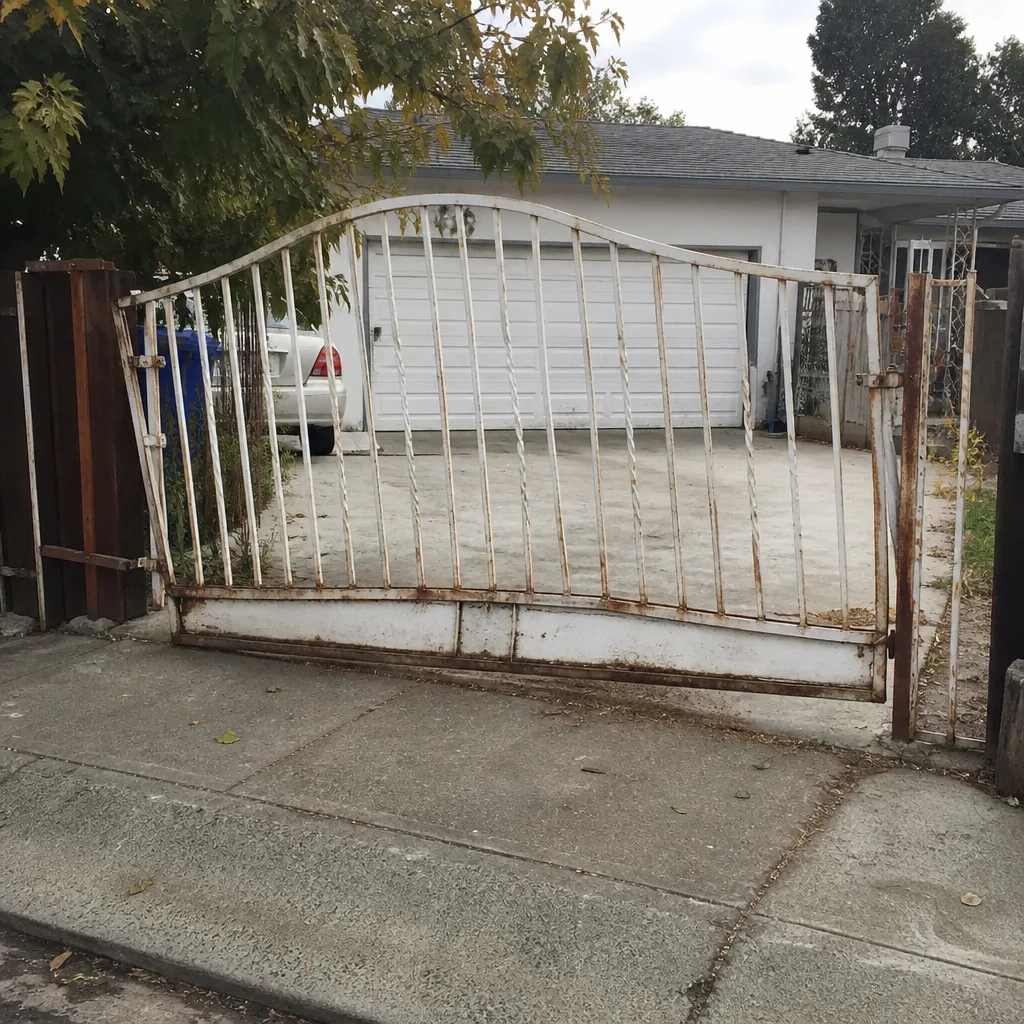
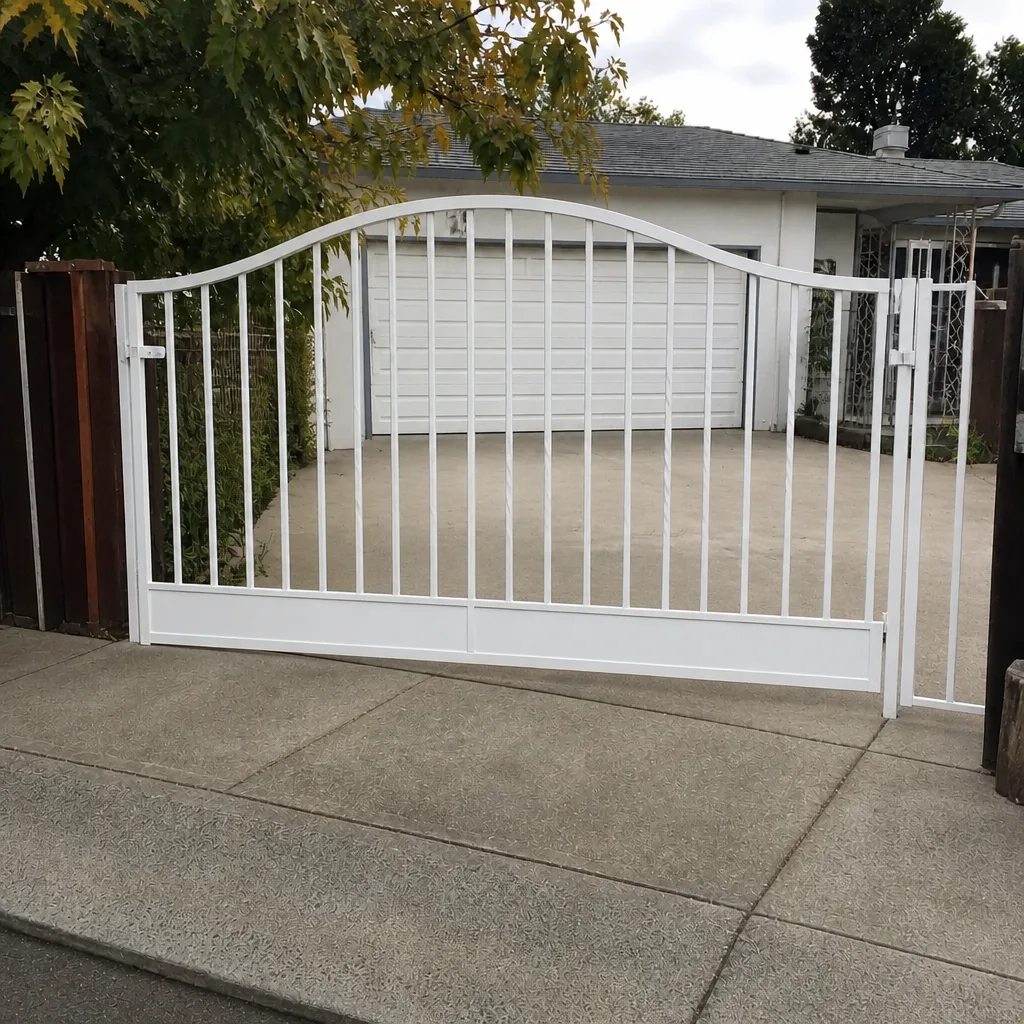
See the difference
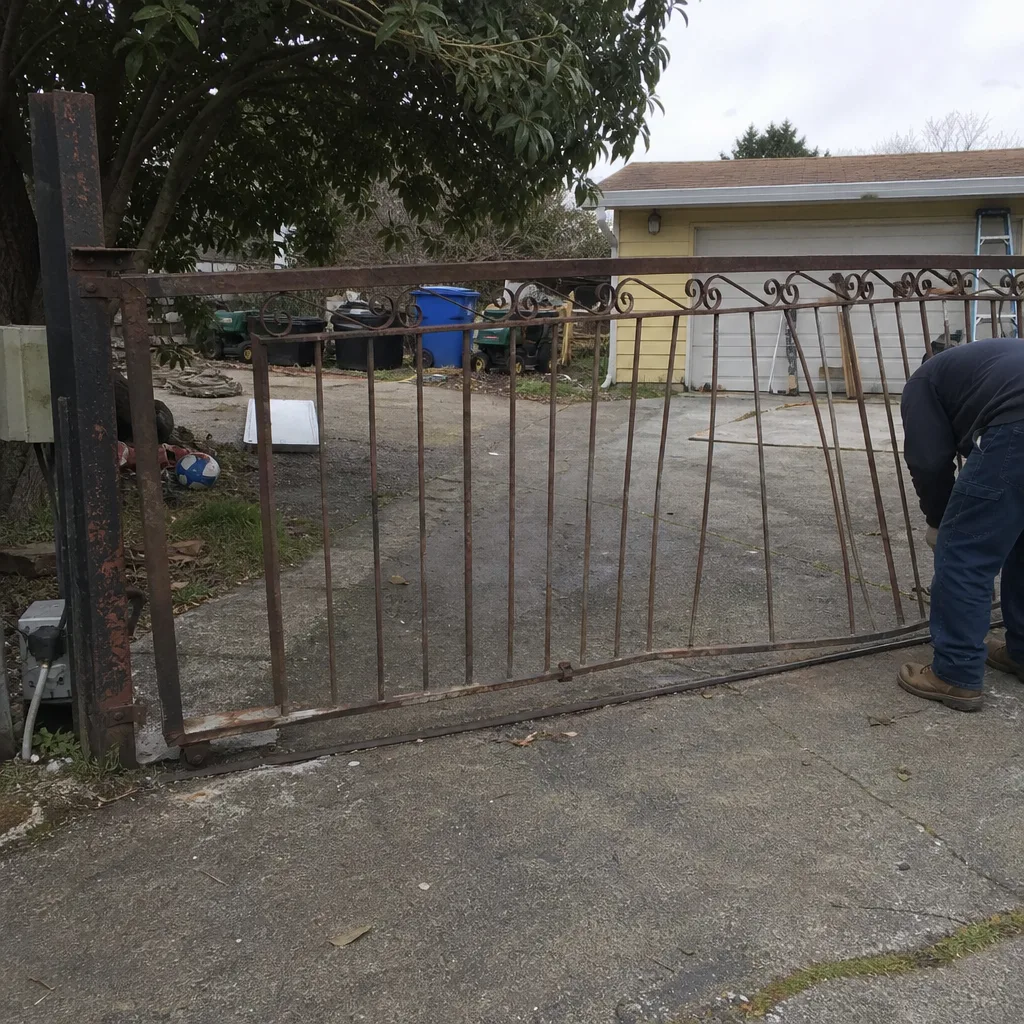 Before
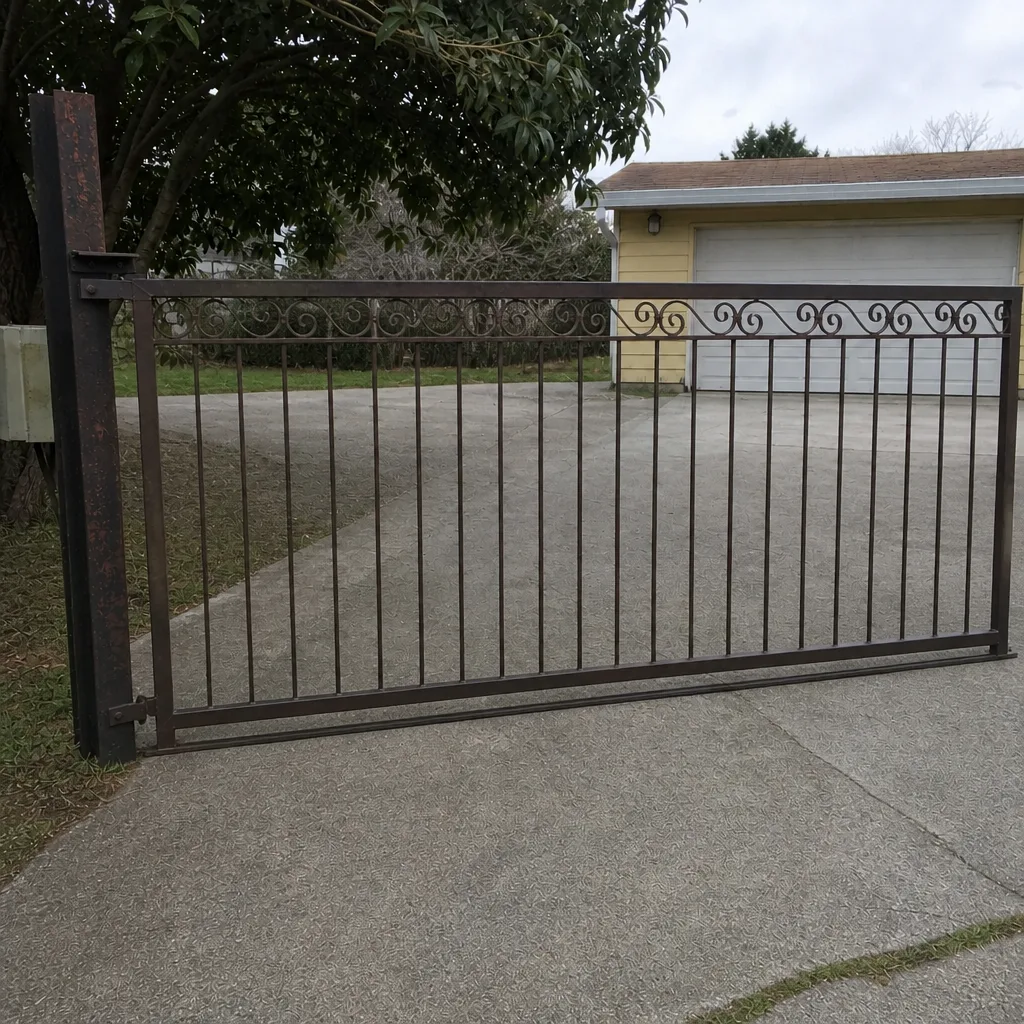 After
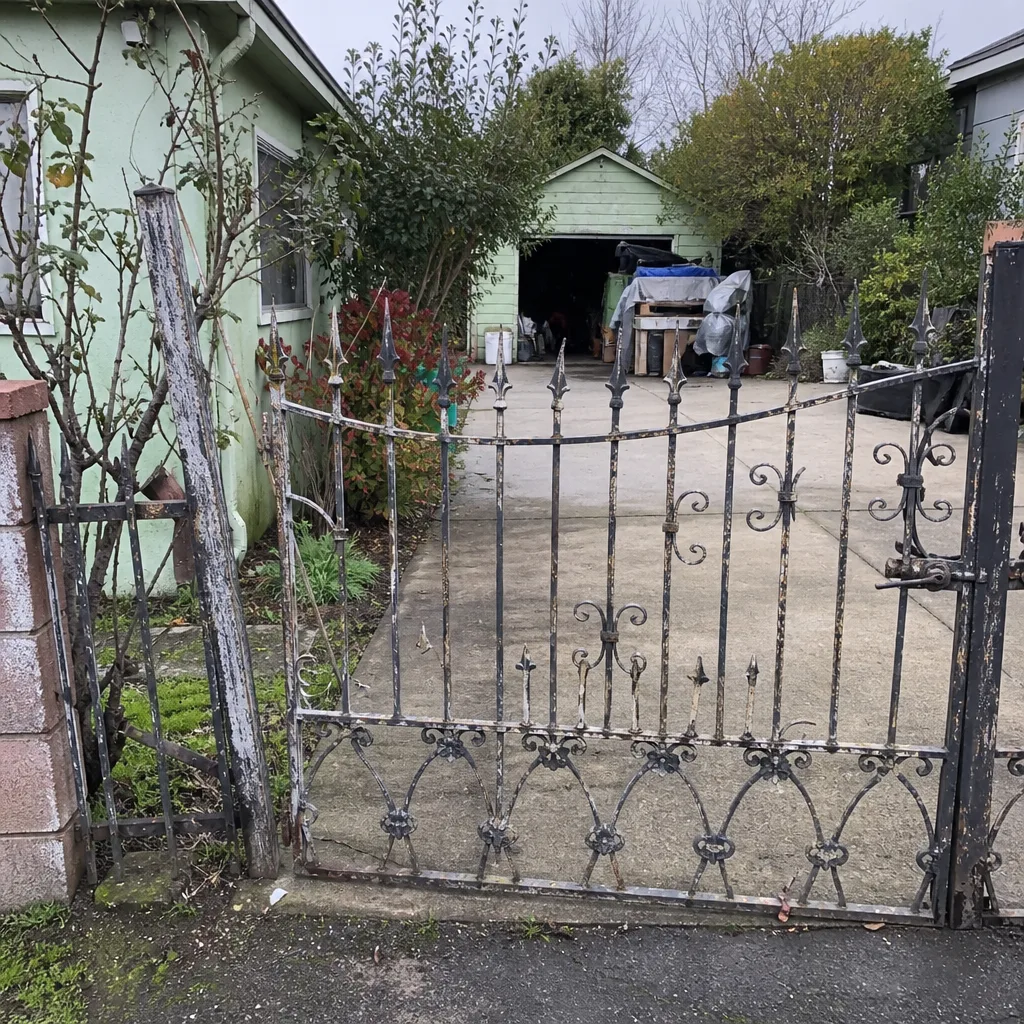 Before
 After
 Before
 After
When to Call a Professional
Call a gate specialist when the question involves electrical work, operator components, structural posts, entrapment protection, or the difference between a permit-required job and an exempt repair. A few specific cases come up in Vallejo: your automatic gate stops reversing when something crosses its path, your operator behaves erratically and you can’t tell whether it’s a control board, a sensor, or a power issue, or a gate inspection comes back with findings and you need someone to remediate them. Also call if you’re buying a home with an automatic gate and want a pre-purchase read on its compliance. Gate Repair Vallejo offers free estimates in Vallejo. Call (877) 315-2991. We answer 24/7, and fast dispatch from 7am to 7pm, Sunday through Friday.
Frequently Asked Questions
Most gate repairs in Vallejo don’t require a permit. Replacing hinges, rollers, latches, and hardware, repairing a control board or remote, and tune-ups on an existing operator are repair work outside permit scope. A new automatic operator, structural post replacement, and new electrical circuits typically do require a permit. If you’re unsure, call the City of Vallejo building department before work starts. For an exact read on your own gate, call (877) 315-2991; estimates are free.
UL 325 is the safety standard for automatic gates, and yes, your existing automatic gate needs to comply. The standard requires that an automatically closing gate be able to detect an obstruction and reverse or stop rather than trap or crush anything in its path. Photoelectric sensors, safety edges, inherent entrapment sensing, and safety loops are the common forms of protection. Older and unpermitted installations frequently fail the check, which is why a safety reverse test matters on any used gate. Call (877) 315-2991 if you’d like your gate checked.
Yes. An unpermitted gate can delay a home sale when the buyer’s inspector discovers it and the deal requires remediation before closing. The delay usually involves scheduling the city’s inspection and doing whatever remediation the inspector finds. The specific timeline depends on the city’s current scheduling and the condition of the gate. Checking permit history before making an offer avoids the situation. If you’re buying in Vallejo and want a gate assessed, call (877) 315-2991; estimates are free.
Both can apply, and they’re separate approvals. The City of Vallejo building department issues permits based on the building code. Your HOA’s architectural committee reviews style, material, color, height, and visibility from the street. A change can be city-compliant and still violate HOA rules, or vice versa. Get both before the gate changes. Call (877) 315-2991 for an estimate on the gate side of the work.
You check the City of Vallejo permit records for the address. The building department can tell you what permits were issued and what was inspected. Also ask the seller for receipts and installation documents, and check the HOA’s architectural approval file. A gate specialist can look at the installation and point out anything that looks unpermitted. Call (877) 315-2991 to arrange a visit; estimates are free.
Yes. A retroactive permit for an unpermitted gate is generally limited to the gate installation, its structural elements, the electrical connection, and the entrapment protection. It doesn’t reopen the whole house to a full code review. The steps are: contact the City of Vallejo building department, have a gate specialist correct the compliance gaps first, submit the application, and schedule the inspection. Call (877) 315-2991 to get the gate assessed before you apply.
The Bottom Line
Permits on Vallejo gate work follow a simple rule: if the job changes the structure, the electrical system, or the safety of an automatic installation, expect a permit; if it’s a repair to an existing system, you probably don’t need one. The complication is that most owners assume the opposite in both directions. Confirm the permit question with the city early, test the safety reverse on any automatic gate, get HOA approval in parallel, and check permit history before a home purchase. A gate specialist can do the technical assessment that makes all four steps straightforward.
If your gate needs service, a compliance check, or remediation ahead of a city inspection, Gate Repair Vallejo handles the full scope, from worn hinges to failed control boards, on the brand you already have. Call (877) 315-2991 for a free estimate. We answer 24/7. Fast dispatch from 7am to 7pm, Sunday through Friday.
Written by the team at Gate Repair Vallejo.