
Last updated November 15, 2026
 Wrought iron
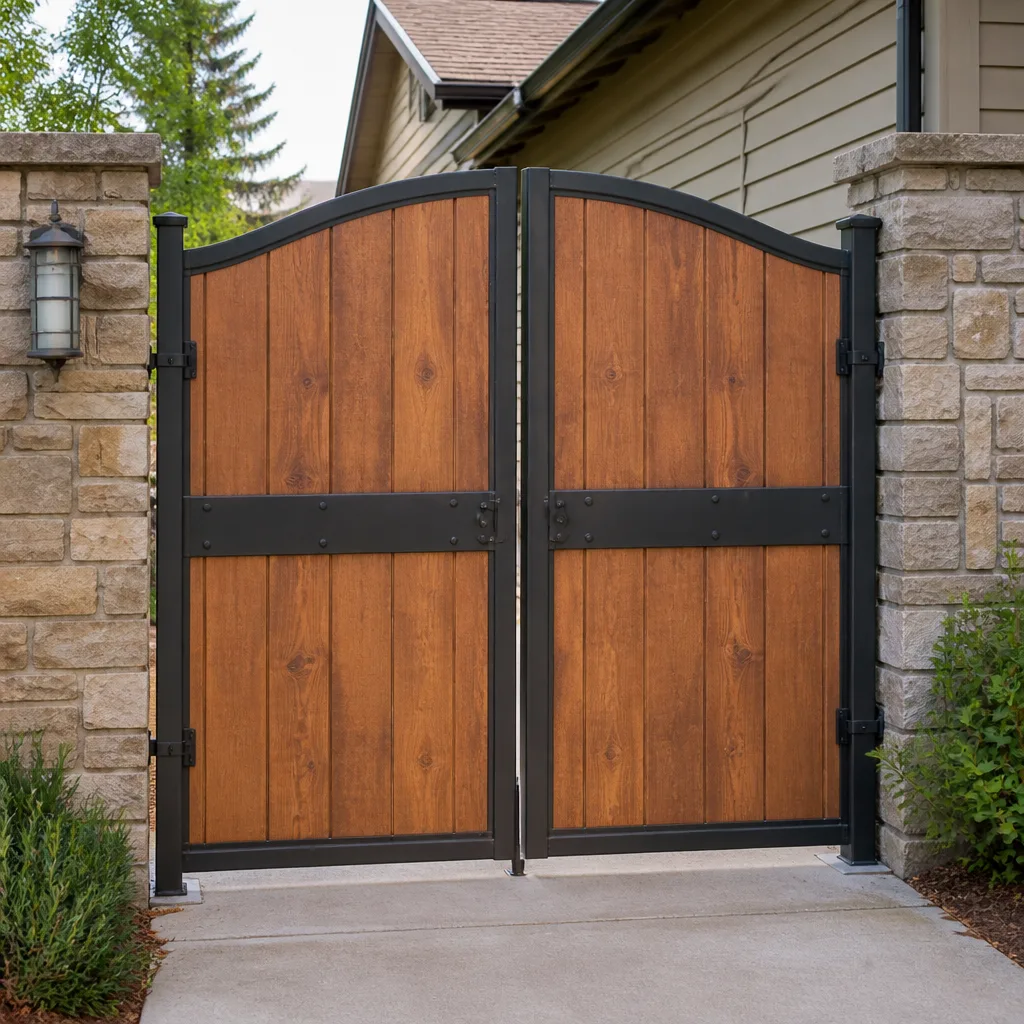 Wood & steel frame
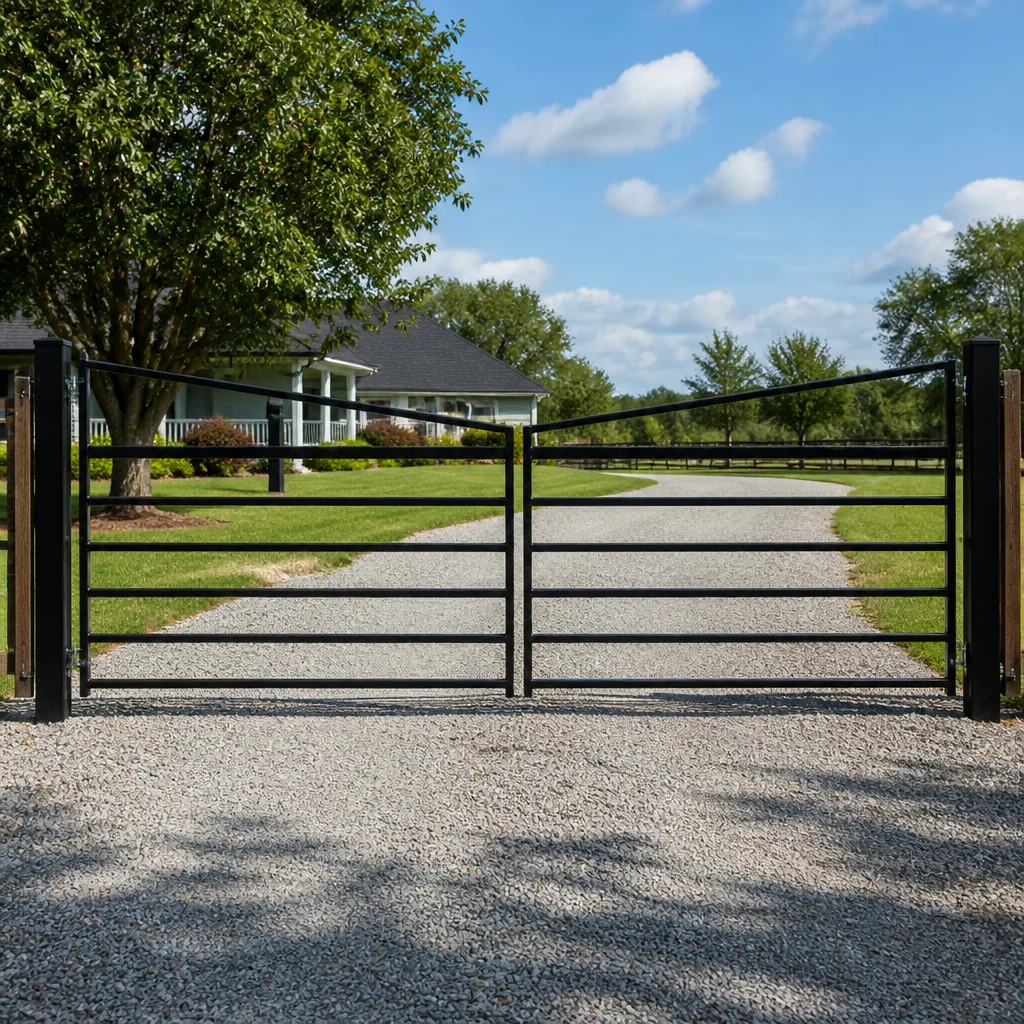 Farm & ranch
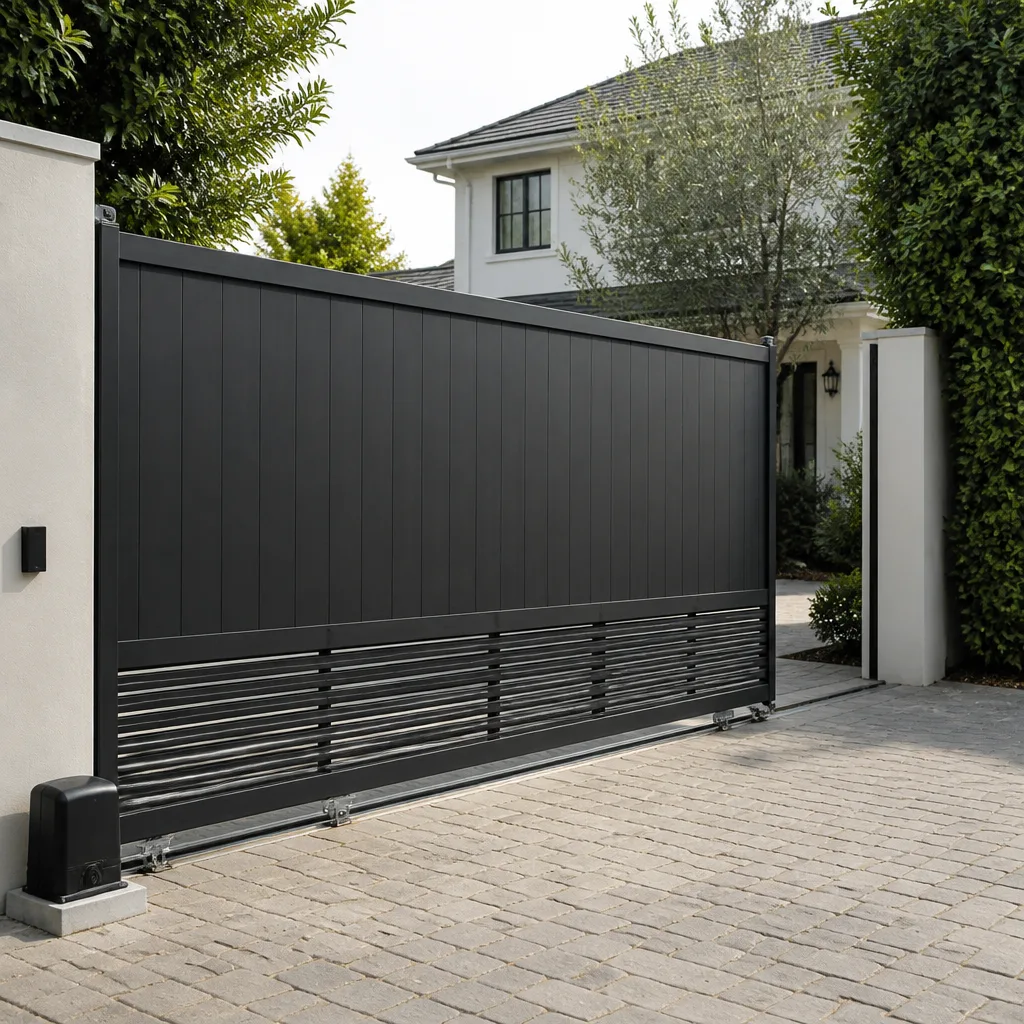 Sliding driveway gates
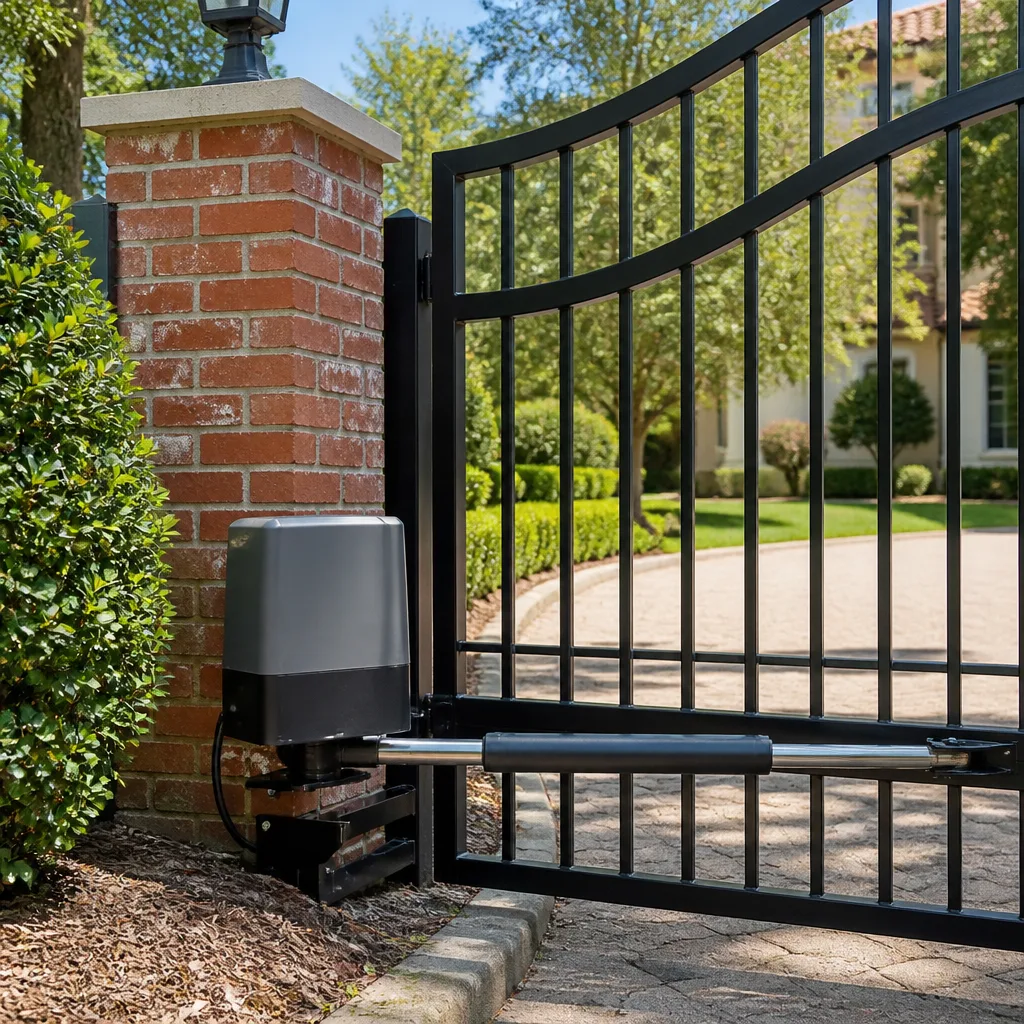 LiftMaster operators
Free on-site gate assessment - hinges, posts, and your LiftMaster or Nice gate operator checked before anything is quoted
The assessment is free and the quote is the invoice.
Get your free estimateGate Repair Warning Signs: A Vallejo Homeowner’s Reference Guide
A gate that reverses direction mid-cycle without touching anything isn’t acting up. It’s telling you that its obstruction sensor is misaligned or its motor is drawing excess current, and left alone it will stop dead within weeks. Most emergency gate calls we handle in Vallejo start with a symptom the owner noticed and dismissed a month earlier: a new grind, a slight lean, a remote that needed two presses instead of one. The gate was communicating the whole time. This guide is a translation key. You’ll learn what each sound, speed change, and rust pattern means in plain mechanical terms, so you can book a repair on your schedule instead of an emergency.
Quick Answer
In Vallejo, the most reliable gate repair warning signs are: a gate that reverses or stops mid-travel, grinding or clicking from the operator, a post that has shifted or a gate that leans, movement noticeably slower than it used to be, and an intermittent gate that works some days and not others. Any one of these usually means a component is failing now, not eventually. Intermittent behavior and mid-cycle reversal are the two most urgent, and a technician should diagnose both before the gate fails completely.
Styles & brands we work with
- Wrought iron
- Wood & steel frame
- Farm & ranch
- Sliding driveway gates
- LiftMaster operators
Table of Contents
- What Your Gate’s Sounds Are Telling You
- Post Movement: The Sign Homeowners Dismiss
- Slow Gate Movement as a Diagnostic Tool
- Why an Intermittent Gate Is More Urgent Than a Dead One
- Reading Rust Patterns: Surface Corrosion vs. Structural Fatigue
- Electric Gate Symptoms: Sensors, Boards, and Safety Loops
- Vallejo’s Seasons and What They Do to Your Gate
- When to Call a Professional
What Your Gate’s Sounds Are Telling You
Sound is the fastest diagnostic tool a homeowner has. A healthy gate makes a consistent, low mechanical hum as the operator moves it and very little else. Any new sound is a message, and each type points to a different part of the mechanism. Here’s how we translate the four most common ones when we’re called out on gate repair in Vallejo.
Grinding. Grinding almost always means metal-on-metal contact somewhere in the drive train or at the hinges. On a swing gate it’s often a hinge pin that has lost its lubrication or worn oval, letting the gate sag and drag. On a slide gate it usually points to worn rollers or a track that has debris packed into it. Grinding gets worse fast because the friction creates more wear, which creates more friction.
Clicking. A rhythmic click that matches the gate’s travel usually comes from the operator itself: a slipping gear, a worn drive belt, or a limit switch that isn’t tripping cleanly. A single loud click at the start or end of travel is often the operator hitting a mechanical stop because a limit is out of adjustment. On DoorKing and Linear operators we see the click-and-stall pattern frequently when a limit cam has drifted.
Squealing. Squealing is high-frequency friction, typically a dry hinge, a dry roller, or a binding pivot. It’s the least urgent sound on this list, but it’s the easiest to fix early and the easiest to let escalate into a worn hinge or a bent track.
Humming without movement. A motor humming while the gate stays still is the most serious sound of the four. It means the operator is trying to move the gate and being prevented from doing so, either by a mechanical jam, a failed capacitor, or a control board sending power to a motor that can’t turn. Continued humming in this state overheats the motor and can burn it out.
Post Movement: The Sign Homeowners Dismiss
A gate post that has shifted a fraction of an inch looks like nothing. It isn’t nothing. Every gate is a rigid frame relying on two fixed points, and once either post moves, the entire geometry changes. In our experience, a post that has visibly moved is the single most reliable predictor that a gate will be out of alignment within one season, and often sooner.
Here’s what to look for, all of it visible without tools:
- A gap at the base. Soil pulled away from the post on one side, or a crack in the concrete collar around a metal post, shows the post has shifted or settled.
- A lean you can see against a straight edge. Hold a level or a straight board against the post. A post that was set correctly should read plumb. Even a small lean compounds across the width of the gate.
- A gate that no longer latches the same way. If the latch, the receiver, or the strike plate used to line up and now needs a lift or a shove, the frame has moved.
- Drag marks or scrape lines. Fresh scratches on a gate leaf or a track tell you the moving part is now traveling a different path than when it was installed.
- Loose hinge bolts on one post only. Hinges loosening on both posts suggests general wear. Loosening on one post suggests that post is moving and stressing the hardware.
Vallejo’s soils and its wet-season drainage patterns make post movement a regular finding on older properties, especially where a gate sits at the bottom of a slope or near a downspout outlet. A post that’s moving can often be stabilized and re-set before it takes the gate out of alignment. Once the gate itself is out of alignment, you’re replacing hinges and hardware instead of just the footing.
Slow Gate Movement as a Diagnostic Tool
Gate speed is a diagnostic readout most owners never think to watch. A gate that has slowed down is telling you where the problem lives, and the pattern of the slowdown narrows it further.
- Slow throughout the whole cycle. If the gate moves slowly from start to finish, the problem is upstream of the mechanics: a weakening motor, a failing capacitor, low voltage at the operator, or a control board that isn’t delivering full power.
- Slow in one direction only. A gate that opens at normal speed but closes slowly (or the reverse) usually has a mechanical bind on one side of the travel: a worn roller, a bent track, a hinge that binds under load in that direction.
- Fast at the start, then slowing. This pattern points to friction building as the gate travels, which means a track, a roller, or a hinge is dragging progressively more as the load shifts.
- Slow and straining. If the gate sounds like it’s working harder to move, the operator is drawing excess current, and that’s the same symptom an obstruction sensor is designed to catch. This is the pattern behind most mid-cycle reversals.
Timing your gate is a useful habit. Note how many seconds a full open cycle takes when the gate is working well, and check it again when something feels off. A gate that used to take twelve seconds and now takes twenty is not just slow, it’s failing. On electric gate repair calls, a speed change is often the first thing we ask about, because it tells us where to look before we even open the control box.
Why an Intermittent Gate Is More Urgent Than a Dead One
This is the counterintuitive part of gate repair. A gate that has stopped entirely is a problem, but it’s a stable problem. An intermittent gate is a moving target, and that makes it more urgent, not less.
When a gate works some days and not others, something in the system is operating at the edge of its tolerance. That edge shifts with temperature, with how much current the motor is drawing that day, with a safety sensor that’s marginally misaligned, or with a control board whose relay is starting to stick. An intermittent fault is a fault that is already happening; you’re just catching it on the good days.
Intermittent behavior in Vallejo usually traces to one of these:
- A safety sensor or safety loop that’s marginal. Photocell eyes that are slightly out of line, or a loop in the driveway that’s been cracked by settling, will trigger a reverse or a refusal to close only sometimes.
- A remote or access system with a weak signal path. A remote that needs two presses, or a keypad that only reads when it feels like it, points to a receiver or antenna problem rather than a failing operator.
- A control board with a failing relay or capacitor. These components degrade unevenly, so the gate behaves differently when the electronics are cold than when they’re warm.
- A mechanical bind that only appears at certain temperatures. Metal expands and contracts with the day’s temperature, so a hinge or roller at the edge of its tolerance can bind on a warm afternoon and run free in the morning.
An intermittent gate is also a safety problem. A gate that reverses unpredictably is a gate that can close on a person, a pet, or a vehicle. If your gate is intermittent, don’t wait for it to stop entirely. That’s the point at which the diagnosis is easiest and the repair is smallest.
Reading Rust Patterns: Surface Corrosion vs. Structural Fatigue
Rust on a gate is normal. Rust that means the gate is failing is not. You can tell the difference by eye if you know what to look for, and it’s one of the most useful things a homeowner can learn to read.
Surface corrosion looks like a thin, even orange-brown film on the exposed faces of the metal. It appears first on scratches, weld seams, and the top edges where water sits. It’s cosmetic until it starts to pit. Surface rust responds to cleaning and repainting, and it doesn’t threaten the gate’s structure.
Structural fatigue looks different. Watch for these patterns:
- Rust blooming out of a joint or weld. Rust pushing out from under a weld seam means the metal inside the joint has been corroding for a while. That’s a structural concern, not a cosmetic one.
- Pitting with flaking. When rust is deep enough to flake off in layers, the metal is losing section thickness. A gate frame that’s lost thickness at a hinge point or a stress point can fail under load.
- Rust concentrated at the hinge and roller contact points. Wear points that are also rusting are losing material twice as fast.
- Rust along the bottom rail with paint bubbling above it. Paint bubbling from below means the corrosion is happening under the coating, which is where it does the most damage undetected.
Vallejo’s wet season puts moisture on metal repeatedly, and gates that sit under trees or near irrigation keep that moisture longer. A gate that’s showing joint rust and flaking at the hinges needs a closer look now, because a repaint over active corrosion hides the problem rather than fixing it.
Electric Gate Symptoms: Sensors, Boards, and Safety Loops
An electric gate has a second layer of warning signs beyond the mechanical ones, and they’re the ones most homeowners can’t interpret without help. The system is a chain: the operator motor, the control board, the safety devices, and the access hardware. A symptom in one part often looks like a symptom in another. Here’s how the common ones map out.
- Reverses mid-cycle without contact. The obstruction sensor is misaligned, or the motor is drawing excess current and the board is interpreting that as an obstruction. Check whether the photocell eyes are clean and facing each other squarely; if they are, it’s a current-sensing issue that needs a technician.
- Won’t close, or closes then reopens. A safety loop in the driveway that’s been cracked by settling, or a photocell that’s being blocked by a plant, a parked car, or debris. Loops are common on residential properties around Vallejo and can fail quietly.
- Remote or keypad needs repeated presses. This is usually a receiver or antenna issue, not a dying operator. A technician can test the signal path before recommending any replacement.
- Operator stops partway and won’t restart without a reset. Most often a limit switch that’s drifted or a control board relay that’s failing. On Viking and Ghost Controls units, this pattern is frequently a limit adjustment rather than a hardware failure.
- Gate moves with the remote but not the keypad, or the reverse. The operator is fine. The problem is in the access hardware, and diagnosing it means testing each input separately.
If you’re dealing with any of these, our Gate Repair Vallejo team works on the brand you already have, from Linear and Viking controllers to DoorKing access systems and Ghost Controls operators, so a symptom gets diagnosed on your equipment, not on whatever a single-brand dealer prefers to sell.
Vallejo’s Seasons and What They Do to Your Gate
Vallejo’s climate is mild, and that’s exactly why gate problems can build for months before they’re obvious. The wet season puts repeated moisture on posts, hinges, and metal, then the dry season shrinks and settles the soil around a post. That cycle is what moves a post a little each year, and why post movement is more common on older Vallejo properties than you’d expect.
Here’s a simple seasonal routine we recommend to any owner who wants to catch problems early:
- Walk the gate by hand. With the operator off, push the gate through its full swing or slide. It should move smoothly with no binding and no grinding.
- Look at both posts against a straight edge. A lean that wasn’t there last season is a warning sign.
- Check the track or the hinge points for debris and rust. Clear leaves and grit from a slide gate’s track; look for bubbling paint and joint rust on a swing gate.
- Test the safety devices. Wave a hand across the photocell path, and confirm the gate reverses. If it doesn’t, stop using the gate until it’s fixed.
- Time a full cycle. Compare it to how the gate felt last season. A slowdown is a diagnostic signal.
That five-step check takes ten minutes and catches most of the warning signs in this guide. If any of the steps fails, treat it as a call to action rather than a note for later.
See the difference
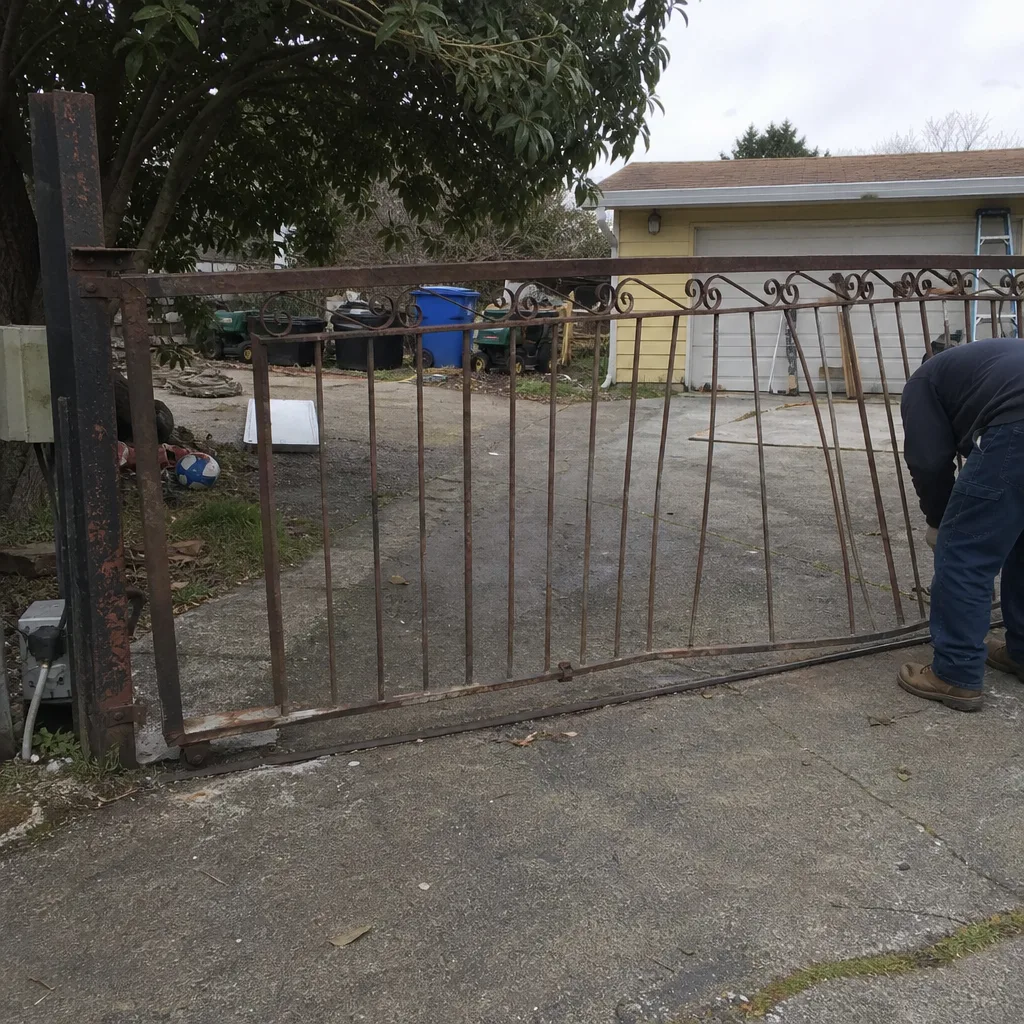 Before
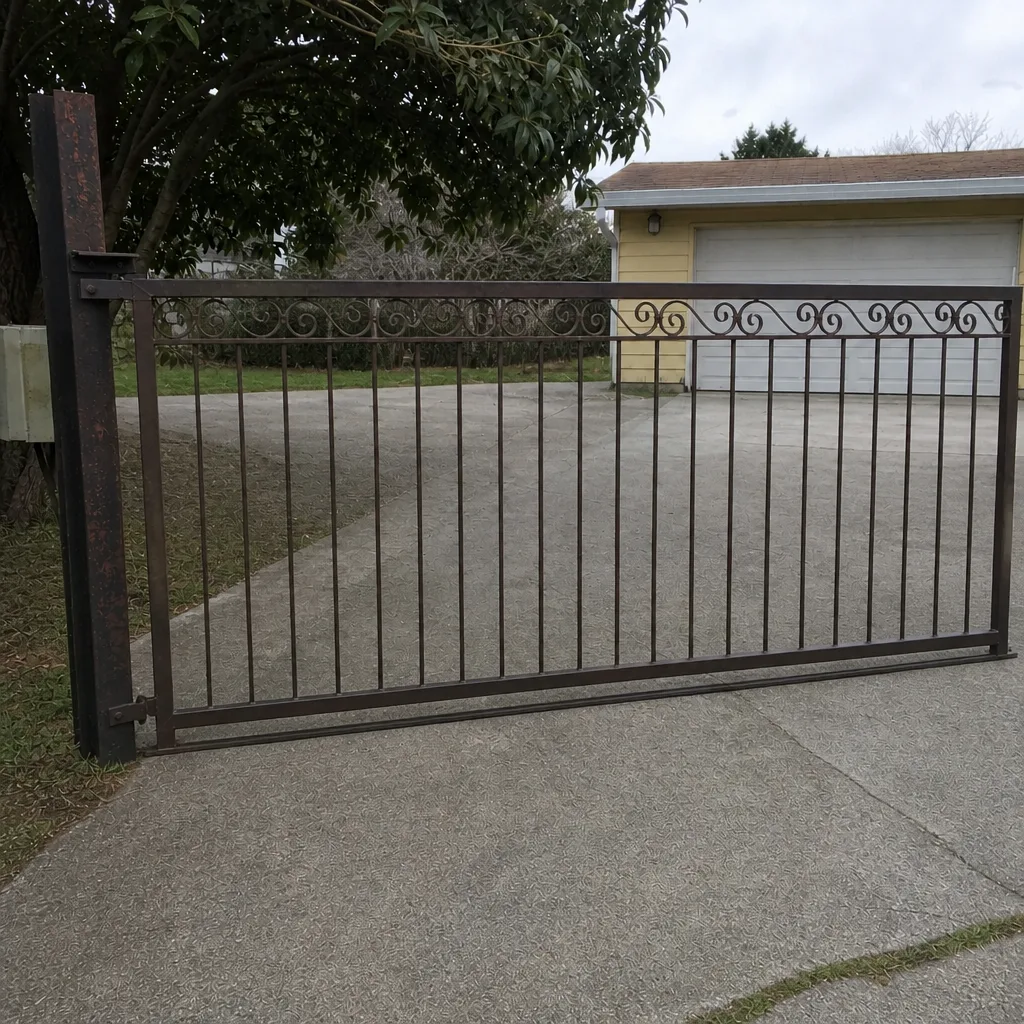 After
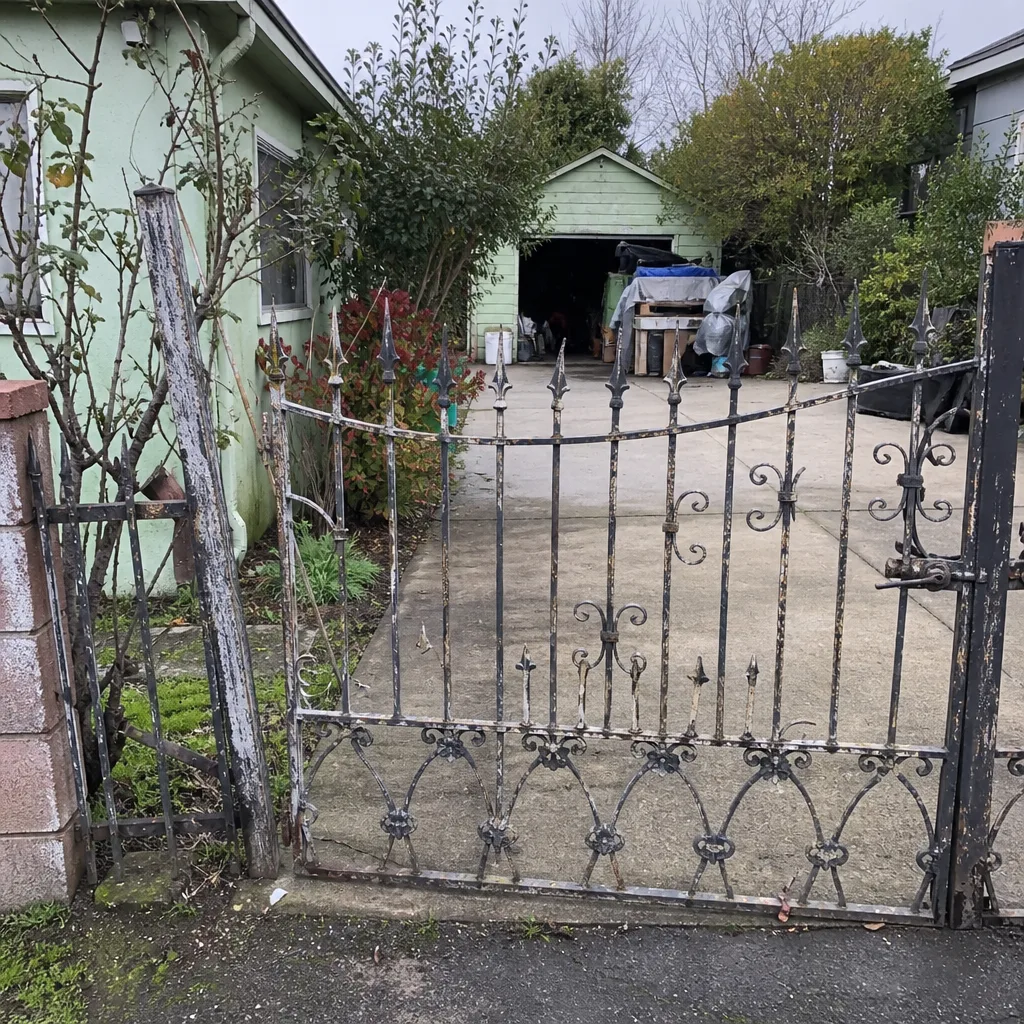 Before
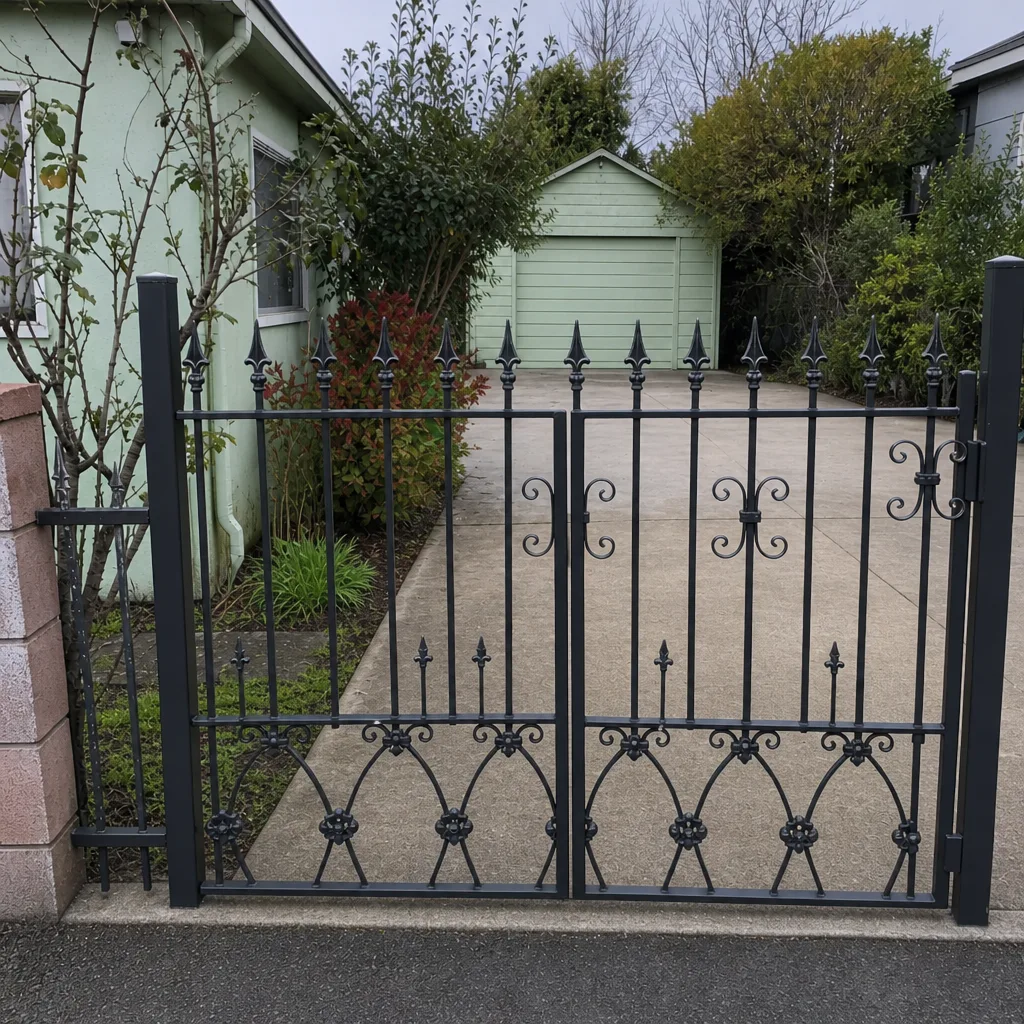 After
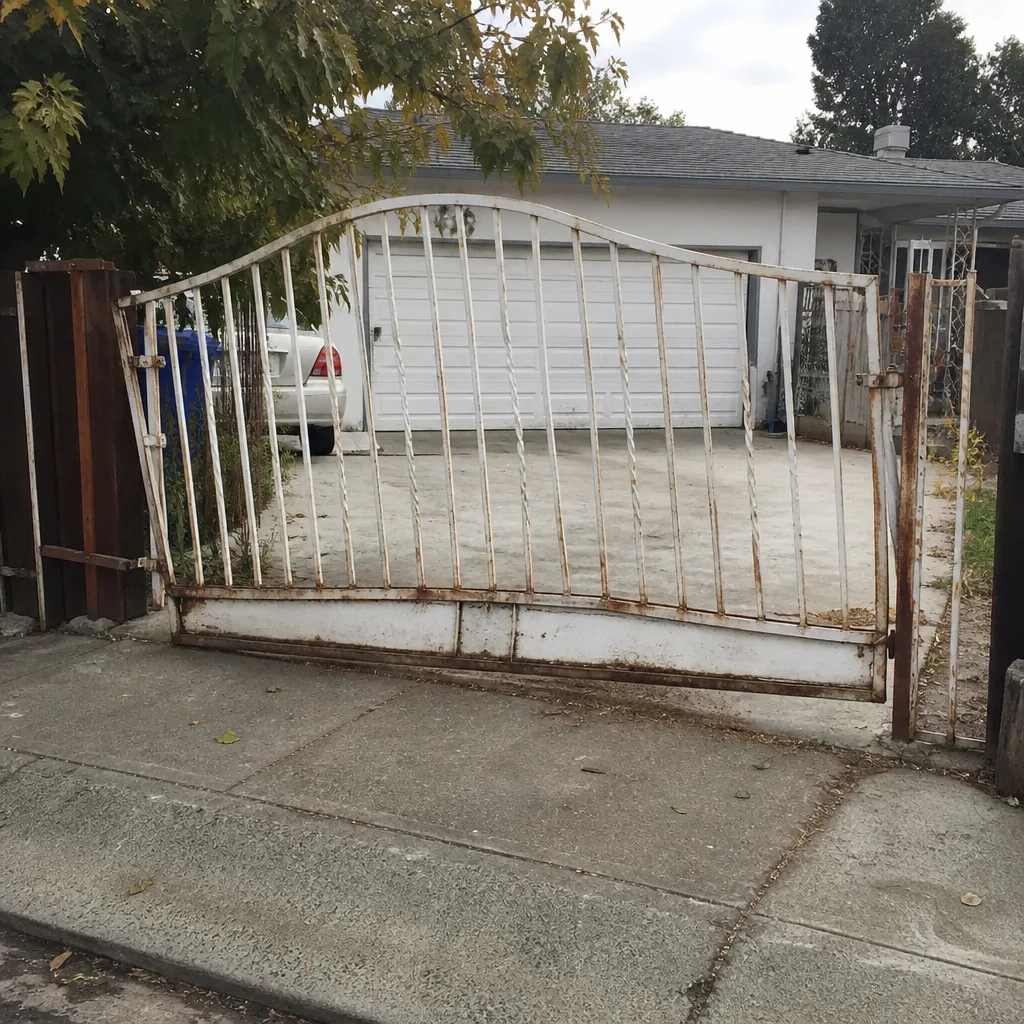 Before
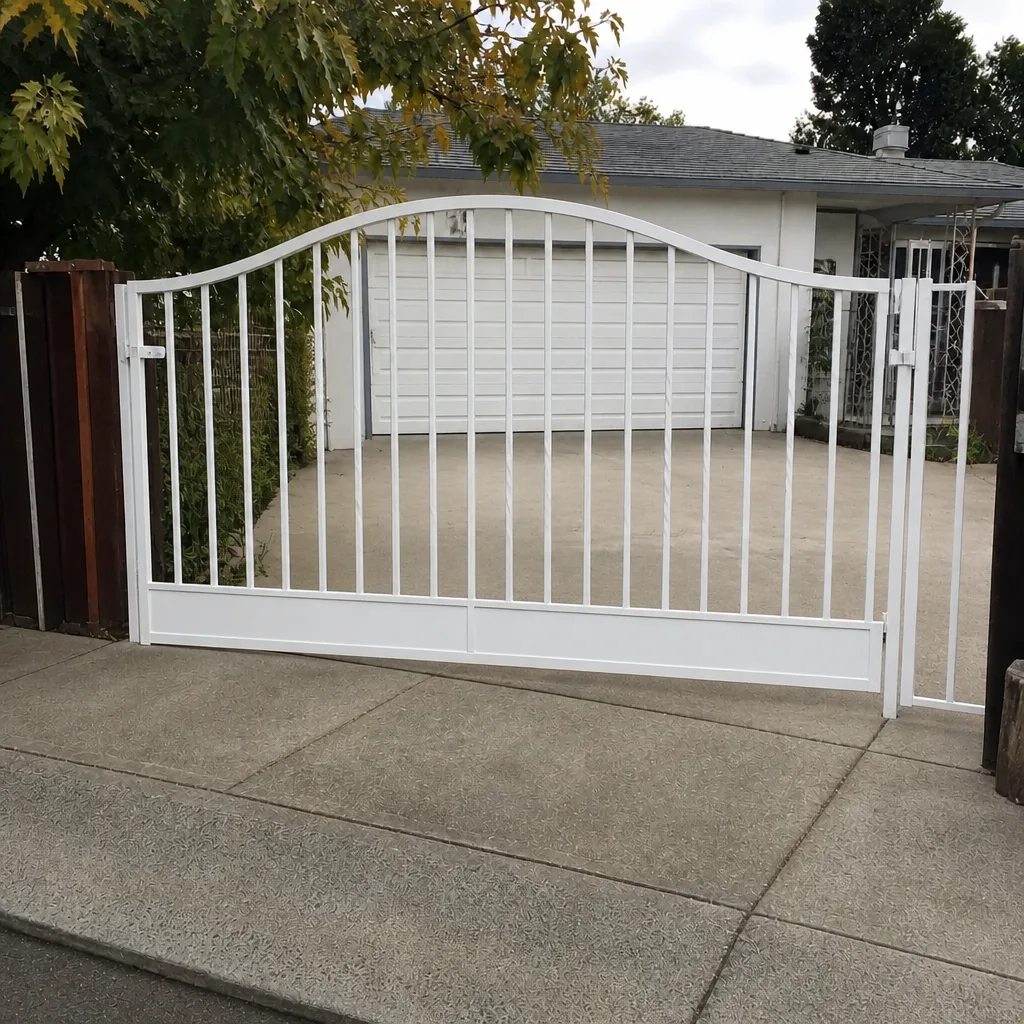 After
Common Mistakes to Avoid
- Ignoring a reversal because it “only happened once.” A single mid-cycle reversal is a sensor or current-draw problem that will recur. It’s a safety fault, and it needs a technician before it happens while someone is walking through the gate.
- Greasing a grinding hinge instead of diagnosing it. A hinge that needs grease every week hasn’t been fixed, it’s been masked. The underlying wear is still progressing, and the hinge will eventually fail under load.
- Assuming an intermittent gate will “settle down.” An intermittent gate is a gate that’s failing at the edge of tolerance. Waiting doesn’t stabilize it; it just moves the failure to a less convenient moment.
- Repainting over joint rust. Paint over active corrosion traps moisture and hides the damage. Clean and treat rust before you coat it, and get a professional opinion if it’s coming out of a weld.
- Letting a post lean go for a season. A post that’s moved is the leading indicator of the whole gate going out of alignment. Stabilizing the footing early is far cheaper than rebuilding the gate later.
- Mixing brands without a plan. If you’re adding an operator, a keypad, or a safety loop to an existing gate, the components need to be compatible. A specialist can tell you what will and won’t work with the operator you have.
- Letting a general handyman guess at an electric gate. Mechanical repairs and operator control issues are different skills. When the symptom lives in the control board, the safety loop, or the access hardware, it needs a technician who works on gates only.
When to Call a Professional
Call a gate specialist if your gate reverses or stops mid-cycle, if it’s intermittent in any way, if you’ve spotted a post that’s moved or a gate that’s out of alignment, or if the operator hums without moving. Call immediately if a safety device fails to reverse the gate, or if a slide gate has come off its track. If a gate post is rusting from the inside of a weld joint, or if your gate has lost mass at a hinge point, call before you use it again. A gate is a heavy moving object, and a failing one is a hazard to anyone standing under it, walking through it, or pulling up in a car. Gate Repair Vallejo offers free estimates in Vallejo. Call (877) 315-2991. We answer 24/7. Fast dispatch from 7am to 7pm, Sunday through Friday. Our technicians have experience, and they’ll tell you plainly what needs fixing and what can wait.
Frequently Asked Questions
The earliest warning sign is almost always a new sound or a small slowdown, before the gate stops working. A grind, a click, or a change in cycle time shows a component is failing under load while the gate still functions. That’s the moment to book an inspection, because the repair is smallest and the gate is still safe to use with care.
More urgent than a gate that’s stopped completely. An intermittent gate is operating at the edge of tolerance, so a marginal sensor, a weak relay, or a failing capacitor is already failing and will eventually fail completely at the worst moment. It’s also a safety concern, because an unpredictable gate can close on someone. Call (877) 315-2991 and we’ll diagnose the intermittent fault while it’s still small.
Look for a gap at the base, a crack in the concrete collar, or fresh drag marks on the gate. Then hold a straight edge or a level against the post to check for a lean. A gate that no longer latches cleanly is often the practical tell: the frame has moved, not the latch. If you’re unsure, a professional inspection takes minutes and can catch a post movement before it takes the gate out of alignment.
No. Slow movement throughout the whole cycle points to the motor, capacitor, or power supply. Slow movement in one direction, or a gate that starts fast and slows down, usually points to a mechanical bind in the track, the rollers, or a hinge. Timing your gate’s full cycle is the easiest way to tell the difference, and a technician can confirm it on site.
Yes. We work on the brand you already have, including Linear, Viking, DoorKing, Ghost Controls, and the other major operators. We diagnose the gate on its actual condition, not on which product earns the highest margin, so if a limit adjustment or a sensor realignment will fix it, that’s what we recommend.
Yes. Our Vallejo team handles gate repair, electric gate repair, and new gate installation across the city, and we can work with your insurer if a repair is part of a claim. Call (877) 315-2991 for a free estimate. We answer 24/7. Fast dispatch from 7am to 7pm, Sunday through Friday.
The Bottom Line
Gate failure follows a pattern, and almost every emergency call starts with a warning sign you could have seen three weeks earlier. Grinding means metal is contacting metal. Clicking means a limit or a drive component is slipping. Humming without movement means the motor is being prevented from turning. A moving post means the gate will go out of alignment within a season. An intermittent gate is more urgent than a dead one, and slow movement tells you where the fault lives. Rust out of a joint means structural fatigue, not cosmetics. Watch your gate, time its cycle, and walk it by hand once a season. When any of those checks fails, that’s your signal to call a specialist. Call (877) 315-2991 for a free estimate. We answer 24/7. Fast dispatch from 7am to 7pm, Sunday through Friday.
Written by the team at Gate Repair Vallejo.