
Last updated November 15, 2026
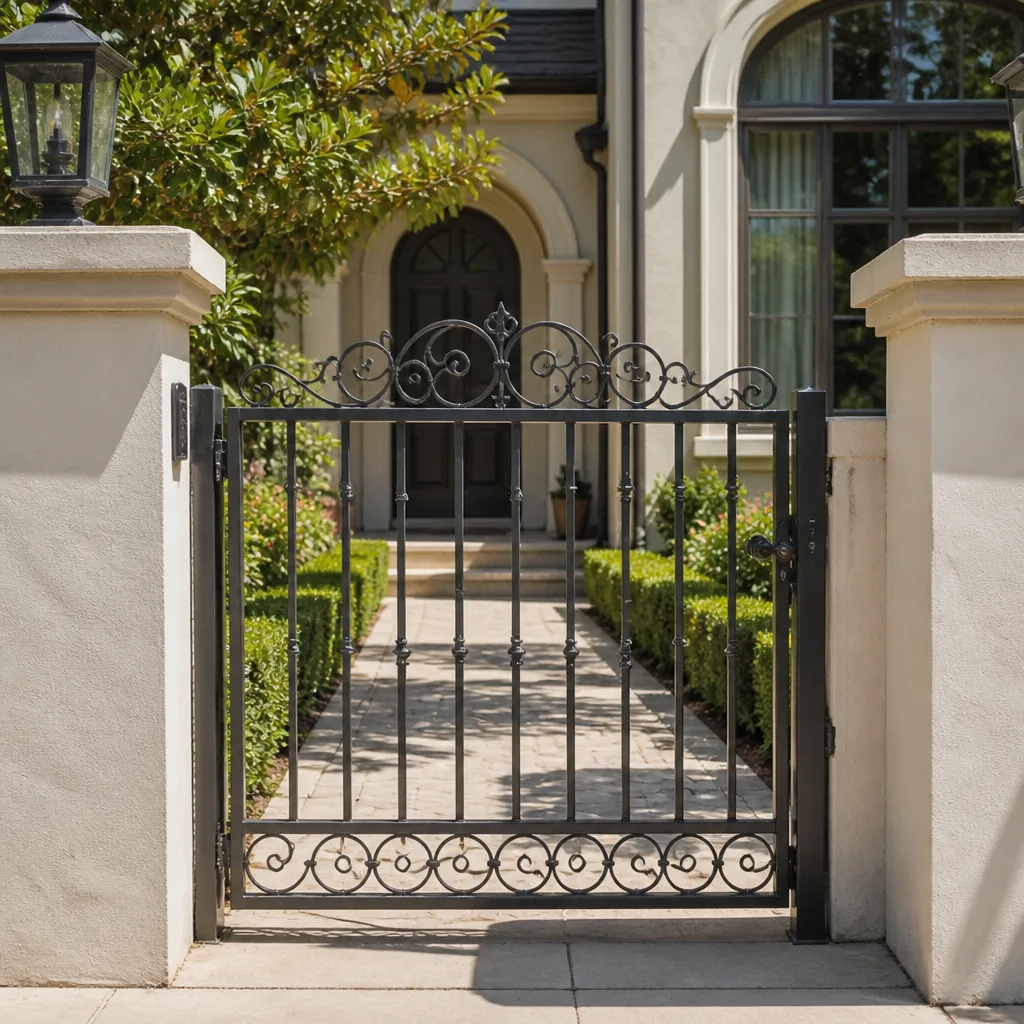 Wrought iron
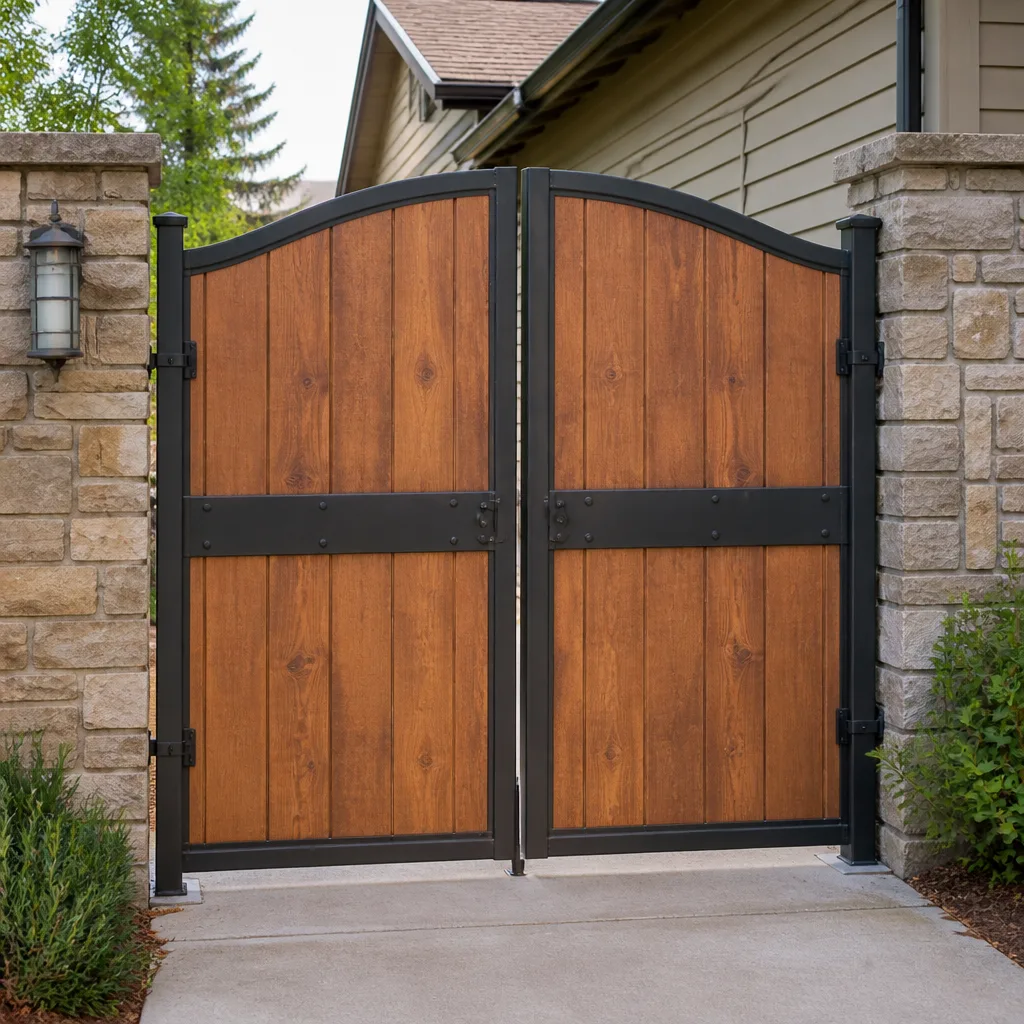 Wood & steel frame
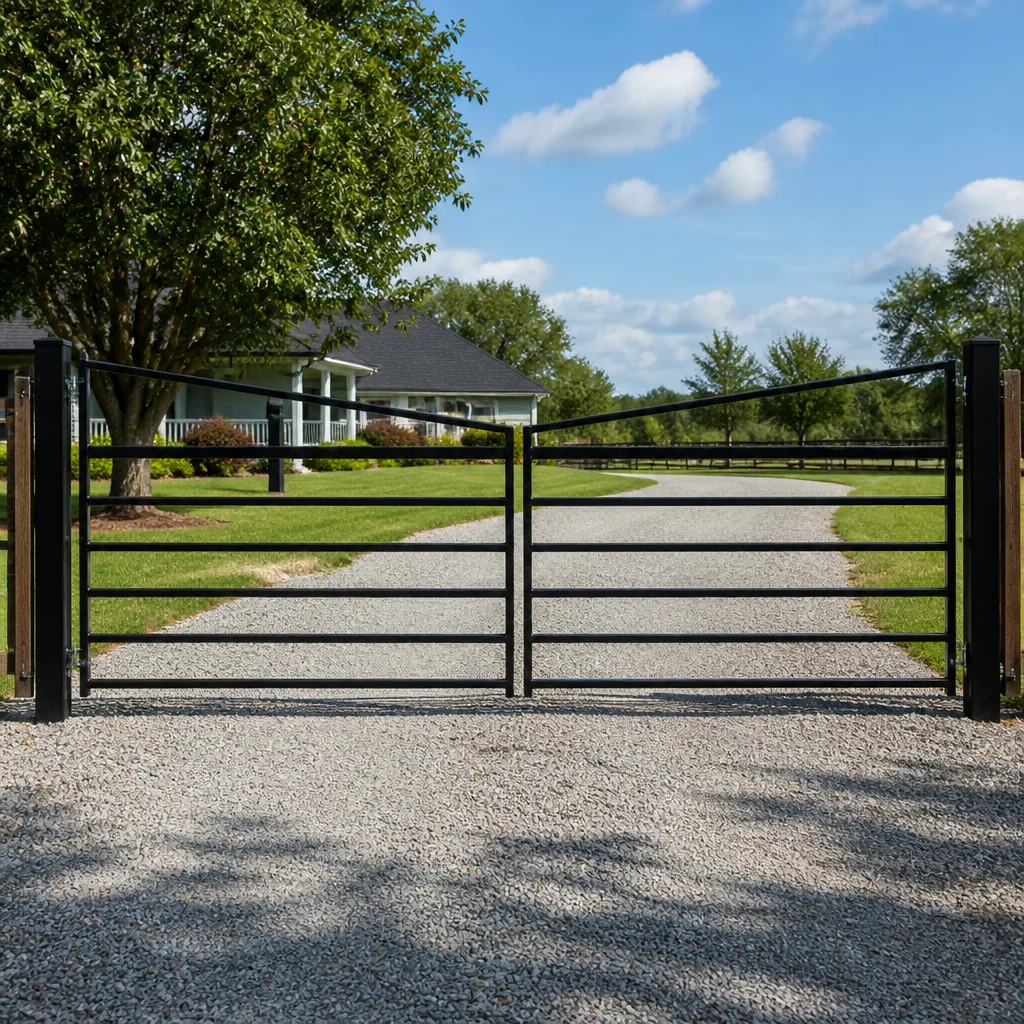 Farm & ranch
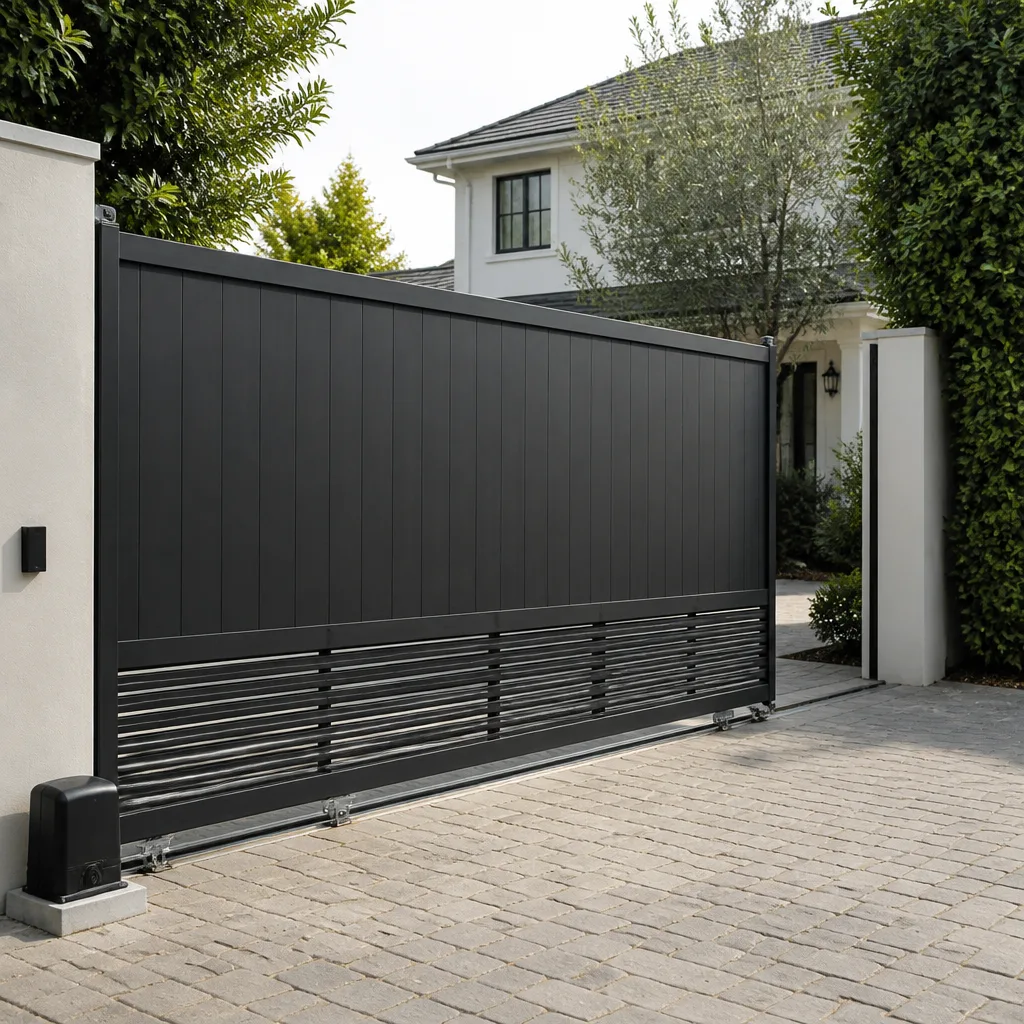 Sliding driveway gates
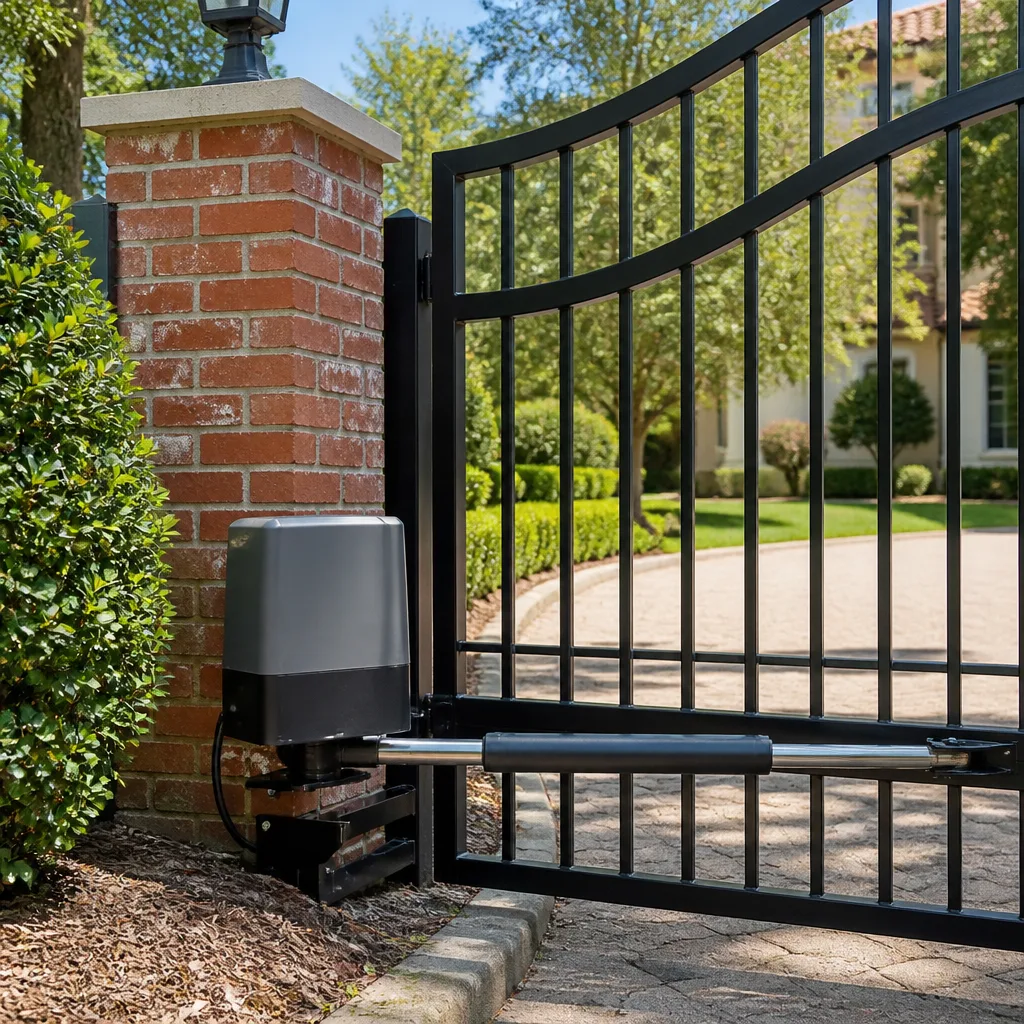 LiftMaster operators
Free on-site gate assessment - hinges, posts, and your LiftMaster or Nice gate operator checked before anything is quoted
The assessment is free and the quote is the invoice.
Get your free estimateGate Repair Maintenance Schedule: What to Do and When
Annual maintenance is the advice you’ll find on every gate care sheet, and in Vallejo it’s the wrong interval. A gate hinge in Vallejo exposed to Delta fog gathers as much oxidation in four months as the same hinge would in twelve months in Sacramento. Spring mornings pull moisture off the strait and leave it on cold steel; late fall then swings temperatures hard enough to work bolts loose and shift soil under posts. Your schedule should follow that rhythm, not the calendar year. This guide walks through what to inspect, lubricate, and test at each interval, what an automated system needs every quarter, and how to log it all so you can see wear before a hinge or operator fails.
Quick Answer
A gate in Vallejo needs a short walk-around inspection every month, moving parts lubricated every 90 days (more often on the fog-exposed side), a full hardware and alignment check each spring and late fall, and a deep service of your automated system once a year, with battery and safety-device tests quarterly. Build the schedule around the two wet seasons and the temperature swings between them, and you’ll catch most gate failures while they’re still cheap to fix.
Styles & brands we work with
- Wrought iron
- Wood & steel frame
- Farm & ranch
- Sliding driveway gates
- LiftMaster operators
Table of Contents
- Why a Vallejo Gate Can’t Follow a Standard Maintenance Calendar
- The Month-by-Month Maintenance Calendar
- Lubrication: What to Use on Steel, Powder-Coat, and Raw Iron
- The Quarterly Checks on Automatic Gates Most Homeowners Skip
- How to Log a Gate Inspection in 15 Minutes
- The Three Maintenance Shortcuts That Void Automatic Opener Warranties
- Hardware, Posts, and Soil Movement
- When a Maintenance Task Becomes a Repair
Why a Vallejo Gate Can’t Follow a Standard Maintenance Calendar
Two things drive wear on a gate faster than anything else: moisture that sits, and temperature that swings. Vallejo gets a lot of both, just not the versions most published schedules assume. Fog rolls through in the morning and leaves a film of moisture on exposed metal. The sun burns it off by midday. The gate goes through that cycle dozens of times a season, and every cycle leaves a little more oxidation in the joints and hinges than a drier climate would.
Then come the temperature swings. From the cool, damp mornings to warm afternoons, metal expands and contracts. Bolts that were snug in July can be a quarter-turn loose by November. Those swings don’t break gates; they loosen them, and looseness is what breaks gates. A continuous hinge with a slightly backed-out bolt will wear its pin faster in one fog season than in two years of stable weather.
Soil is the third factor, and the one most homeowners miss. Vallejo’s clay-heavy soil expands as it takes on winter rain and contracts as it dries out. Gate posts set in that soil move with it. A slide gate that runs perfectly in August can bind against its track by February, not because the hardware failed, but because the ground around one post lifted a fraction of an inch. That’s why your inspection schedule should track seasons rather than dates on a wall calendar.
What does that mean for a schedule? Two heavy checkpoints – one in early spring as the wet season winds down, one in late fall as it begins – with light monthly checks between. Automated systems get their own quarterly rhythm. For a broader overview of what a full service covers, see our page on gate repair, and keep this guide as your inspection backbone.
The Month-by-Month Maintenance Calendar
This calendar is built for a Vallejo driveway or entry gate, manual or automated. Treat it as a general guide and adjust to your gate’s age, finish, and exposure – a gate on a wind-exposed hillside corner takes more punishment than one tucked behind a windbreak.
- January: Mid-wet-season check. Look for standing water at post bases and any pools forming under the gate’s swing path. Clear debris from the track and from any channel that holds water against the gate.
- February: Hardware tightness check. With the gate at rest, test hinge bolts and latch screws by hand – no gate should feel loose. Note anything you turn, so you can track it next month.
- March: Spring deep inspection. This is the biggest checkpoint of the year. Check post alignment, gate sag, track level, latch engagement, and the full condition of your finish. This is when you assess oxidation and plan any refinishing.
- April: First full lubrication pass of the year. Do the hinges, rollers, latches, and any exposed pivot points. Note how much of the old lubricant has broken down since last fall.
- May: Automated system check. Test the operator, safety edges, and remote or access hardware. This is a good month to clear the control box of debris and check for pests.
- June: Light mid-season check. Walk the gate, listen for new sounds – a squeak, a metallic tick, a hesitation at the start of travel. Sounds are your early warning.
- July: Second lubrication pass. The dry, warm stretch dries out lubricant faster than most people expect. Reapply where you applied in April.
- August: Quarterly automated test. Battery backup, limit switches, and safety loop sensitivity – we cover these below.
- September: Pre-wet-season hardware check. Tighten anything that loosened over the dry months. Check the finish for any new oxidation you didn’t see in spring.
- October: Late-fall deep inspection, the second major checkpoint. Repeat the March inspection. Compare against your spring notes and flag anything that’s changed.
- November: Wet-season preparation. Check drainage around posts, clear the track, and lubricate everything that will be exposed to moisture over the next five months. If you’re going to refinish, do it before the wet season, not during.
- December: Mid-wet-season walk. Same as January – look for water, watch for movement, and listen for new sounds.
This isn’t a schedule you need to memorize. It’s a rhythm: two deep checkpoints, four lubrication passes, four quarterly automated tests, and a light walk-around each month. Homeowners in Vallejo who build that rhythm get a gate that runs smoothly for years. The rest discover problems the way most people do – when the gate won’t open.
Lubrication: What to Use on Steel, Powder-Coat, and Raw Iron
Lubrication isn’t one product applied everywhere. The wrong lubricant on the wrong finish creates a sticky mess that collects grit and makes wear worse. Match the product to the surface and the joint, and use less than you think you need.
Galvanized steel
Galvanized steel has a sacrificial zinc coating that’s tolerant but not immune. It does best with a light, penetrating lubricant on the moving parts and a protective spray on the surface. Avoid heavy grease on hinges – on a Vallejo gate, airborne road dust and pollen will stick to grease and turn it into a grinding paste. A light film, reapplied every 90 days (or 60 in the wetter stretches), works better than a thick coat that stays put and traps grit.
Powder-coat
Powder-coated aluminum or steel needs the least lubrication on the finish – the coating protects the metal – but the most care on the pivot points, because the finish hides what’s happening underneath. If you see bubbling, chipping, or a whitish bloom along an edge, moisture has gotten in. Lubricate the joints every 90 days with a silicone-based spray that won’t degrade the coating. Inspect the hinges and latches alongside, since the coating won’t protect parts that break through it.
Raw iron
Raw iron needs the most attention and the most protective product. It oxidizes quickly in Vallejo’s morning fog, and once the flash rust starts, it accelerates. Use a heavier protective lubricant on the surface – a light oil or a product specifically designed for bare metal – and reapply more often, especially on surfaces facing the fog. Raw iron joints want a grease that stays in place, because the joint opens when the gate cycles and will pump out thin lubricants. Plan on checking raw iron every 60 days in fog season and every 90 days in the dry stretch.
Two rules apply regardless of finish. First, clean the joint before you lubricate it – a lubricant applied over grit just traps the grit. Second, never use WD-40 as a standalone long-term lubricant. It’s a water displacer, and it evaporates fast, leaving the joint drier than before. If you see a gate operator’s service record using it in place of proper lubricant, treat that as a warning sign. For more on how gate materials and finishes factor into repair decisions, our main page on Gate Repair Vallejo covers the full range of what we see.
The Quarterly Checks on Automatic Gates Most Homeowners Skip
Automated gates fail in ways manual gates don’t, and three of those checks are the ones most homeowners never do. If your gate has an operator – LiftMaster, DoorKing, Elite, or another brand – these three deserve a spot in your schedule four times a year.
Battery backup capacity
Most modern operators include a battery backup so the gate can be cycled once or twice during a power interruption. That battery degrades quietly, and a gate that opens fine under normal power can fail to open the one time you actually need it. Test it quarterly: cut power at the operator’s disconnect (not the breaker panel), cycle the gate once, and restore power. If the gate hesitates, runs slow, or fails to complete an open-close cycle, the battery is beyond service life. Don’t wait for the next outage to find out. Many operators will throw a fault code that signals weak battery, but the test is faster than the code.
Limit switch calibration
The limit switches tell the operator where the gate’s open and close positions are. Over time they drift, especially in Vallejo where thermal swings move the gate slightly and the switches keep their old reference points. The symptom most homeowners notice is that the gate stops short of fully open, or reverses before fully closing. That’s not a failing motor – it’s a calibration issue, and quarterly checks catch it before it becomes an operator that over-runs its travel and burns out. Check travel direction and stop points at each quarterly test; if the gate stops more than a hand’s width from where it should, the limit switches need adjustment.
Loop detector sensitivity
The loop detector senses a vehicle over the exit loop and triggers the gate to open. Sensitivity drifts over time, and a loop that’s too sensitive will trigger for a passing car in the next lane; one that’s too insensitive won’t detect your own vehicle and will leave you sitting at the gate. Those are both safety issues, not just conveniences. Quarterly, note how the loop responds when you drive through. If it triggers late, early, or not at all, the loop sensitivity needs adjustment. Same test applies to any safety edge or photo-eye on your gate: they should stop and reverse the gate the moment they detect an obstruction.
If any of these three feels beyond what you want to handle yourself, an on-site visit is the fastest way to sort it. Our electric gate repair service covers operators, control boards, loop detectors, and safety hardware, whatever brand is installed. We work on the brand you already have, so there’s no reason to call the original installer if they’re no longer available.
How to Log a Gate Inspection in 15 Minutes
An inspection you can’t compare to your last one isn’t maintenance – it’s a walk-around. The 15-minute log is the single highest-value habit in this guide, because it turns a series of impressions into a wear trend you can act on. Here’s how to do it.
- Date and weather (1 minute). Note the date and what the weather has been doing – wet stretch, dry stretch, or a transition. Weather tells you what to expect from the inspection before you even walk out.
- Walk the swing path or track (3 minutes). With the gate stationary, note any resistance, binding, or noise as you manually cycle it if it’s a manual gate. On an automated gate, cycle it once from the operator and listen for anything new: a squeak, a hesitation, a bump at the end of travel.
- Check hinges and hardware by hand (3 minutes). Tug each hinge and latch. Note anything that moves more than it did last month. This is where the log earns its keep – a hinge that’s a little loose this month will be noticeably loose next month, and you caught it early.
- Inspect the finish (3 minutes). Look for oxidation, bubbling, chipping, or whitish blooms along edges and bottoms. Note the specific location. If you refinish later, you’ll know exactly where moisture is getting in.
- Test the operator (3 minutes on automated gates). Remote response, open/close travel, stop points, safety reversal. If you’re doing a quarterly check, add the battery cut-power test and loop sensitivity.
- Note anything that changed (1 minute). Write one line: “gate slower to open than last month” or “small squeak at the hinge, gone after light spray.” Changes are the point.
After three or four months, the log starts telling you things. You’ll see that the same hinge loosens every year around this time, that the gate’s travel drifts slightly as the wet season starts, that a specific section of finish oxidizes faster than the rest. Those patterns let you act before a failure. They also give any technician you call a much better starting point, which cuts down on diagnostic time.
A paper notebook, a notes app, or a spreadsheet all work. What matters is consistency. Keep the log where you’ll see it – on the hook next to the gate remote or in the car’s glove box – so a 15-minute inspection stays a habit, not a project.
The Three Maintenance Shortcuts That Void Automatic Opener Warranties
Automatic operator warranties – on LiftMaster, DoorKing, Elite, Mighty Mule, and the rest – have maintenance conditions. Skip those conditions and the warranty can be refused, even if the failure seems unrelated. Here are the three shortcuts we see most often in prior service records, and how to spot each one.
1. Pressure-washing the operator or control box
Water forced into a control box through a gasket or switch housing looks harmless at the time. Months later, a board fails. Manufacturer warranty terms almost always exclude water damage from improper cleaning. If you see pressure-washing in a service record covering the operator, that’s a red flag. Spot it by looking for water staining or mineral residue inside the control box access panel – not a step to take lightly yourself, since opening a live control box is a risk.
2. The wrong lubricant on moving parts
Grease on the wrong surface, or thin lubricant on a surface that needs grease, causes premature wear on the operator’s gear, track, or chain. Some operators have specific lubricant requirements, and substituting a general-purpose product can void the wear warranty. Check the service record for what was applied to the operator’s moving parts; if it lists a general spray or car-grade grease, it’s worth verifying against the manufacturer’s maintenance guidance.
3. Skipping the annual operator service
Most operator warranties require periodic service, and “periodic” usually means annual. A service record with no entry at all over a year’s stretch tells you the operator hasn’t been checked. Wear on gears, chain, or board components in that missing year can be excluded from a warranty claim.
When you’re calling for service on an older operator, tell the technician the make and model and what you can see in the prior records. An independent technician will know what each brand’s maintenance schedule actually requires, without having to send you back to the original dealer for basic service. That’s part of why our technicians work on multiple brands: the fix follows the gate’s actual condition, not the product line.
Hardware, Posts, and Soil Movement
Most gate failures that send people looking for repair start with post movement or hardware loosening, not with a catastrophic break. In Vallejo, the soil gives those two problems an extra push. Here’s what to watch.
Posts and footing
Check gate posts twice a year, at the spring and fall deep checkpoints. What you’re looking for: lean, wobble, or a gap opening at the surface where the post meets the ground. A post that has shifted by even a fraction of an inch changes the gate’s geometry. Slide gates bind on their track, swing gates stop latching, and automated gates start over-working the operator to compensate. During your inspections, check that posts are plumb and firm. If a post shows movement, get it looked at before adjusting the gate – adjusting a gate to fit a moving post is a temporary fix.
Hinges and latches
Hinge wear shows up as gate sag or drag. Watch for a gate that no longer swings freely with the hinge fully open, or one that has started to touch the ground at the end of its swing. Latches tell you a related story – a latch that has started catching or missing tells you the gate’s geometry has shifted, which usually traces back to a hinge or post. Check both at every monthly walk.
Track and rollers (slide gates)
Slide gates need the most attention to the track. Clear it of grit and debris every month – on a Vallejo gate, leaf litter and grit build up faster in the wet months. Inspect rollers every quarter for flat spots or worn bearings; flat spots change the gate’s travel and wear the operator. A track that’s level in dry months can shift when wet soil expands, which shows up as binding near the post at one end.
When a Maintenance Task Becomes a Repair
Maintenance is what you do before something breaks. Once a task crosses certain lines, it’s a repair, and continuing to treat it as maintenance wastes time and risks a more expensive outcome. Here’s how to tell the difference.
- Movement that doesn’t stop after tightening. If the same hinge or bolt has loosened again within a month, something is wearing – a bushing, a pin, or the post’s footing. Tighten it twice and it’s a repair.
- A gate that hesitates, reverses, or stops partway. On an automated system, that’s a symptom – limit switch drift, a worn gear, a failing board. Don’t keep cycling it hoping it will settle in.
- A safety device that fails a test. Safety edges, photo-eyes, and loop detectors should not be “tested and adjusted” indefinitely. If a safety device doesn’t stop the gate reliably, the gate shouldn’t be used until it’s fixed.
- Oxidation that reappears after cleaning. A spot of rust that comes back within weeks is a sign the underlying finish has failed. Surface treatment won’t stop it, and it will spread.
- A gate that operates differently in wet and dry weather. Post movement, track shift, and footing problems all show up this way. A repair will reset the geometry; a maintenance pass won’t.
For gates in Vallejo, including those on older setups with legacy operators that a general contractor might not recognize, one call covers the full repair – diagnostics, parts, and follow-up. That single-call model is why homeowners reach for a specialist instead of a handyman: the specialist knows the symptom the moment they see it.
Common Mistakes to Avoid
- Lubricating everything with the same product. A general-purpose spray on a raw-iron hinge in fog season will be gone in a week. Match the product to the finish and the joint, and note what you used so you can compare results.
- Skipping the fall deep check because the gate “ran fine all summer.” The gate that runs fine in July is the one that binds in February. The fall check catches the wear the dry season hid.
- Adjusting the gate instead of the post. If a post has shifted, adjusting the gate to fit is temporary. Fix the post, then check the gate.
- Never testing the battery backup. A backup battery that hasn’t been tested is a backup you own but might not have. Test it quarterly when you do the other automated checks.
- Cleaning the control box with water. Dry cleaning only, and a professional should be the one opening the box. Water inside a control box is one of the most common causes of board failure.
- Letting the inspection log go stale. A maintenance log is only useful when it’s current. A 15-minute monthly walk keeps the trend visible; a six-month gap lets you miss the pattern.
- Calling the original installer when they’ve moved on. Operators and their make and model don’t change because the dealer stopped servicing the area. An independent technician can work on the system already installed.
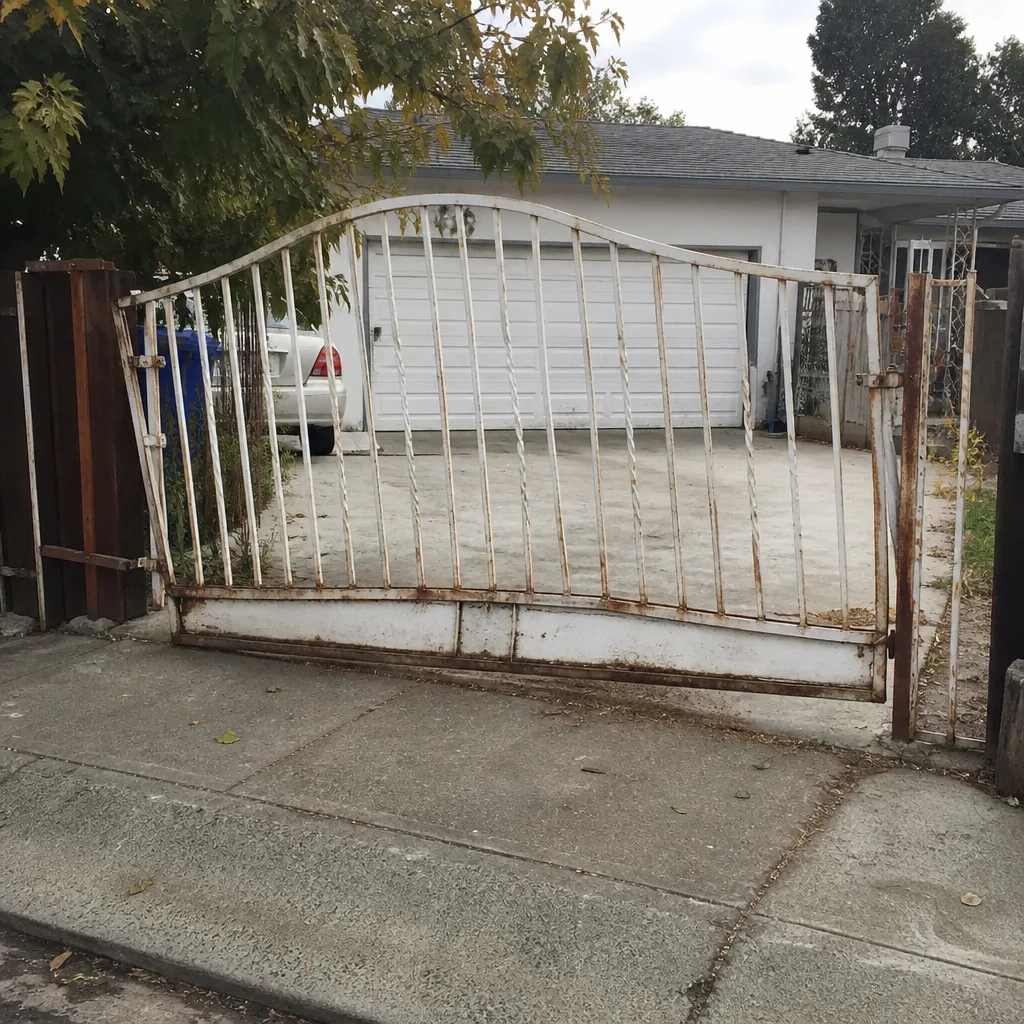
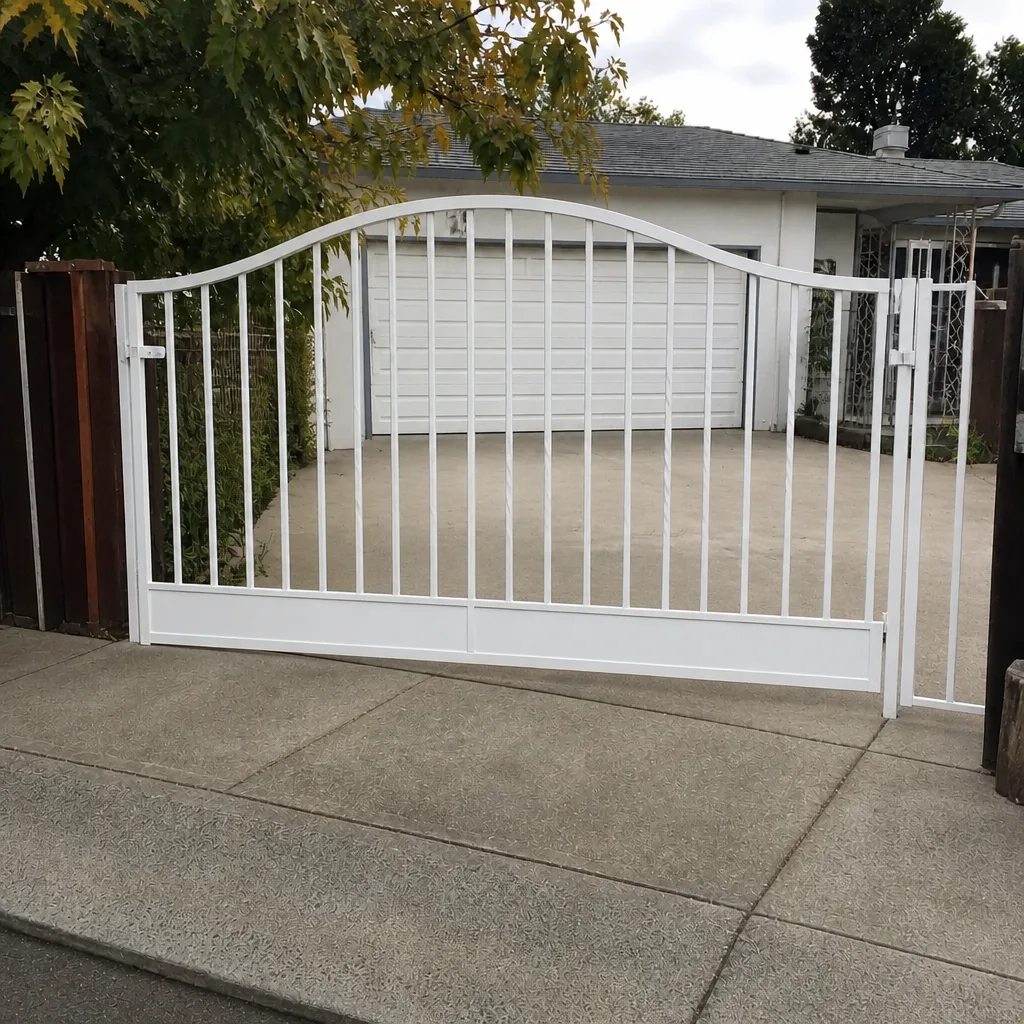
See the difference
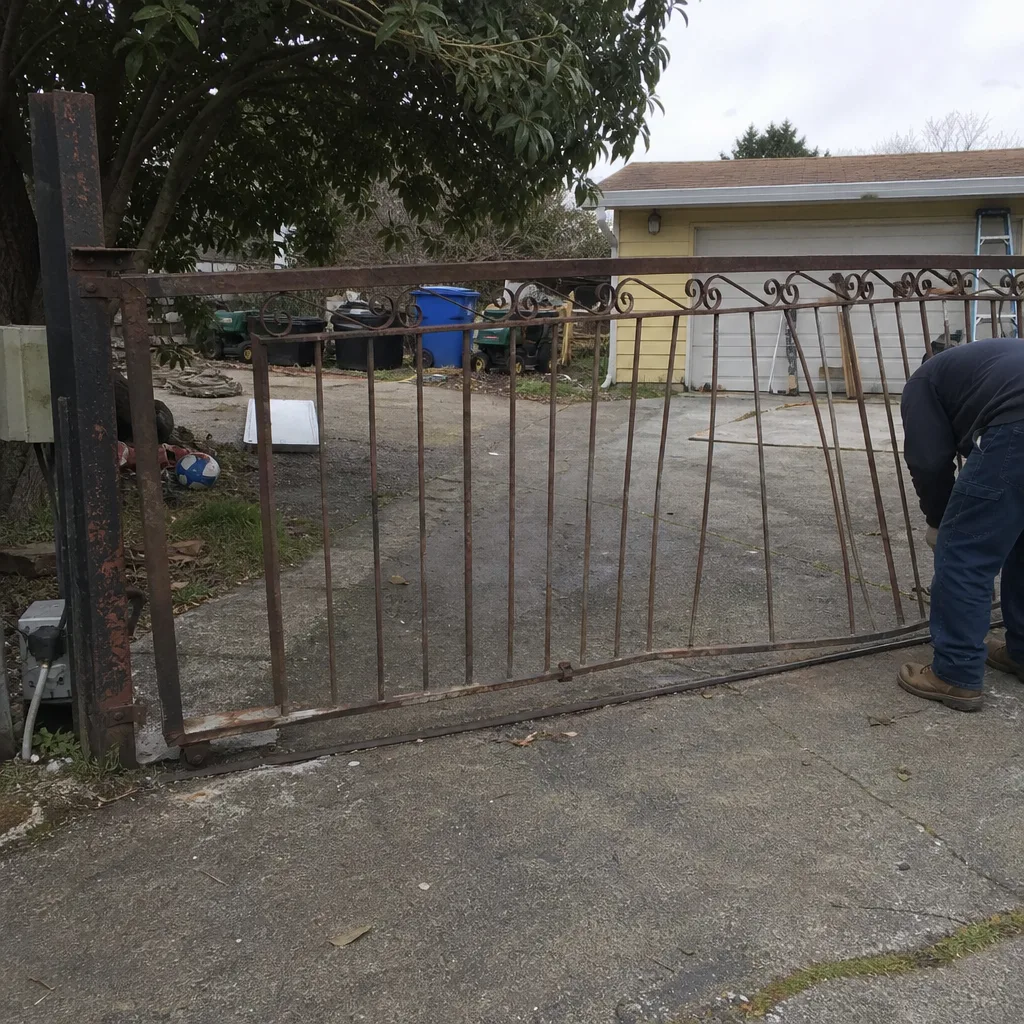 Before
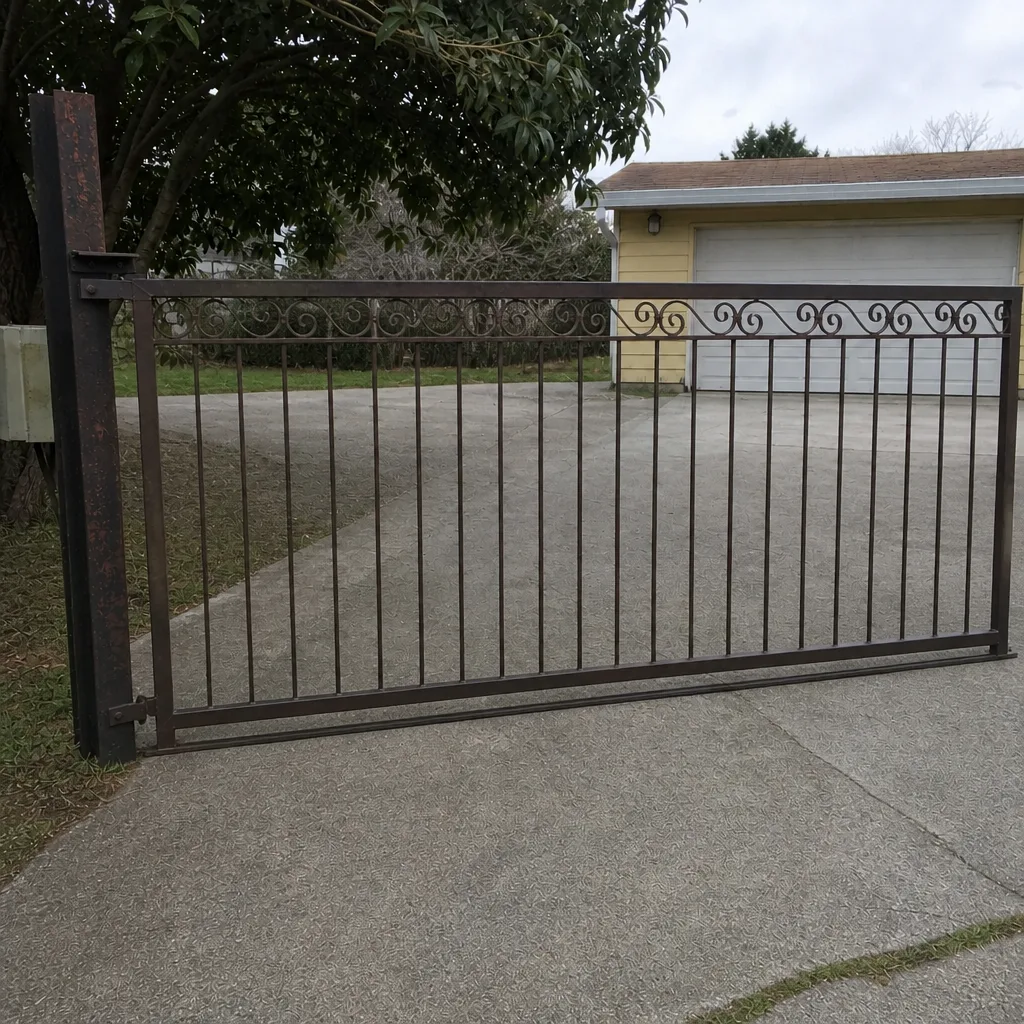 After
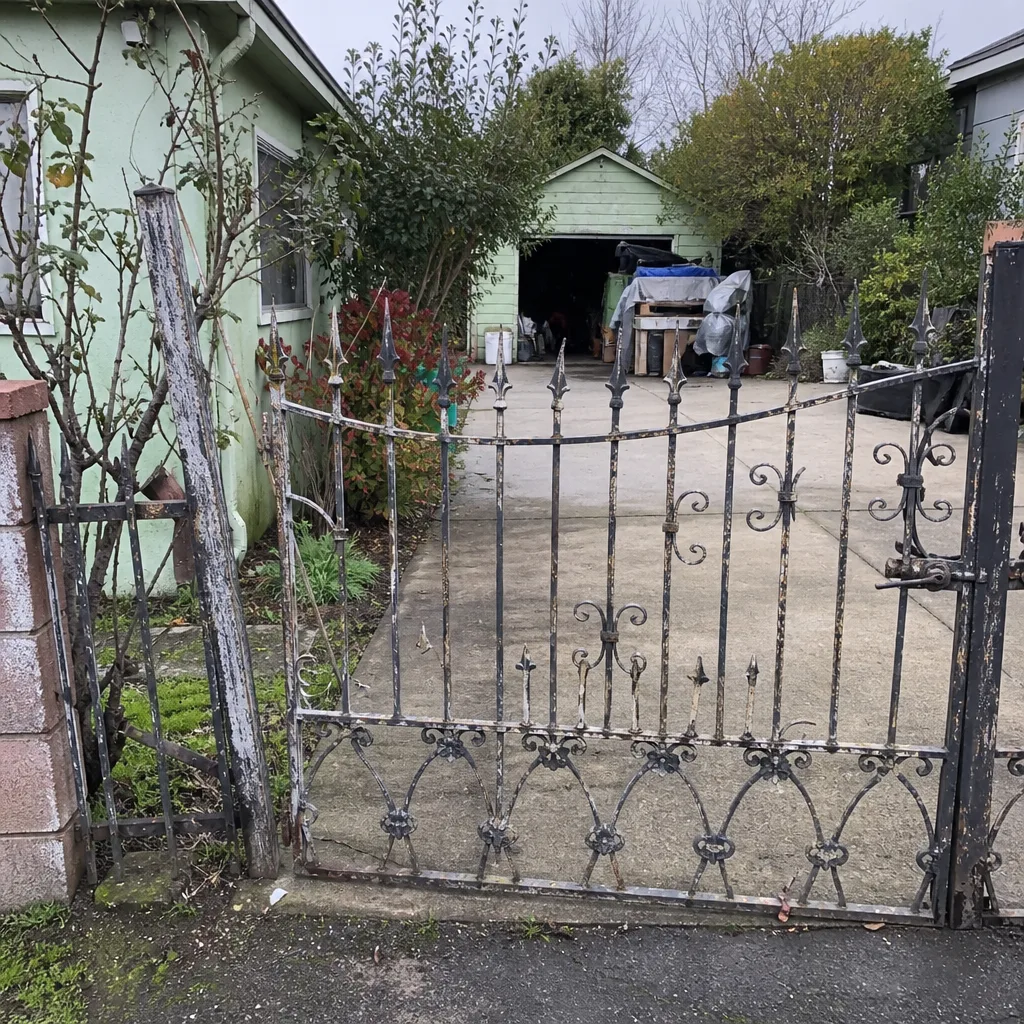 Before
 After
 Before
 After
When to Call a Professional
Some tasks belong on your schedule; others belong on a technician’s. Call a professional when the gate has moved on its own (a post that’s shifted, a track that’s out of level, a gate that no longer latches), when an automated system hesitates, reverses, or stops short, when a safety device fails a test, or when you’re uncertain whether a symptom is a maintenance item or a developing failure. Electrical work on operators and control boards – including the wiring and the power run – is worth leaving to a trained technician: there’s line voltage inside the control box and a gate that cycles unexpectedly is a crush risk. If you’re in Vallejo and want a professional to walk the full gate, Gate Repair Vallejo offers free estimates – call (877) 315-2991. We answer 24/7, and fast dispatch runs 7am to 7pm, Sunday through Friday. Our technicians have experience across the brands already installed, so you’re not starting from zero.
Frequently Asked Questions
A gate in Vallejo needs a light 15-minute inspection monthly, a lubrication pass every 90 days, a full hardware check in spring and again in late fall, and a full operator service once a year with quarterly battery, limit-switch, and safety-loop tests. That rhythm follows the local fog and wet-season cycle better than a single annual visit would.
Vallejo’s temperature swings and clay-heavy soil move gate posts and hardware with the seasons. Bolts that are tight in July can be a quarter-turn loose by November, and posts can shift slightly as soil takes on rain in the wet season and dries out later. Tighten hardware at both deep checkpoints and watch for repeated loosening as a sign of a post or hinge issue.
No, not as a long-term lubricant. WD-40 displaces water but evaporates quickly, leaving the joint drier than before. Use it as a short-term loosener if you like, then follow with a proper lubricant matched to the finish and joint.
Cut power at the operator’s disconnect (not the breaker panel), cycle the gate once, and restore power. If the gate hesitates, runs slow, or fails to complete a cycle, the battery is past its service life. Test quarterly so a failure shows up during a controlled test, not a real outage.
Most automatic operators, including DoorKing, LiftMaster, Elite, and Mighty Mule systems, need annual service of gears, chain, and moving parts, quarterly battery and safety-device tests, and the manufacturer’s specified lubricants only. Specific requirements vary by model – an independent technician can check what your operator needs from its make and model.
Yes. A gate that “works fine” is the one you haven’t tested, especially in Vallejo’s fog and wet-season cycle. Annual operator service and spring/fall hardware checks catch wear before it becomes a repair, and they keep the operator’s maintenance conditions in good standing. Call (877) 315-2991 for a free estimate on a full gate service.
The Bottom Line
Build your gate schedule around Vallejo’s seasons, not the calendar year. Two deep checkpoints – early spring and late fall – with monthly walks, quarterly lubrication, and quarterly tests of your automated system will catch most failures while they’re still a loose bolt and a squeak instead of a broken hinge or a dead operator. Match your lubricant to the finish, log the condition of hinges, posts, tracks, and safety devices, and don’t pressure-wash a control box. Learn to spot the shortcuts that void a warranty, and call a specialist when a symptom crosses the line from maintenance into repair. A gate is a simple machine, and the schedule that keeps it running is built from patience rather than complicated parts. Call (877) 315-2991 for a free estimate. We answer 24/7. Fast dispatch from 7am to 7pm, Sunday through Friday.
Written by the team at Gate Repair Vallejo.